.svg&w=384&q=75 "naujapitch logo")
Crystal Palace vs Everton: Premier League Showdown for Mid-Table Stability
In 2026 at Selhurst Park, Crystal Palace host Everton in Premier League Regular Season - 36 with both sides effectively in the mid-table pack but still needing points to lock in their objectives. In the league phase, Palace sit 15th on 43 points with a -6 goal difference (36 scored, 42 conceded in 34 games), while Everton are 10th on 48 points with a neutral goal difference (44 scored, 44 conceded in 35 games). The seasonal weight is clear: Palace can all but eliminate any late relegation anxiety with a home result, while Everton are trying to cement a top-half finish and keep an outside lane open towards the European conversation if the teams above falter.
Head-to-Head Tactical Summary
The recent head-to-head pattern tilts towards Everton, especially in tight, low-margin games.
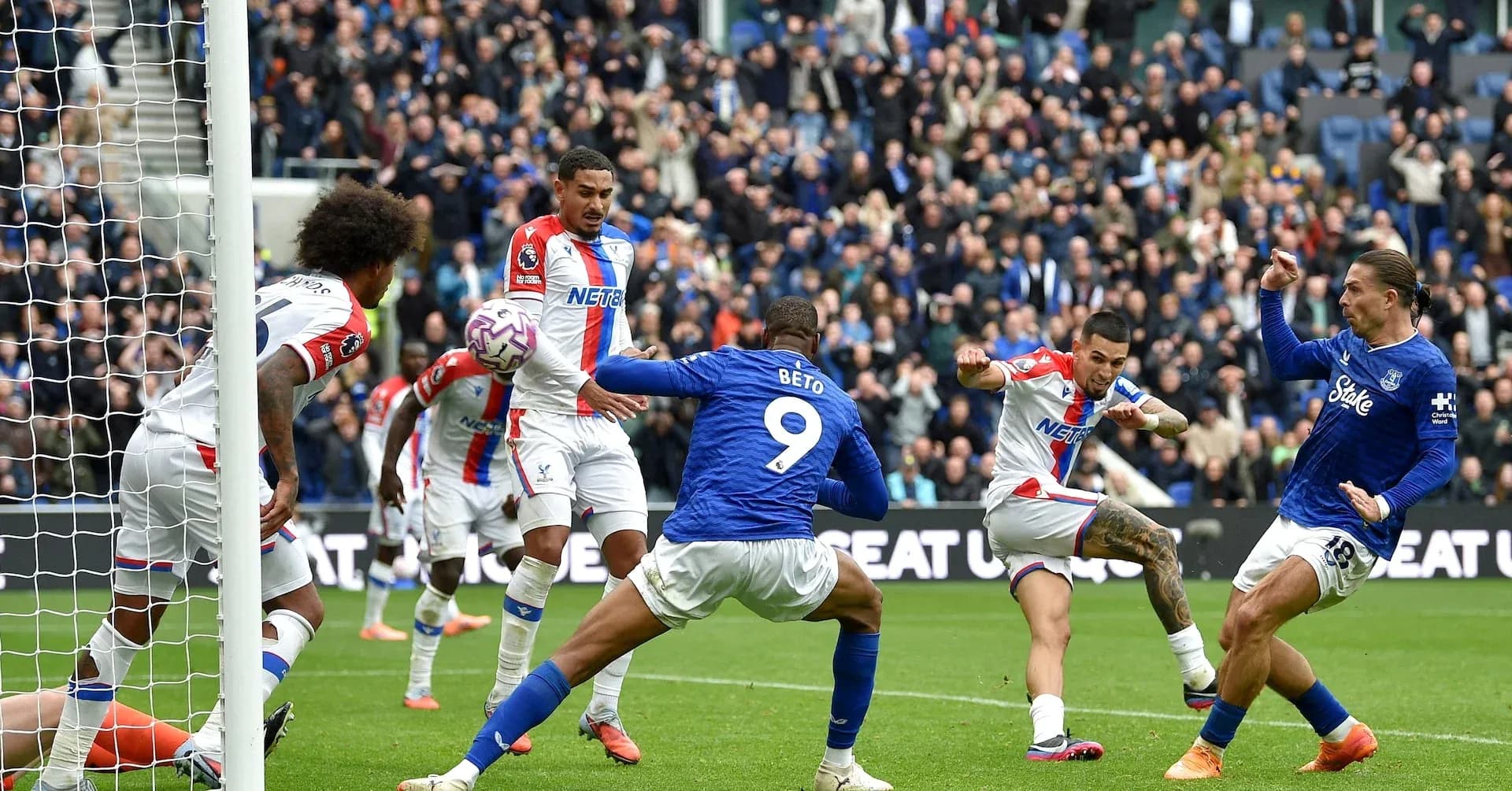
- On 2025-10-05 at Hill Dickinson Stadium (Premier League, Regular Season - 7), Everton beat Crystal Palace 2-1. Palace led 1-0 at half-time, but Everton turned it around to 2-1 by full-time.
- On 2025-02-15 at Selhurst Park (Premier League, Regular Season - 25), Everton again won 2-1. Everton were 1-0 up at half-time and managed the game to a 2-1 full-time result.
- On 2024-09-28 at Goodison Park (Premier League, Regular Season - 6), Everton beat Palace 2-1. Palace led 1-0 at half-time, but Everton came back to win 2-1.
- On 2024-02-19 at Goodison Park (Premier League, Regular Season - 25), the sides drew 1-1 after a 0-0 first half, underlining how often this fixture stays within a single goal either way.
- On 2024-01-17 in the FA Cup 3rd Round Replays at Goodison Park, Everton won 1-0, leading 1-0 at half-time and preserving that margin.
Tactically, these results show Everton repeatedly edging one-goal games, often overturning Palace leads or protecting narrow advantages. Palace have shown they can score first away and at home, but game management and in-box efficiency have favoured Everton in this matchup.
Global Season Picture
- League Phase Performance: In the league phase, Crystal Palace’s 15th place comes from 11 wins, 10 draws and 13 losses in 34 matches, with 36 goals for and 42 against. At Selhurst Park they have 4 wins, 8 draws and 5 losses, scoring 16 and conceding 19. Everton’s 10th place is built on 13 wins, 9 draws and 13 losses from 35 games, with 44 goals scored and 44 conceded; away from home they have 7 wins, 4 draws and 6 losses, with 19 goals for and 20 against.
- All-Competition Metrics: Across all phases of the competition, Palace average 1.1 goals scored and 1.2 conceded per match (36 for, 42 against over 34 games), with 12 clean sheets and 11 matches where they failed to score, reflecting a conservative, low-margin profile. They have used a back-three base almost exclusively (3-4-2-1 in 30 games, 3-4-3 in 4), suggesting a wing-back structure focused on stability rather than volume of chances. Their card distribution is concentrated around the 31-60 minute window (31-45: 14 yellows; 46-60: 13), hinting at rising aggression as games settle. Everton, across all phases, mirror their league phase output almost exactly: 1.3 goals scored and 1.3 conceded per match (44 for, 44 against over 35 games), with 11 clean sheets and 9 games without scoring. Their main structure is 4-2-3-1 (21 matches), pointing to a balanced double-pivot with a three-man band behind the striker, and their yellow cards spike late (76-90: 15 yellows), consistent with a team that often defends leads or chases games aggressively in the final phase.
- Form Trajectory: In the league phase, Palace’s recent form string is “LLDWD”: two straight losses, then a draw, a win, and another draw. That pattern indicates a slide from relative stability to a mini-dip, with points being picked up but momentum fragile. Everton’s league phase form is “DLLDW”: a draw followed by two losses, then a win and a draw. Both teams come in without a sustained winning streak; Everton’s slightly better recent return (four points from the last three) sits on top of a broader season marked by short, two-game streaks rather than long runs, as reflected in their biggest streaks (wins: 2, draws: 2, losses: 2 across all phases).
Tactical Efficiency
Across all phases of the competition, Crystal Palace’s output (1.1 goals for, 1.2 against per game) points to a risk-averse, medium-block approach where their back-three structure is designed to keep matches tight rather than to push xG aggressively. The fact they have failed to score in 11 of 34 games but still collected 12 clean sheets underlines a side that lives on small margins and relies on game-state control once ahead.
Everton’s 1.3 goals for and 1.3 against per match across all phases show a more open, trade-heavy profile. Their 4-2-3-1 base allows them to generate a steady, if not explosive, attacking threat while accepting that they will concede chances. The balance between 11 clean sheets and 9 games without scoring suggests streaky attacking efficiency: when their front four click, they can win to nil, but they can also get stuck against compact blocks.
Without explicit numeric attack/defense indices from the comparison block, the relative efficiency can still be inferred: Everton’s slightly higher scoring rate (1.3 vs 1.1) on a similar defensive concession (1.3 vs 1.2) implies a marginally stronger attacking index and a near-par defensive index compared to Palace across all phases. That aligns with the head-to-head pattern where Everton repeatedly convert tight games into wins, while Palace’s structure keeps them competitive but does not consistently tilt xG or scorelines in their favour.
The Verdict: Seasonal Impact
This fixture is unlikely to decide the title but carries real weight for both clubs’ seasonal narratives. For Crystal Palace, a home win would likely push them towards the mid-40s in points in the league phase, effectively closing the door on any late relegation scenario and validating their conservative, back-three approach as sufficient for safety in 2026. A draw would maintain a buffer but prolong anxiety into the final rounds, especially given their recent “LLDWD” trend, while a defeat would extend their losing run and could drag them closer to the bottom pack if results elsewhere turn against them.
For Everton, three points away would strengthen their grip on a top-half finish and keep them within touching distance of the teams above, preserving an outside chance of climbing into the European discussion if the final weeks break their way. Given their current 10th place and neutral goal difference in the league phase, a win at Selhurst Park would be a signature result supporting the idea that their 4-2-3-1 structure and marginally stronger attack can travel. Dropped points, especially a loss, would not plunge them into relegation trouble but would likely cap their ceiling around mid-table and reinforce the story of a side that plays a lot of tight games without consistently converting them into upward mobility.
In summary, this is a high-leverage mid-table match: safety consolidation for Palace versus top-half consolidation and outside European positioning for Everton, with the head-to-head pattern and all-phase attacking edge tilting the pre-match balance slightly towards the visitors, but within the narrow margins that have defined this fixture over the last two years.