.svg&w=384&q=75 "naujapitch logo")
Chelsea's Season of Chaos: A Summer of Consequence
Chelsea stagger towards the end of another fractured season clinging to two very different images of themselves.
On one side, a club one game from lifting the FA Cup at Wembley, caretaker Callum McFarlane trying to steady the wheel long enough to upset Manchester City on Saturday. On the other, a ninth‑placed Premier League side, lurching from one misstep to the next, still searching for a manager, a plan and a way back to the elite.
Both versions are real. Both say plenty about where Chelsea are – and where they think they might be going.
A season of chaos, a summer of consequence
The numbers are brutal. Ninth in the table after a disastrous run of form, with Champions League qualification hanging by the thinnest of threads. To sneak in through the back door, Chelsea must somehow climb to sixth with two matches left, then sit back and hope Aston Villa finish fifth and beat Freiburg in the Europa League final.
That is not a strategy. It is wishful thinking.
The owners have already burned through two permanent managers this season, including the ill‑fated move to pluck Liam Rosenior from Strasbourg. That gamble failed. The next appointment cannot.
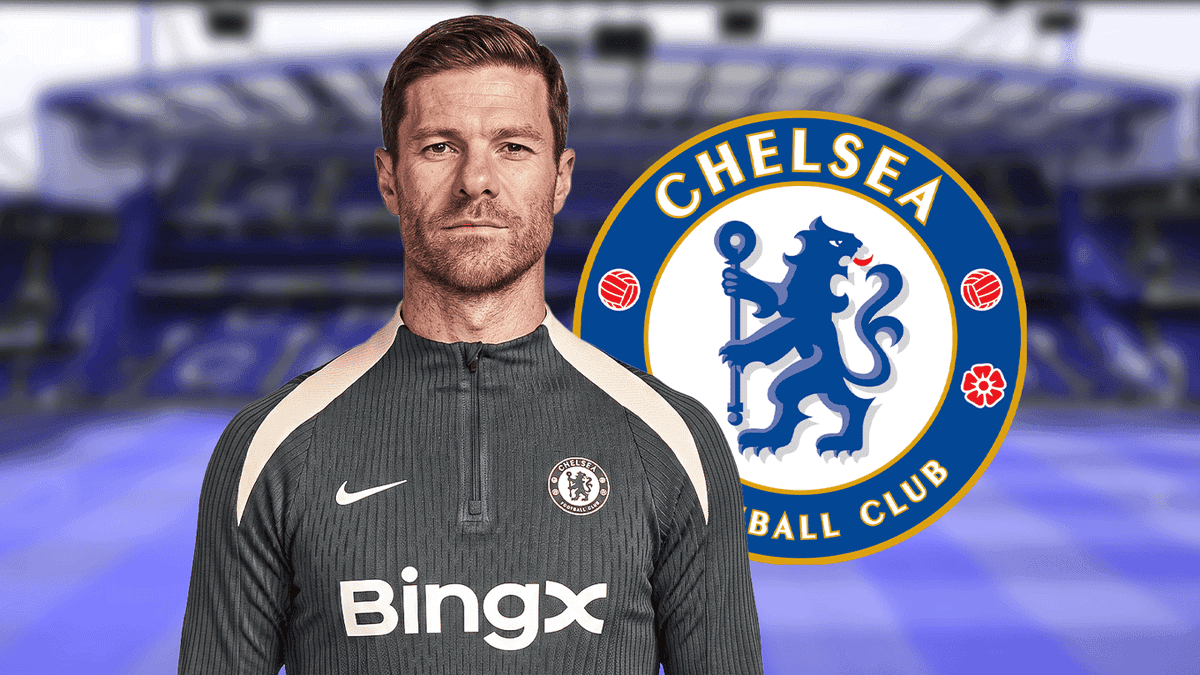
So attention turns to Xabi Alonso. The former Bayer Leverkusen and Real Madrid coach is high on the list of targets, admired for the clarity of his ideas and the edge to his football. If he walks into Cobham, he will inherit a bloated, expensive squad – but also the raw material for something coherent.
Alonso has built his reputation on variations of a fluid 3-4-2-1, a shape that morphs with and without the ball, that demands intelligence as much as intensity. Drop that framework on this Chelsea group and a very different team starts to take shape.
On paper, at least, it looks fun.
Goalkeeper: a new number one
The goalkeeping situation has been a running sore. Robert Sanchez arrived from Brighton & Hove Albion at a significant cost but has never fully convinced as the long-term answer. A new goalkeeper sits near the top of Chelsea’s summer to-do list.
One name keeps resurfacing: Gregor Kobel.
Borussia Dortmund’s 28-year-old No.1 has the presence, shot-stopping and distribution to anchor a side that wants to build from the back and play on the front foot. The Swiss international is no stranger to Alonso either, with the Spaniard having spent his entire playing career in Germany. That familiarity would matter in a dressing room that has lacked clear, authoritative voices in key positions.
If Chelsea want to reset, they need reliability behind everything. Kobel would give them that.
Defence: a back three with bite
A shift to a back three would force some uncomfortable conversations. Marc Cucurella has battled to cement his place and, at left-back, has been one of the few constants in a chaotic season. Malo Gusto has shown enough to suggest he belongs at this level. But in a 3-4-2-1, both risk being caught between roles – not quite centre-backs, not quite wing-backs of the required profile.
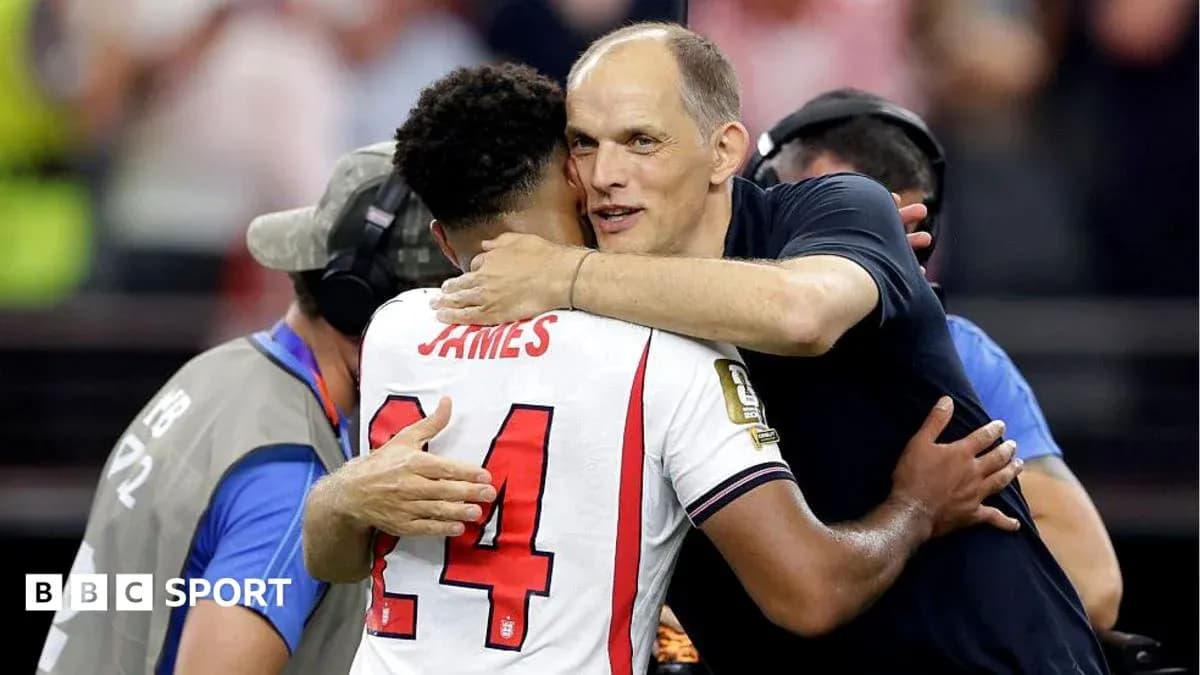
Reece James is a different story. When fit, he is a proven force higher up the pitch, a natural fit for the right flank in a system that lets him attack without constantly sprinting back into a flat back four. Cucurella as a left winger, though, does not solve much for a side already short of incision.
So the centre-backs become crucial.
If Trevoh Chalobah is finally ready to take the step from promising squad player to genuine leader of the back line, and if Levi Colwill can stay fit long enough to build rhythm, Chelsea suddenly have a homegrown core with balance: one right-sided, one left-footed, both comfortable stepping into midfield.
Add a marquee signing and the picture sharpens.
Bournemouth’s Marcos Senesi has been linked and with good reason. Aggressive, composed on the ball and dominant in duels, he has quietly built a reputation as one of the Premier League’s most reliable defenders. If the Cherries reach the Champions League, persuading him to leave the south coast will not be easy. But this is the calibre of defender Chelsea must target if they are serious about turning a soft underbelly into a hardened spine.
Chalobah, Colwill, Senesi. On paper, that is a back three with bite.
Midfield: Caicedo at the core, questions around him
Midfield has been expensive, noisy and strangely incomplete.
Enzo Fernandez has become a lightning rod. Some supporters are ready to see him go, irritated by comments about where he might like to live in future. The remarks were probably innocent, but they landed badly – naïve, a little careless, and not for the first time from a player entrusted with the captain’s armband.
The one non-negotiable is Moises Caicedo. He is the fixed point around which everything else should revolve. His range, his tackling, his ability to patrol vast spaces make him the natural anchor for Alonso’s midfield, the player who frees others to create.
If James locks down the right flank as a wing-back, Pedro Neto’s erratic form and inconsistency push him towards the margins as well. That opens space for two new profiles: a partner for Caicedo in the engine room and a young, left-sided presence to balance the four across midfield.
Atletico Madrid’s Pablo Barrios fits the first brief. Technically sharp, tactically astute and fearless in possession, he looks tailor-made for a side that wants to control games rather than simply chase them. His release clause is sky-high, and any deal that does not trigger it would still cost a fortune. Chelsea know that. They also know that this is the going rate for midfielders who can dictate the rhythm at the highest level.
On the left, Said El Mala has emerged as one of the Bundesliga’s more intriguing teenagers. The Cologne youngster has enjoyed a breakthrough season and has already drawn Chelsea’s gaze. He would not arrive as an immediate superstar, but as a project – the kind of player who could grow into the role while learning the demands of a top Premier League club.
Anthony Gordon has also been mentioned. Direct, fiery, Premier League-hardened. His signing would be very Chelsea: expensive, headline-grabbing, and instantly polarising.
Caicedo, Barrios, James, El Mala. Suddenly, the midfield looks less like a collection of names and more like a unit with purpose.
Attack: Palmer at the heart, Pedro leading the line
The future of Chelsea’s attack has a name: Estevao. The Brazilian is already being spoken about as a generational talent, but he is young, currently injured and cannot be asked to carry a broken attack on his own shoulders.
That means business this summer.
Up front, Joao Pedro has been one of the few bright spots in a bleak campaign. Fifteen Premier League goals in this side is no small achievement. He offers movement, link play and a coolness in front of goal that too many of his team-mates have lacked. Chelsea may still move for another striker, but whoever arrives will need something special to dislodge the current top scorer.
Behind him, Cole Palmer has become the club’s creative heartbeat. He has already been linked with a move away, an inevitable consequence of his rapid rise. But if Chelsea are serious about building something lasting, they cannot afford to let him go. He is the player around whom a new attacking structure should be built, one of the few in the squad who consistently makes things happen when the game tightens.
In a 3-4-2-1, Palmer operates in his ideal habitat: between the lines, facing goal, free to drift and combine. Beside him, a fit, confident Morgan Rogers offers power, direct running and the ability to break lines with or without the ball. That blend of guile and thrust would give Pedro the service he needs and give Alonso the attacking rotations his system thrives on.
Palmer, Rogers, Pedro. With Estevao waiting in the wings.
A dream shape – and a hard reality
Laid out on a tactics board, this imagined Chelsea under Alonso looks coherent, modern, dangerous:
Kobel behind a back three of Chalobah, Senesi and Colwill. James and El Mala stretching the pitch as wing-backs. Caicedo and Barrios knitting everything together in midfield. Palmer and Rogers buzzing around Pedro, with Estevao as the next wave.
It is a dream team for now, a sketch rather than a guarantee. Transfers are messy. Release clauses bite. Players choose Champions League football elsewhere. Some of these names will never pull on a Chelsea shirt.
But the bigger point is unavoidable.
After another season of upheaval, Chelsea need more than a new manager. They need a clear idea of what they want to be – and the courage to recruit for it, stick to it and live with the consequences.
Wembley offers a shot at silverware and a welcome distraction. The real judgment, though, will come in what follows: who they appoint, who they trust, and whether this club finally starts to look as sharp on the pitch as it does on the drawing board.