.svg&w=384&q=75 "naujapitch logo")
Canada Achieves Landmark 6-0 Victory Over Qatar
Canada came for a statement. It left with a landmark.
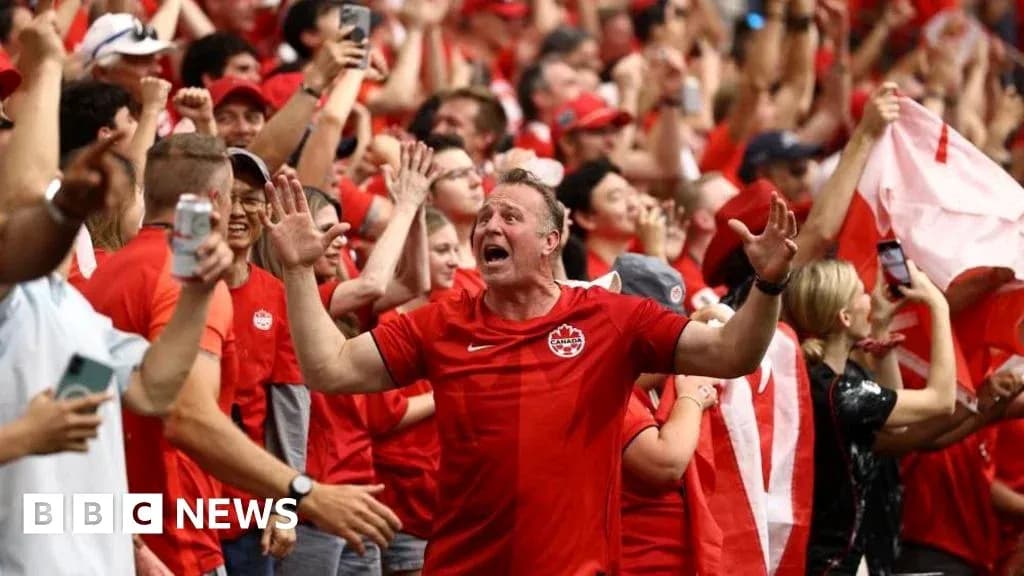
What began as a cautious hope for a tidy opening win over Qatar exploded into a 6-0 demolition in Vancouver on Thursday night, a result that delivered Canada its first-ever men’s World Cup victory and a jolt of recognition that this is no longer a country that just dabbles in football.
It felt like a line in the sand. A hockey nation, loudly, defiantly, sounding like a soccer nation.
A city painted red
Hours before kick-off, Vancouver’s streets told the story. The “last mile” to the stadium became a red river: thousands of fans marching, wrapped in flags and scarves, smoke flares staining the air crimson. By the time they poured through the turnstiles, 52,000 people had packed the arena, almost all in red and white, almost all ready to believe.
Across the country, the same scene played out on a smaller scale. Granville Street in downtown Vancouver. Tucked-away bars in Toronto. Living rooms in between. The sense that something bigger than a group-stage opener might be brewing.
In one of those Toronto bars sat Dave Di Cola, a long-time believer in Canadian football, still wary enough to talk about “reserved optimism” before kick-off. He knew the sport too well to assume anything.
Ninety minutes later, caution felt outdated.
Goals, red cards, and a rout
The game tilted Canada’s way early and never came back. Les Rouges swarmed Qatar, pressed high, and cut through a fragile back line with a ruthlessness that has rarely been associated with the maple leaf on a football shirt.
Three goals before half-time set the tone. The scoreline ballooned after the break, helped by Qatar going down to nine men after two dismissals. By the end, it was a blowout, the sort of score that looks almost unreal on a World Cup graphic next to the word “Canada”.
Jonathan David stood at the centre of it all. The forward helped himself to three of the six, a clinical hat-trick that underlined his status as the face of this new era. In the stands, one fan captured the moment perfectly: an Edmonton Oilers Connor McDavid jersey, the “Mc” taped over and replaced with a hand-drawn “J” to read “Javid” in honour of Canada’s hat-trick hero. A small, improvised joke, but a telling one — hockey culture literally rewritten for football.
For supporters like Di Cola, this was more than a scoreline.
“Canada soccer has always been kind of a joke. It’s always secondary,” he said. On Thursday night, watching the country rally around the team, he admitted it “nearly brought a tear” to his eye.
Joy, shock, and a broken leg
The party, though, came with a brutal twist.
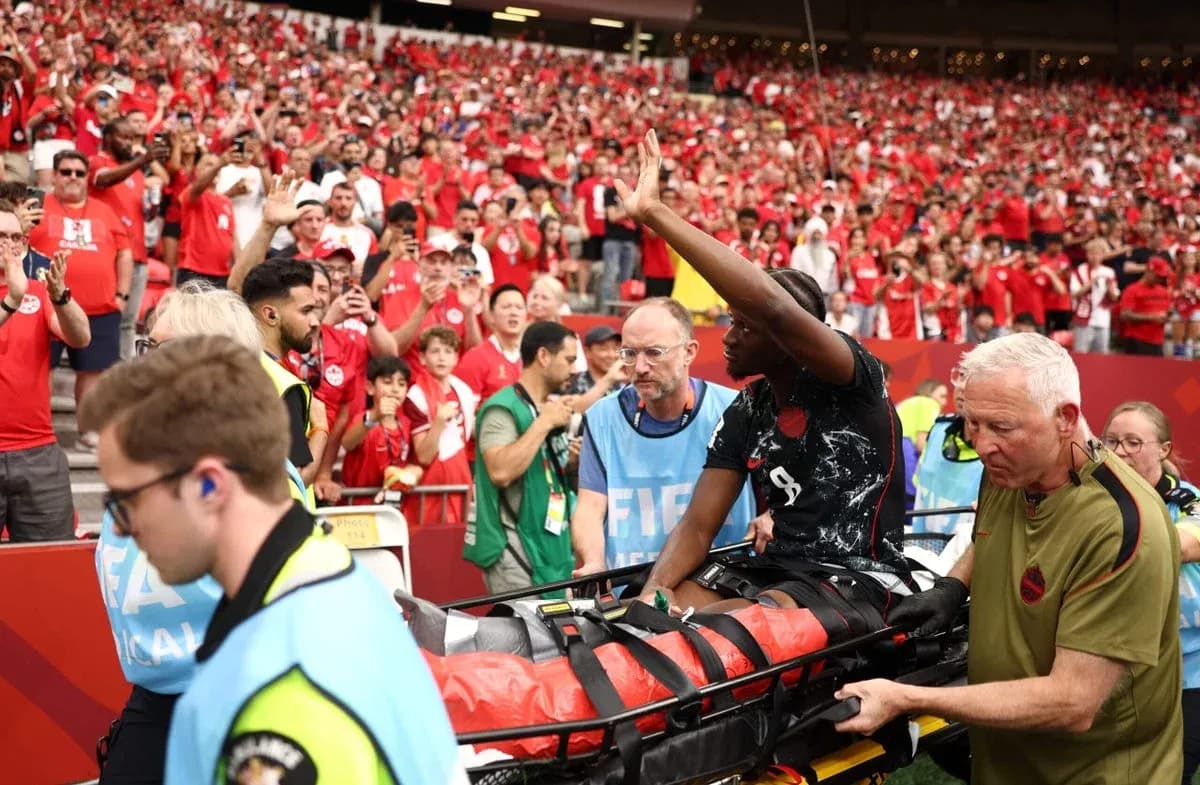
Midfielder Ismaël Koné, one of the emotional and tactical pillars of Jesse Marsch’s side, saw his tournament end in an instant with a leg break that silenced the stadium. The roar that had accompanied every Canadian attack turned into a hush as medics rushed on and teammates formed a protective ring around him.
Koné had been exactly what Marsch later called him: “a big part of the heart of our team.” Losing him is more than a tactical headache; it rips out a piece of the group’s identity.
The response on the pitch told its own story. Nathan Saliba, sent on in Koné’s place, quickly lashed in Canada’s fourth goal. He didn’t sprint to the corner flag. He grabbed Koné’s jersey and held it aloft, a simple tribute that cut through the noise and reminded everyone that this night carried a cost.
From his hospital bed, after surgery, Koné posted on Instagram the next morning: “What you guys did yesterday will stay with me forever.” The team had played on without him, but very much for him.
A prime minister’s pep talk
Inside the dressing room, the magnitude of the moment drew in more than just football figures. Prime Minister Mark Carney addressed the squad after the match, praising the way they had handled the shock of Koné’s injury as much as the six goals.
He told them they had shown “a level of character that some people never achieve,” and pointed out that they had done it with “the entire country and a good part of the world” watching — or, at the very least, catching the highlights the next day.
For a team still fighting for global respect, that kind of endorsement matters. Not as a political soundbite, but as another sign that this team now sits alongside the country’s most cherished sporting stories, not outside them.
A new chapter in a crowded history
Canada’s sporting scrapbook is already crammed with iconic images. Sidney Crosby’s golden goal in Vancouver in 2010. The Toronto Raptors toppling the Golden State Warriors in 2019. The women’s national team climbing to the top of the podium at the Tokyo Olympics in 2020.
Thursday night does not yet live at that altitude. Di Cola is the first to say it. He calls this achievement “much smaller” than those towering moments and insists the men’s team still has “a long way to go.”
He’s right. One emphatic win over a weakened Qatar side does not rewrite decades of underachievement. It does not guarantee a deep run. It does not instantly place this group alongside Olympic and NBA champions.
But it does something else. It shifts the conversation.
For once, Canada’s men did not just qualify, compete, and bow out with dignity. They dominated. They entertained. They gave their fans a night that felt like it belonged on the same shelf as the country’s greatest sporting memories, even if it slides in on a lower rung.
As the final whistle blew, the noise in Vancouver sounded less like a novelty and more like a beginning.
Next up is Switzerland, a far sterner test, and a chance to prove that this was not a one-off eruption but the early rumblings of a genuine contender. The question now is simple: was Qatar the peak of a brief high, or the first marker on a climb Canada has been waiting decades to start?