.svg&w=384&q=75 "naujapitch logo")
Brighton Dominates Wolves in 3–0 Victory at Amex Stadium
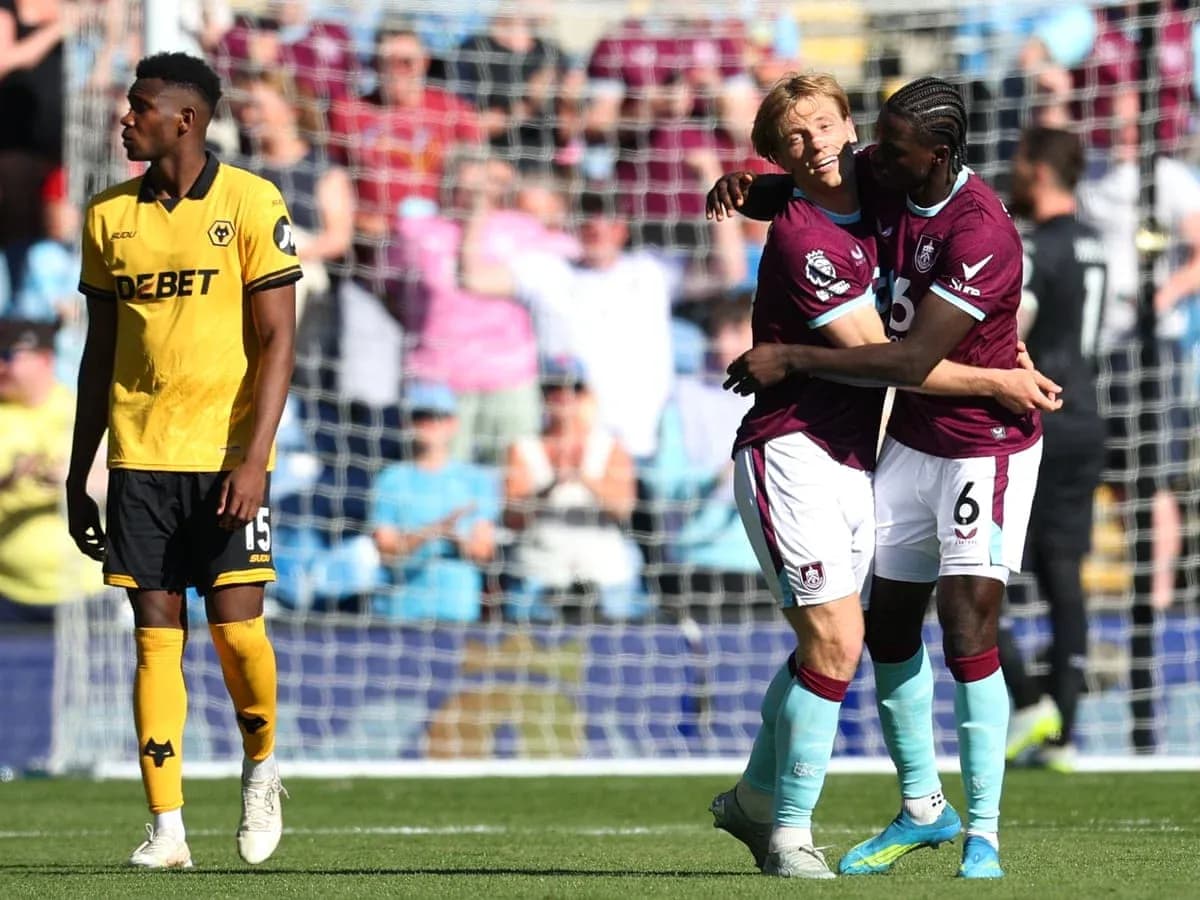
Brighton’s 3–0 win over Wolves at the Amex Stadium was a controlled dismantling built on early structure and territorial dominance rather than pure shot volume. In this Premier League Round 36 fixture, Fabian Hurzeler’s side established a 2–0 lead inside five minutes and then used their possession game to suffocate any Wolves response. With 72% of the ball, superior passing accuracy, and a compact rest-defence, Brighton translated a 1.62 xG profile into three goals while allowing Wolves just 0.49 xG and a single shot on target.
Scoring Pattern
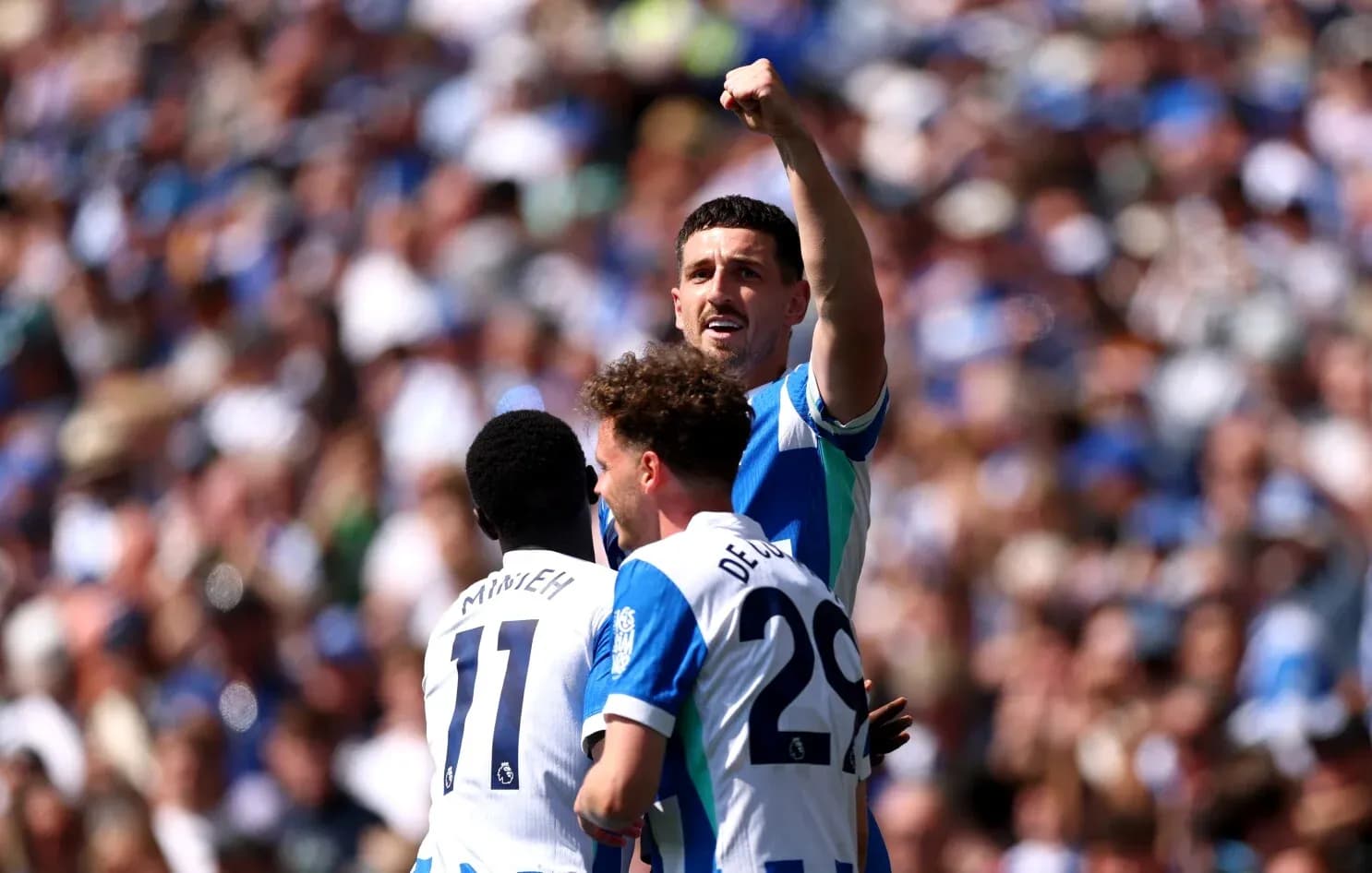
The scoring pattern shaped the tactical story. At 1', Jack Hinshelwood arrived from midfield to finish a move created down the left, assisted by Maxim De Cuyper. At 5', Lewis Dunk doubled the lead, again from a De Cuyper delivery, underlining Brighton’s early emphasis on wide progression and set or semi-set routines involving the left-back’s delivery and the centre-back’s advanced positioning. From that point, Brighton could dictate tempo, cycling the ball through Pascal Groß and Carlos Baleba to pin Wolves deep and keep their front three away from transition opportunities. The halftime score of 2–0 reflected both efficiency and control: Brighton had already built a structure that made Wolves chase without offering them space to counter.
Disciplinary Log
The disciplinary log was light but telling in terms of duels and where the game was played. Card verification from the events array yields: Brighton: 1, Wolves: 2, Total: 3. The exact bookings were:
- 24' Kaoru Mitoma (Brighton) — Foul
- 49' Hwang Hee-chan (Wolves) — Foul
- 68' André (Wolves) — Foul
Mitoma’s yellow on 24' came with Brighton already two goals up, a reminder that their aggressive counter-press in wide areas occasionally overstepped. Wolves’ two yellows, both for “Foul”, underlined how often they were late to challenges as they tried to disrupt Brighton’s rhythm, particularly when the home side played through midfield.
Second Half Adjustments
In the second half, Hurzeler’s game management and structure were evident. Wolves made the first adjustment at 46', with David Møller Wolfe (IN) came on for Hugo Bueno (OUT), a like-for-like change on the flank intended to add more athleticism in wider defensive zones. It did little to change the territorial balance. Brighton continued to build with Bart Verbruggen acting as a calm distributor, splitting centre-backs Dunk and Jan Paul van Hecke, and using Baleba as a vertical outlet.
On 49', Hwang Hee-chan’s yellow card for “Foul” reflected Wolves’ frustration in trying to press out of their low and mid blocks. Brighton’s 578 total passes at 86% accuracy repeatedly pulled Wolves’ first line out of shape, especially as Hinshelwood and Groß rotated between the half-spaces and deeper pockets. The lack of a defined Wolves press trigger allowed Brighton to progress methodically.
Hurzeler’s first substitution on 58' was structurally significant: Joël Veltman (IN) came on for Kaoru Mitoma (OUT). This tilted Brighton slightly more conservative on the right, with Veltman offering defensive stability and underlaps rather than constant high dribbling. It suggested Hurzeler was already thinking about protecting the lead and managing Mitoma’s card risk while keeping the right flank secure against any late Wolves counters.
Rob Edwards responded with a double change on 67': Rodrigo Gomes (IN) came on for Pedro Lima (OUT) and Jean-Ricner Bellegarde (IN) came on for Mateus Mané (OUT). The intention was to inject more ball-carrying and creativity between the lines. Yet, almost immediately after, on 68', André’s yellow card for “Foul” again showed Wolves struggling to cope with Brighton’s midfield circulation and second-ball control.
Hurzeler’s 76' double change locked the game down and refreshed the press: Yasin Ayari (IN) came on for Carlos Baleba (OUT) and Georginio Rutter (IN) came on for Danny Welbeck (OUT). Ayari provided fresh legs in central zones, maintaining Brighton’s ability to close passing lanes and counter-press, while Rutter offered a more mobile outlet, stretching Wolves’ back line horizontally and vertically. This preserved Brighton’s capacity to threaten in transition even as they prioritized control.
Third Goal
The third goal on 86' was the tactical payoff of that balance: Yankuba Minteh struck to make it 3–0, capitalizing on Wolves’ stretched shape as they chased the game. Unlike the first two, this goal did not involve De Cuyper, reflecting Brighton’s ability to create from multiple channels once Wolves’ structure had been worn down.
Late Substitutions
Late substitutions further underlined game management and squad usage. On 88', Charalampos Kostoulas (IN) came on for Jack Hinshelwood (OUT) and Solly March (IN) came on for Maxim De Cuyper (OUT), preserving energy for key starters and reinforcing wide work-rate. Wolves’ final changes at 89' — Angel Gomes (IN) came on for Hwang Hee-chan (OUT) and Tolu Arokodare (IN) came on for João Gomes (OUT) — were more about minutes and fresh legs than any meaningful tactical shift; by then Brighton’s block was set and compact.
Statistical Overview
Statistically, Brighton’s dominance was rooted in territory and ball control rather than sheer shot volume. Their 14 total shots to Wolves’ 5, and 6–1 advantage in shots on goal, aligned with the 1.62 vs 0.49 xG split. Crucially, Brighton translated their possession (72% vs 28%) into high-quality chances inside the box (10 shots inside the area) while limiting Wolves to 4 efforts in the box, most of which were low-quality or well-contested.
Defensively, Brighton’s structure was efficient: Verbruggen needed to make only 1 save, reflecting how well Dunk and van Hecke controlled depth and how effectively Baleba and later Ayari screened central spaces. Wolves’ Daniel Bentley, with 3 saves and 0.25 goals prevented, kept the scoreline from becoming heavier, but he could not offset the constant exposure created by Wolves’ inability to keep the ball (225 passes at 68% accuracy).
In terms of overall form, Brighton looked like a side comfortable in their positional play identity, translating high possession and passing accuracy into territorial dominance and controlled risk. Defensively, their index in this match was strong: low shots conceded, minimal saves required, and disciplined rest-defence that neutralized Wolves’ forwards. Wolves, by contrast, showed limited offensive structure and relied heavily on individual runs, which Brighton’s compact, well-coached block handled with relative ease.