.svg&w=384&q=75 "naujapitch logo")
Brighton vs Wolves: Premier League Clash with Relegation Stakes
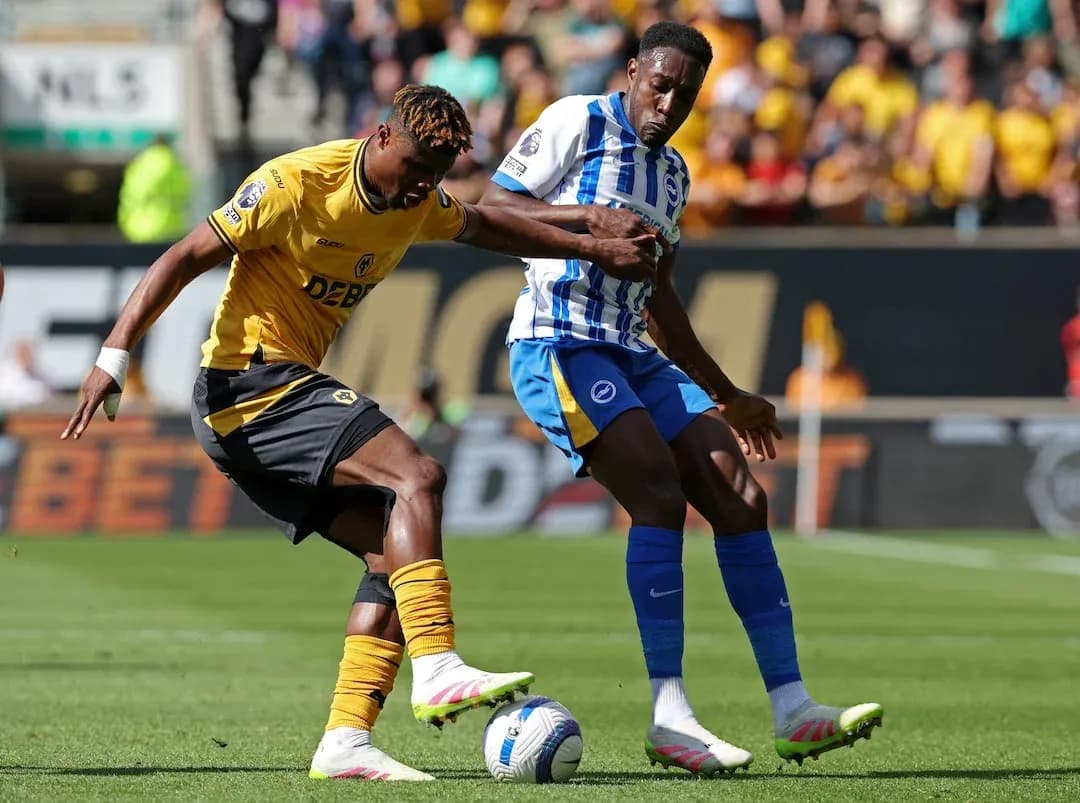
Matchday 36 at the Amex Stadium sets up a high-stakes league clash with very different pressures: Brighton, 8th in the Premier League in 2025 with 50 points and a +7 goal difference in the league phase (49 scored, 42 conceded), are pushing to secure a top-half and potential European-position platform for 2026, while bottom‑placed Wolves arrive in deep trouble, 20th with 18 points and a -38 goal difference in the league phase (25 scored, 63 conceded), locked in the relegation zone and running out of road to avoid the drop.
Head-to-Head Tactical Summary
The recent head-to-head pattern is tight but leans towards Brighton’s control in key moments. On 5 October 2025 at Molineux Stadium in the Premier League, Wolves drew 1-1 with Brighton, having led 1-0 at half-time before being pegged back. Earlier in the same competition on 10 May 2025, also at Molineux in Regular Season - 36, Brighton won 2-0, having already been 1-0 ahead at half-time. At the Amex (listed as American Express Stadium) on 26 October 2024 in Premier League Regular Season - 9, Brighton and Wolves played out a 2-2 draw, with Brighton leading 1-0 at half-time before Wolves found a way back.
In cups, Brighton have edged the fine margins at home while Wolves have landed a key blow at home. On 18 September 2024 in the League Cup 3rd Round at the American Express Stadium, Brighton beat Wolves 3-2, leading 2-1 at half-time in a more open, transitional game. In contrast, on 28 February 2024 in the FA Cup 5th Round at Molineux, Wolves won 1-0, having led 1-0 at half-time and then managing the game. Overall, across these five recent meetings, Brighton have two wins (one league, one cup), Wolves have one cup win, and there have been two draws, with both sides repeatedly finding ways to score.
Global Season Picture
- League Phase Performance: In the league phase, Brighton’s profile is that of a solid upper‑mid‑table side: 8th with 50 points from 35 matches, 13 wins, 11 draws, 11 losses, and a positive goal return (49 goals for, 42 against). At home they have been relatively strong (8 wins, 6 draws, 3 losses, 27 scored, 17 conceded), underlining the Amex as a productive base. Wolves, by contrast, have been consistently outgunned: 20th with 18 points from 35 games, only 3 wins, 9 draws, and 23 losses, with a very low attacking output and fragile defence (25 goals for, 63 against). Away from home they have yet to win in the league phase (0 wins, 5 draws, 12 losses, 7 scored, 30 conceded), which makes this trip to Brighton particularly daunting.
- All-Competition Metrics: Across all phases of the competition, Brighton’s attacking structure has been relatively efficient: 49 goals in 35 matches, averaging 1.4 goals per game overall and 1.6 at home, with 9 clean sheets and only 7 games without scoring. Their main tactical base has been a 4-2-3-1 (used 30 times), supporting a controlled, possession‑oriented style, and their disciplinary profile shows a concentration of yellow cards between minutes 46-60 (24 yellows, 28.24% of their total), which suggests intensity and tactical fouling immediately after the restart. Wolves, across all phases, are struggling badly in both boxes: 25 goals in 35 games (0.7 per game, only 0.4 away) and 63 conceded (1.8 per game home and away), with 18 matches where they have failed to score and just 4 clean sheets. They have rotated through multiple back‑three and back‑four systems (notably 3-4-2-1 and 3-5-2), but the defensive issues persist, and their card profile is similarly spike‑heavy after half-time (21 yellow cards between 46-60, 28.00%), reflecting reactive defending under pressure.
- Form Trajectory: In the league phase, Brighton’s recent form string of LWDWW indicates a positive late‑season trend: three wins in their last five with only one defeat, pointing to a side finishing strongly and stabilising performance levels. Wolves’ form string of DLLLD captures a team in freefall: no wins in the last five, three defeats and two draws, and no sustained momentum. This divergence in trajectory amplifies the expectation that Brighton can impose their structure, while Wolves arrive in survival mode, hoping for disruption rather than control.
Tactical Efficiency
Across all phases of the competition, Brighton’s attacking efficiency is underpinned by consistent goal production (1.4 goals per game overall, 1.6 at home) and relatively limited failures to score (7 in 35), which aligns with an above‑average attacking index profile. Their use of a 4-2-3-1 in 30 matches supports a clear offensive framework: double pivot for rest defence, three advanced midfielders to create high‑value chances, and enough structure to sustain pressure, particularly at home where they also concede just 1.0 goal per game. This balance points to a side that converts possession into a steady stream of chances and goals rather than relying on volatility.
Wolves’ tactical efficiency is far lower. Across all phases, they average only 0.7 goals per game and fail to score in over half their fixtures (18 out of 35), while conceding 1.8 goals per match. The combination of a low attacking output and a consistently breached defence signals a weak overall index: their systems—whether 3-4-2-1, 3-5-2 or 3-4-3—have not translated into either shot volume or shot quality sufficient to change results. Even their best attacking outings top out at 3 goals at home and 2 away, while their heaviest defeats reach 4-0 away, underlining a vulnerability when they are forced to chase games.
When set against these season averages, the comparative efficiency gap is stark: Brighton’s structured, moderately productive attack and relatively controlled defence contrast sharply with Wolves’ blunt attack and porous back line. Any model based on these indices would skew heavily towards Brighton at home, with Wolves’ main hope lying in compressing space, slowing tempo, and targeting set‑pieces rather than open‑play dominance.
The Verdict: Seasonal Impact
For Brighton, a home win here would consolidate a strong league phase and keep them firmly in the conversation for a higher top‑half finish and potential European qualification routes, either in 2026 or via positioning if additional spots open. Moving beyond 50 points with a positive goal difference already in place (49 for, 42 against in the league phase) would reinforce the narrative of upward stability and justify a continued investment in their current tactical model and squad core.
For Wolves, the seasonal impact is existential. Sitting 20th with 18 points and winless away in the league phase, anything less than a win at the Amex leaves them needing near‑perfect results elsewhere and significant help from other fixtures to have any realistic chance of avoiding relegation. A defeat would all but confirm a return to the Championship, shaping strategic decisions around contracts, wage bill, and squad rebuild for 2026. Even a draw, while marginally helpful, would likely be insufficient given their current points deficit and poor goal difference. In forward‑looking terms, this match functions as a de facto survival checkpoint for Wolves and a platform‑building opportunity for Brighton to lock in their status as a stable upper‑tier Premier League side heading into 2026.