.svg&w=384&q=75 "naujapitch logo")
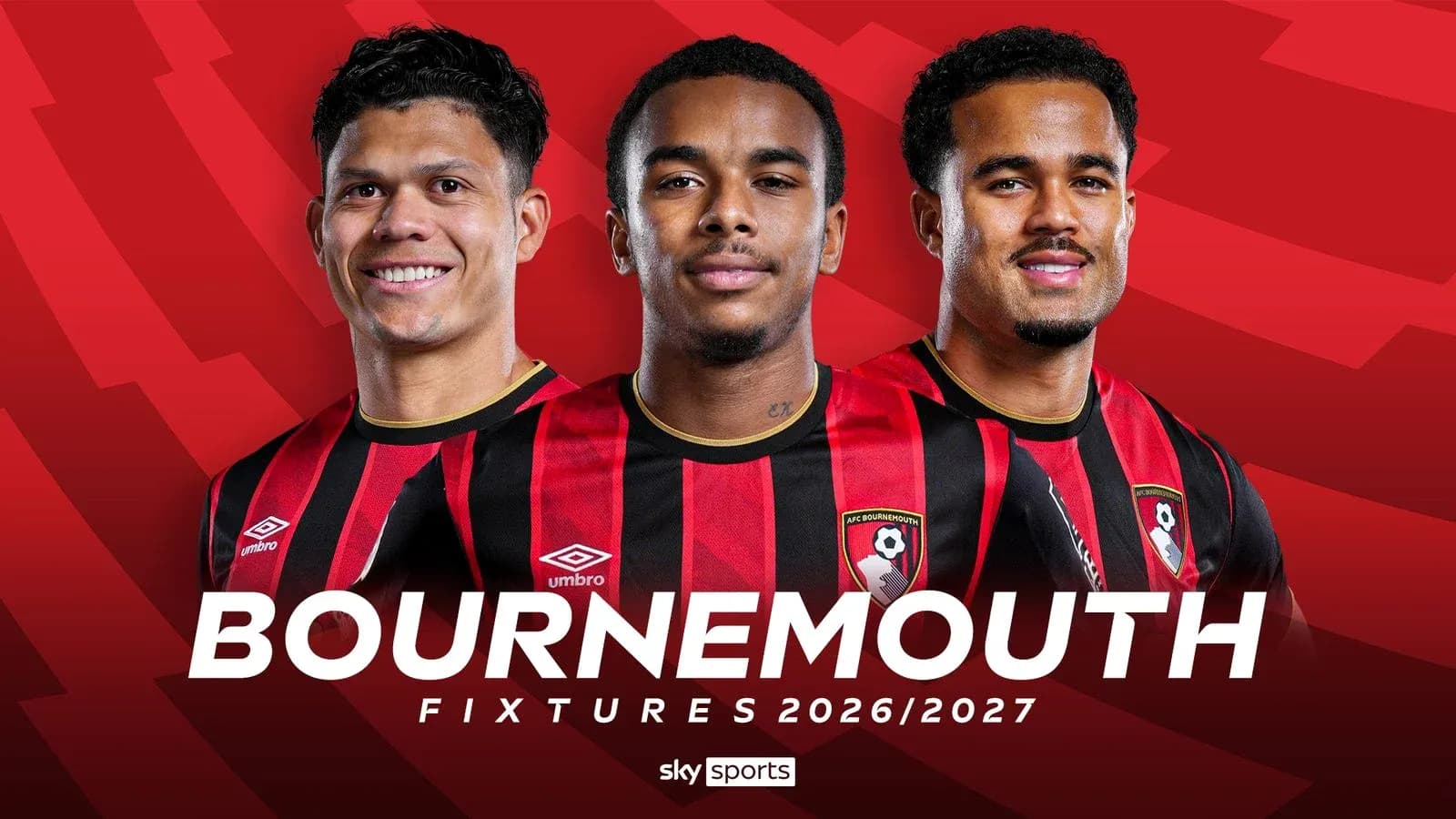
Bournemouth's Premier League Challenges and Europa League Debut
Bournemouth’s reward for last season’s surge into Europe is as clear as it is unforgiving: a Premier League curtain-raiser away to champions Man City, under the lights and the cameras, on Sunday August 23.
New head coach Marco Rose walks straight into the deep end. No easing in, no gentle acclimatisation. The Cherries, fresh from a sixth-place finish and Europa League qualification, start the new era at the Etihad, live on Sky Sports, with the champions waiting.
Rose era begins in the spotlight
From there, the schedule barely lets up. Rose’s first home game comes six days later, on August 29, when Everton visit the Vitality Stadium. It’s the first chance for the Bournemouth crowd to see how the former RB Leipzig and Borussia Dortmund boss reshapes a side that punched above its weight last term.
Then comes a trip to Newcastle on September 5, another stern early examination in one of the league’s most hostile arenas.
Those opening weeks set the tone: no soft landings, no time to settle. A new manager, a European campaign, and a domestic calendar that bites from the start.
First taste of Europe, and an old friend returns
Bournemouth’s first-ever Europa League campaign begins on the week of September 16/17, but the build-up is anything but quiet. Before Matchday 1, Brentford come to the south coast on September 12, bringing Andoni Iraola back to the Vitality for the first time since his departure.
The narrative writes itself. The coach who took Bournemouth to Europe returns with his new club, facing the man chosen to take his work on. There’s no time for sentiment, though. Four days later, Bournemouth step into Europe for the first time in their history.
The schedule then snaps straight back to domestic intensity. Liverpool arrive on September 19, another heavyweight test, this time on the south coast. By the end of that month, Rose will have faced Man City away and Liverpool at home, with European football layered in between. Any illusions about a gentle bedding-in period vanish.
Autumn grind: big hitters and long miles
October and November bring a different sort of challenge: depth, resilience, and travel.
Bournemouth head to Chelsea on October 10, then host Sunderland a week later on October 17. A trip to Man Utd on October 24 and a home clash with Leeds on October 31 complete a month that swings from old giants to ambitious climbers.
November doesn’t relent. Ipswich away on November 7, Nottingham Forest at home on November 21, and Fulham away on November 28 form a run that will test Bournemouth’s consistency as much as their quality. These are the fixtures that often define whether a European side can maintain league standards while juggling midweek commitments.
Festive fixture pile-up
December is chaos. Six league fixtures, squeezed into 28 days, with the Europa League league phase still in play until late January.
Brighton visit the Vitality on December 2 under the floodlights. Hull follow on December 5, then comes a daunting trip to Arsenal on December 12. Coventry at home on December 19 offers no guarantee of respite.
Then Boxing Day. Tottenham away. A classic festive heavyweight clash in north London, with Crystal Palace at Selhurst Park four days later on December 30 to close out the year.
The strain continues into the first week of 2027. Aston Villa come to Bournemouth on Saturday January 2, before a midweek journey back to Brighton on January 6. Six games in December, two more in the opening six days of January: Rose’s squad depth will be stretched to its limits.
Winter slog and European crossroads
January steadies, but only slightly. Ipswich at home on January 16, Forest away on January 23, and Fulham at home on January 30 give Bournemouth a run of fixtures that, on paper, offer opportunity. In reality, they sit right alongside the decisive stages of the Europa League league phase, which ends on January 28.
The FA Cup third round lands on January 9, another date that will demand rotation and smart management.
February continues the domestic grind: Leeds away on February 6, Aston Villa away on a Friday night on February 10, Crystal Palace at home on February 20, and Coventry away on February 27. By then, the Europa League knockout phase will be looming, starting February 18 if Bournemouth progress.
Balancing Europe, the league, and the cups will define Rose’s first season as much as any single result.
Spring tests and a brutal finish
March brings Tottenham to the Vitality on March 3 for an evening kick-off, followed by Newcastle at home on March 13 and Brentford away on March 20. By then, Bournemouth will know whether they are chasing Europe again, fighting on multiple fronts, or simply trying to hold their ground.
April is headlined by a home meeting with Man City on April 10. Everton away on April 17 and Arsenal at home on April 24 round off a month that feels like a mini gauntlet of its own.
Then comes the run-in. And it is unforgiving.
Hull away on May 1. Man Utd at home on May 8. Sunderland away on May 15. Chelsea at home on May 23. Every one of those fixtures carries weight, whether at the top, in Europe, or in the middle of the table.
And then the finale.
Season closes where the story began
On Sunday May 30, Bournemouth travel to Anfield to face Liverpool. It’s not just another big away day. It’s another reunion with Andoni Iraola, this time on Merseyside, to close a season he helped set in motion.
By then, the FA Cup final (May 22) and Carabao Cup final (March 21) will have been played, and the Europa League final in Frankfurt is set for May 26. Bournemouth will hope their season still has meaning deep into that calendar, that their European adventure stretches beyond the league phase and into the spring.
The key dates are already etched in.
- August 22–24: Premier League begins.
- August 28: Europa League league phase draw.
- September 16–17: Europa League kicks off.
- January 9: FA Cup third round.
- January 28: Europa League league phase ends.
- February 18: Europa League knockouts begin.
For Bournemouth, the message is simple. The club that fought its way into Europe now has a schedule that belongs to a serious side. The question is no longer whether they deserve to be here.
It’s whether they can live with the demands that come with it.