.svg&w=384&q=75 "naujapitch logo")
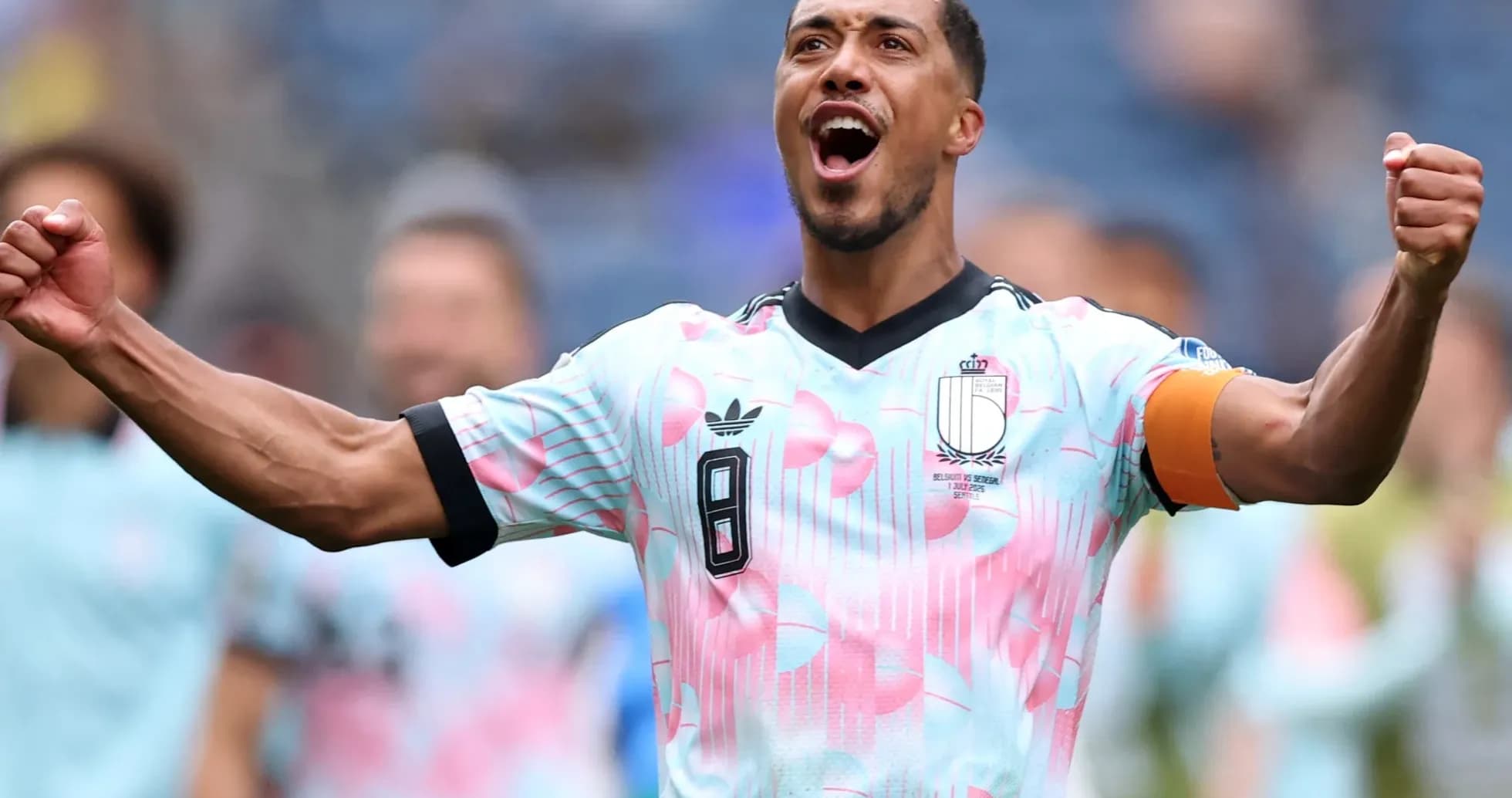
Belgium's Tactical Adaptation Secures 3-2 Win Over Senegal
Belgium’s 3-2 extra‑time win over Senegal at Lumen Field in this World Cup Round of 32 tie was a contest of structural adjustments and game‑state management as much as individual quality. Senegal twice built leads and generated the higher xG (3.54 to Belgium’s 1.8), but Belgium’s control of possession (52%), passing volume, and late tactical reshaping under Rudi Garcia eventually tilted a draining 120‑minute match in their favour.
Belgium began in a 4-2-3-1 with Thibaut Courtois in goal, a back four of Timothy Castagne, Brandon Mechele, Arthur Theate and Maxim De Cuyper, a double pivot of Youri Tielemans and Hans Vanaken, and an attacking band of Leandro Trossard, Kevin De Bruyne and Jérémy Doku behind Charles De Ketelaere. The structure aimed at central control and half‑space occupation, but in the first hour it struggled to turn territory into penalty‑box presence: 11 of Belgium’s 19 shots came inside the box, yet their xG lagged Senegal’s because many were contested or from sub‑optimal angles.
Senegal’s 4-3-3 under Bouna Thiaw Pape was more vertical and direct. Mory Diaw in goal was protected by a back line of Krépin Diatta, Pathé Ismaël Ciss, Moussa Niakhaté and Ismail Jakobs, with Habib Diarra, Idrissa Gana Gueye and Pape Gueye forming an energetic midfield three behind a front line of Iliman Ndiaye, Ismaïla Sarr and Sadio Mané. The plan was clear: compress space centrally, then spring quickly into the channels. Despite having slightly less of the ball (48%), Senegal matched Belgium for total shots (19-19) and equalled their shots on goal (5-5), but with a far higher chance quality.
First Half
The opening goal on 25 minutes, Habib Diarra’s strike for Senegal, crystallised this contrast. Belgium’s double pivot was caught between pressing and screening, leaving a seam for Senegal’s midfield to break through. The back four, especially the left side, were pinned by the threat of Sarr and Mané, which created the pocket Diarra attacked from. Belgium’s 4-2-3-1, in that phase, lacked counter‑pressing bite; when the first line was bypassed, Mechele and Theate were exposed.
Senegal’s second goal at 51 minutes, Ismaïla Sarr finishing from a Moussa Niakhaté assist, again punished Belgium’s transitional fragility. The move originated from a more direct pattern: an early progression, a quick exploitation of space around Belgium’s full-backs, and a decisive action in the box. By then, Senegal’s xG advantage reflected both clearer chances and Belgium’s negative goals prevented figure (-0.61) from their own statistical block, underlining that the quality of chances conceded was higher than the scoreline might suggest.
In-Game Management
Garcia’s in‑game management altered the dynamic. The substitution vector at 46 minutes — Romelu Lukaku (IN) came on for Charles De Ketelaere (OUT) — reoriented Belgium’s attacking reference. Lukaku’s presence allowed De Bruyne to operate closer to the half‑spaces and Trossard to come inside more often, rather than staying wide. Later changes reinforced this: Nicolas Raskin (IN) came on for Kevin De Bruyne (OUT) and Dodi Lukebakio (IN) came on for Jérémy Doku (OUT) at 56 minutes, followed by Diego Moreira (IN) for Hans Vanaken (OUT) at 63 minutes and Thomas Meunier (IN) for Maxim De Cuyper (OUT) at 78 minutes. Each move nudged Belgium towards a more aggressive, wing‑oriented 4-2-4/3-3-4 hybrid, with Meunier adding overlapping thrust on the right.
Senegal’s own substitutions — Lamine Camara (IN) for Pape Gueye (OUT) at 66 minutes, Pape Matar Sarr (IN) for Habib Diarra (OUT) and Ibrahim Mbaye (IN) for Iliman Ndiaye (OUT) at 73 minutes, then El Hadji Malick Diouf (IN) for Ismail Jakobs (OUT), Nicolas Jackson (IN) for Sadio Mané (OUT) at 93 minutes and Bara Sapoko Ndiaye (IN) for Idrissa Gana Gueye (OUT) at 96 minutes — gradually shifted them from proactive pressing towards a more conservative, block‑protecting posture. That ceded territory and invited Belgium’s waves of attacks, even as Senegal still carried threat on counters.
Disciplinary Moments
The disciplinary moments underline where the physical battle was fought. At 64 minutes, Brandon Mechele (Belgium) received a yellow card — Foul — a direct consequence of Belgium defending ever higher and more aggressively as they chased the game. Three minutes later, at 67 minutes, Lamine Camara (Senegal) was booked — Foul — reflecting Senegal’s attempts to disrupt Belgium’s growing rhythm in midfield. The card count ended level (Belgium: 1, Senegal: 1, Total: 2), but the timing shows how the contest’s intensity peaked around the hour when tactical momentum was in flux.
Comeback Phase
The comeback phase showcased Belgium’s structural tweaks. Romelu Lukaku’s 86th‑minute goal, assisted by Thomas Meunier, was the payoff of sustained right‑side overloads. Meunier’s late introduction gave Belgium a true wide outlet; his advanced positioning and crossing threat forced Senegal’s back line to collapse deeper and narrower, opening space for Lukaku to attack the box. The equaliser at 89 minutes, Youri Tielemans finishing from a Leandro Trossard assist, highlighted Belgium’s central layering: with Senegal’s midfield tiring, Tielemans could step beyond his pivot role into the edge‑of‑box zones, timing his arrival behind the first wave.
Extra Time
Extra time was about resource management and set‑play discipline. Amadou Onana (IN) came on for Leandro Trossard (OUT) at 109 minutes, giving Belgium fresh legs and height in central areas, both for pressing and for defending transitions. Senegal, having already rotated much of their attacking line, relied on structure more than individual inspiration. Yet the expected goals split (3.54 for Senegal) suggests they still carved out significant moments; Belgium’s defensive index was not dominant, but their game management improved.
The decisive act came at 120+5 minutes, when Youri Tielemans converted a penalty for Belgium. The sequence was subsequently confirmed by VAR at 120 minutes with a “Penalty confirmed” event. Tactically, this underlined Belgium’s territorial supremacy late on: sustained pressure, high volume of box entries (11 shots inside the box), and the accumulation of duels in dangerous zones eventually produced a decisive incident.
In goal, Thibaut Courtois (Belgium) made 3 saves, matching Senegal’s 5 shots on target only partially because some efforts missed or were blocked; the negative goals prevented value (-0.61) for Belgium indicates that, relative to xG, the goals conceded were broadly in line with chance quality. Mory Diaw (Senegal) also recorded 3 saves from Belgium’s 5 shots on goal, with the same goals prevented figure (-0.61) in Senegal’s statistics block, suggesting that neither goalkeeper significantly outperformed the model, and that finishing and defensive shot quality were the true differentiators.
Statistically, Belgium’s passing platform was the base of their comeback: 699 passes, 602 accurate at 86%, against Senegal’s 639 passes, 536 accurate at 84%. The marginal edge in possession and passing accuracy translated into territorial control, especially after the hour when Garcia’s substitutions reweighted the attack around Lukaku and dynamic wide play. Senegal, despite their higher xG and equal shot volume, were gradually pushed deeper, with only 2 corner kicks to Belgium’s 4, reflecting fewer sustained attacking phases.
In synthesis, Senegal’s game plan produced the clearer chances and a strong overall form metric through xG and transitions, but Belgium’s structural flexibility, bench impact, and late‑game territorial dominance carried the day. The match at Lumen Field was decided less by raw shot counts than by how each side adapted its shape to the evolving game state — and Belgium, after 120 minutes, adapted just that bit better.