.svg&w=384&q=75 "naujapitch logo")
France Dominates Sweden in Round of 32 Clash
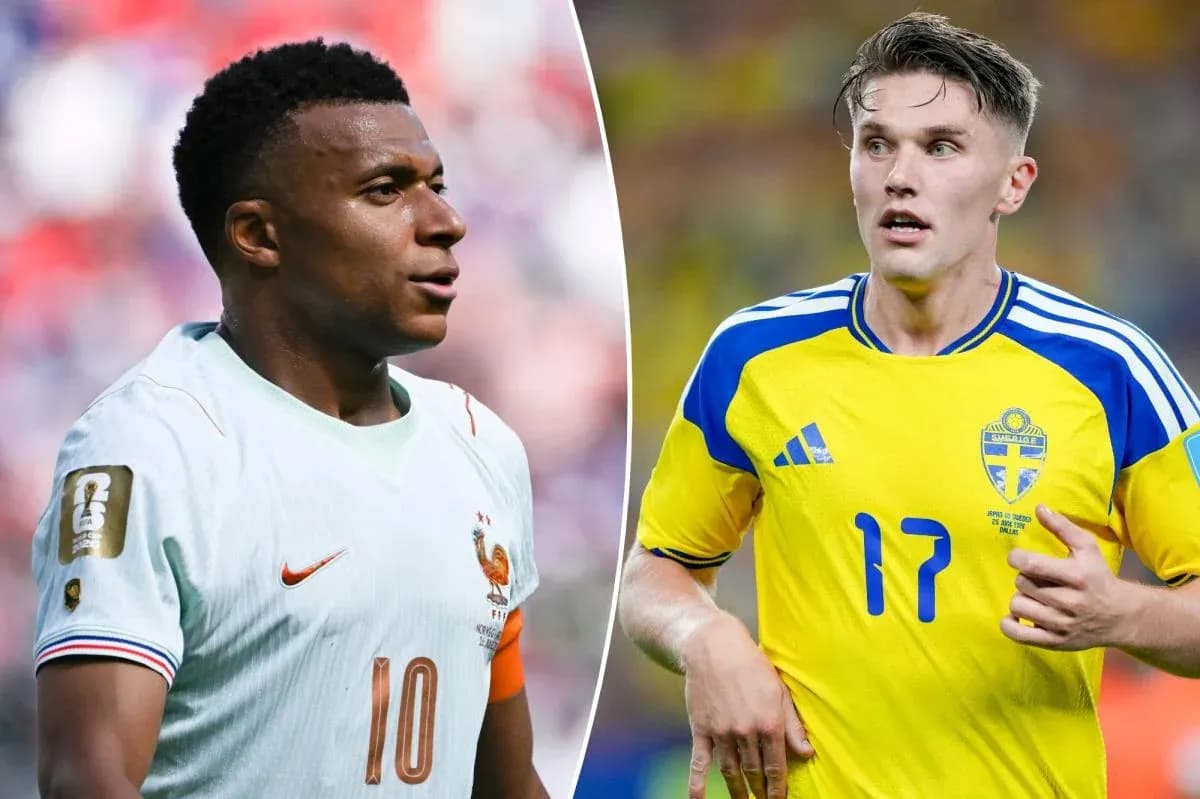
The Round of 32 at MetLife Stadium delivered exactly what France’s group-stage form had promised: a ruthless, structured dismantling of Sweden. Under the New York lights, Didier Deschamps’ side translated their statistical dominance into a 3–0 win, a performance that felt less like a cup tie and more like a continuation of a well-rehearsed campaign.
Heading into this game, France arrived as the World Cup’s form side. Top of their group with 9 points from 3 matches, they had won every outing, scoring 10 and conceding 2 overall in the group phase. Across the tournament so far, they had played 4 fixtures in total, winning all 4, with 13 goals scored and only 2 conceded overall. At home-designated venues, they had produced 9 goals for and 1 against; on their travels, 4 for and 1 against. The goal difference overall stood at +11, underpinned by an average of 3.3 goals scored and 0.5 conceded per match across all venues. Sweden, by contrast, came in as a more volatile proposition: 1 win, 1 draw, and 1 loss in the group stage, with 7 goals both scored and conceded overall there, and 4 points that were enough to carry them into the knockout bracket. Across the tournament, they had played 4 fixtures in total with 1 win, 1 draw, and 2 defeats, scoring 7 and conceding 10 overall, a goal difference of −3 and a defensive record that hinted at vulnerability against elite attacks.
Deschamps doubled down on continuity. France’s preferred 4-2-3-1, used in all 4 fixtures, was rolled out again. Mike Maignan anchored the side behind a back four of Jules Koundé, Dayot Upamecano, William Saliba and Lucas Digne. Ahead of them, Aurélien Tchouameni and Adrien Rabiot formed the double pivot, the structural spine that allowed the front four to attack with freedom. Ousmane Dembélé, Michael Olise and Bradley Barcola lined up behind Kylian Mbappé, who arrived as the tournament’s leading scorer with 6 goals and 2 assists in 4 appearances, averaging a rating of 8.65 and firing 19 shots, 13 on target.
On the opposite bench, Graham Potter opted for a 4-4-2, a notable shift from Sweden’s more experimental group-stage shapes, where they had alternated between 3-1-4-2, 3-4-3 and 4-4-2 across their 4 fixtures. Johan Widell Zetterström started in goal, with a back four of Daniel Svensson, Gustaf Lagerbielke, Victor Lindelöf and Gabriel Gudmundsson. The midfield line of Anthony Elanga, Lucas Bergvall, Yasin Ayari and Elliot Stroud supported the front two of Viktor Gyökeres and Alexander Isak, Sweden’s creative axis. Isak came in as one of the tournament’s leading providers with 3 assists, while Gyökeres had 1 goal and 2 assists, his 40 duels overall and 16 won underlining a physically combative role.
From the outset, the match became a study in how structure amplifies talent. France’s 4-2-3-1 morphed into a 2-3-5 in possession: Koundé and Digne provided the width, Rabiot drifted left to connect with Barcola, and Tchouameni held the central channel, screening transitions. Olise, already the competition’s top assist provider with 5, operated as the subtle conductor between lines, his 211 passes and 9 key passes overall a testament to his ability to control tempo. Dembélé, with 4 goals and 2 assists in the tournament, attacked the right half-space, driving at Gudmundsson and forcing Sweden’s back line to collapse inward.
The “Hunter vs Shield” battle was always going to define this tie. France’s attack had been relentless: at home-designated fixtures they averaged 3.0 goals scored and just 0.3 conceded; away, they still produced 4.0 scored and 1.0 conceded. Sweden’s defence, especially on their travels, had struggled: 9 goals conceded away, an average of 3.0 per away match and 2.5 conceded overall. That discrepancy materialised brutally. Mbappé’s movement between the lines dragged Lagerbielke and Lindelöf into uncomfortable zones, while Dembélé isolated full-backs and Olise exploited the spaces that opened.
In midfield, the “Engine Room” duel pitted France’s control pair against Sweden’s young core. Tchouameni and Rabiot, neither headline-grabbing in the statistics but essential in balance, faced Bergvall and Ayari. Bergvall, who had already collected a yellow card earlier in the tournament and committed 7 fouls overall, brought energy and aggression, but France’s structure denied him the chaos he thrives in. Sweden’s wide players, Elanga and Stroud, were forced deeper and narrower to assist their full-backs, leaving Gyökeres and Isak increasingly isolated against Saliba and Upamecano.
Disciplinary patterns also tilted the tactical risk. France’s yellow-card profile across the tournament showed a single booking concentrated in the 61–75 minute band, a sign of a side that rarely loses composure early or late. Sweden, on the other hand, had spread their cautions across the match, with a late-game surge of 40.00% of their yellows arriving between 76–90 minutes. That tendency to fray under scoreboard pressure was always likely to be exposed if France scored first – which they did, going into half-time 1–0 up and then stretching away to 3–0 by full time.
Crucially, neither side carried the baggage of penalty drama into this tie. Both teams had yet to take or miss a penalty in the tournament; there was no psychological residue from spot-kick failures to manage. Instead, the narrative was written in open play: France’s clean-sheet record at home-designated venues (2 so far) grew again, aligning with a defensive line that had conceded only 2 goals overall in 4 fixtures before this match and preserved that parsimony here.
The statistical prognosis before kick-off pointed firmly towards a French victory: an unbeaten side with a +11 overall goal difference, averaging more than three goals a game, facing a Sweden team conceding 2.5 goals per match overall and yet to keep a clean sheet. On the night, the reality matched the numbers. France’s blend of star power – Mbappé, Dembélé, Olise – and structural discipline overwhelmed Sweden’s honest but overstretched 4-4-2. For Deschamps, the performance reinforced the sense of a team whose data and eye test are perfectly aligned; for Potter, it exposed a squad still searching for a defensive platform robust enough to withstand the very best.