.svg&w=384&q=75 "naujapitch logo")
Australia's Struggles Against Egypt: A First-Half Analysis
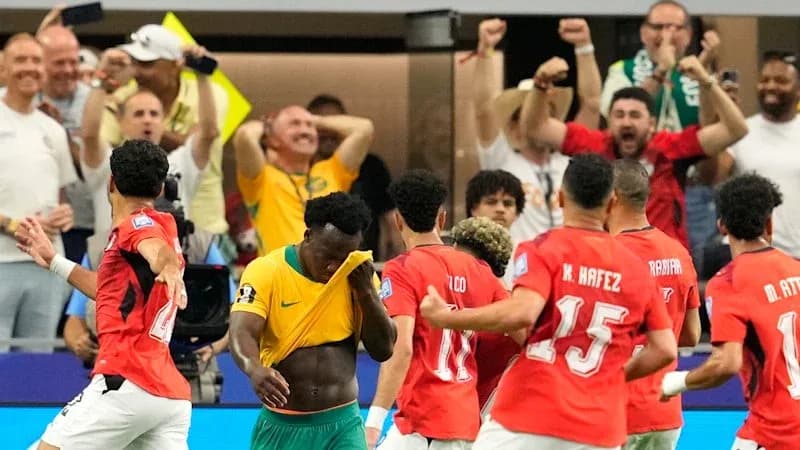
Australia walked off at half-time a goal down to Egypt and bristling with a sense of injustice, yet with enough evidence to believe the game remained there for them.
The Socceroos had done much of the running, much of the probing. Egypt had the lead.
A cheap goal, a costly lapse
The opening goal will sting Australia for a while. It came from the sort of set piece this side usually treats as sacred territory.
A line half a step slow. A runner not tracked tightly enough. A late push to get out that never quite synchronised. In that split second, Egypt found the gap and punished them. It was, by the players’ own admission, a cheap concession, the kind that cuts deeper because it betrays one of the team’s core strengths.
From that moment, the pattern of the half hardened. Egypt had something to protect. They sank into their shape, slowed the tempo, and invited Australia to chase the game.
Egypt dig in, Australia push on
With the Pharaohs happy to sit behind the ball, the onus fell on Australia to create, recycle and keep asking questions. When they strung together five, six, seven passes, spaces began to open between the lines. Pockets appeared. Angles emerged.
That is where the Socceroos looked dangerous. Ajdin Hrustic and his supporting cast started to find feet in midfield, and the wide players stretched Egypt’s back line. Every patient spell of possession felt like it might be the one that prised them open.
The best of those moves came down the left. Aziz Behich drove at Mohamed Hany deep in Egypt’s defensive third, refusing the safe option and forcing the full-back to turn. The move ended with a long throw from Alessandro Circati, a scramble in the area and the ball recycled back to Behich, who hammered a low strike towards the near post. The goalkeeper got down sharply to his right, but the chance underlined the direction of travel: Australia were getting closer.
Moments later, Nestory Irankunda almost made that pressure count again, sniffing out another opening as Egypt’s defensive line wobbled.
A bruising contest, and a major blow
This was not a gentle, technical exhibition. It was a contest heavy on contact, with both sides committed in the tackle. Egypt’s players snapped into challenges and then, when they could, bought every free-kick on offer. They drew fouls, stayed down, slowed things up. It worked. The rhythm broke, Australia’s momentum had to be rebuilt again and again.
One flashpoint summed up the frustration. In the box, an Australian header squirmed through a crowd of bodies. Ahmed Hegazi’s partner, Rami Rabia, appeared to have the ball brush his arm as he challenged. The contact looked incidental, the ball finding the arm rather than the other way around, but there was just enough there to spark Australian appeals. At the back post, Cristian Volpato was dragged down by Mohamed Hafez. Again, nothing from the referee. No whistle, no penalty, no second look.
The sense of grievance deepened with the handling of advantage and discipline. Australia felt the referee let play run, then never came back to show a yellow card that seemed inevitable. The fury was clear, but so was the message from inside the camp: park it, be better, win the second half.
Far more troubling than the officiating was the sight of Jordan Bos being helped from the field. One of Australia’s most dynamic outlets, Bos crumpled and immediately looked in trouble. He could not put weight on his left foot as two trainers supported him off. On a night when Australia needed every runner, every one-on-one threat, losing Bos felt like a punch to the gut.
Salah subdued, but always lurking
For Egypt, the headline act remained strangely muted. Mohamed Salah played within himself, the earlier talk of hamstring tightness never far from mind. He drifted, probed, picked his moments carefully rather than relentlessly driving at defenders.
Yet even at half speed, his danger was obvious. One clever run off Harry Souttar’s shoulder nearly opened Australia up, his timing and vision still razor sharp. Lewis Herrington read it well and got across to snuff out the threat, a vital intervention with the Liverpool star poised to pounce.
From a dead ball on the right, Salah chose guile over spectacle, rolling a short pass square to Mohamed Attia instead of whipping in the expected cross. Attia’s long-range effort was hit with real venom, arrowing towards the far side, but Australia’s back post cover held firm.
Time, tension, and a sense of injustice
As the half wore on, Egypt leaned deeper into the dark arts of game management. Players went down easily. Contact was exaggerated. Every stoppage dragged. Australia chased, pressed, harried – and ran. Egypt made them earn every inch.
Then came the board: five minutes added on.
Given a three-minute hydration break, a goal, and repeated delays, the figure drew immediate disbelief. For a side trying to claw back a deficit, it felt miserly. For Egypt, it was another small victory in a half defined by fine margins and subtle wins.
Yet amid the irritation, one truth stood out: the most likely team to score from open play had been Australia. Before and after the goal, they carved the better looks. They forced the saves. They pushed the tempo.
The chances will come again after the restart. The question, as always at this level, is brutally simple: will they take them?