.svg&w=384&q=75 "naujapitch logo")
AC Milan W Dominates Parma W in Serie A Women Clash
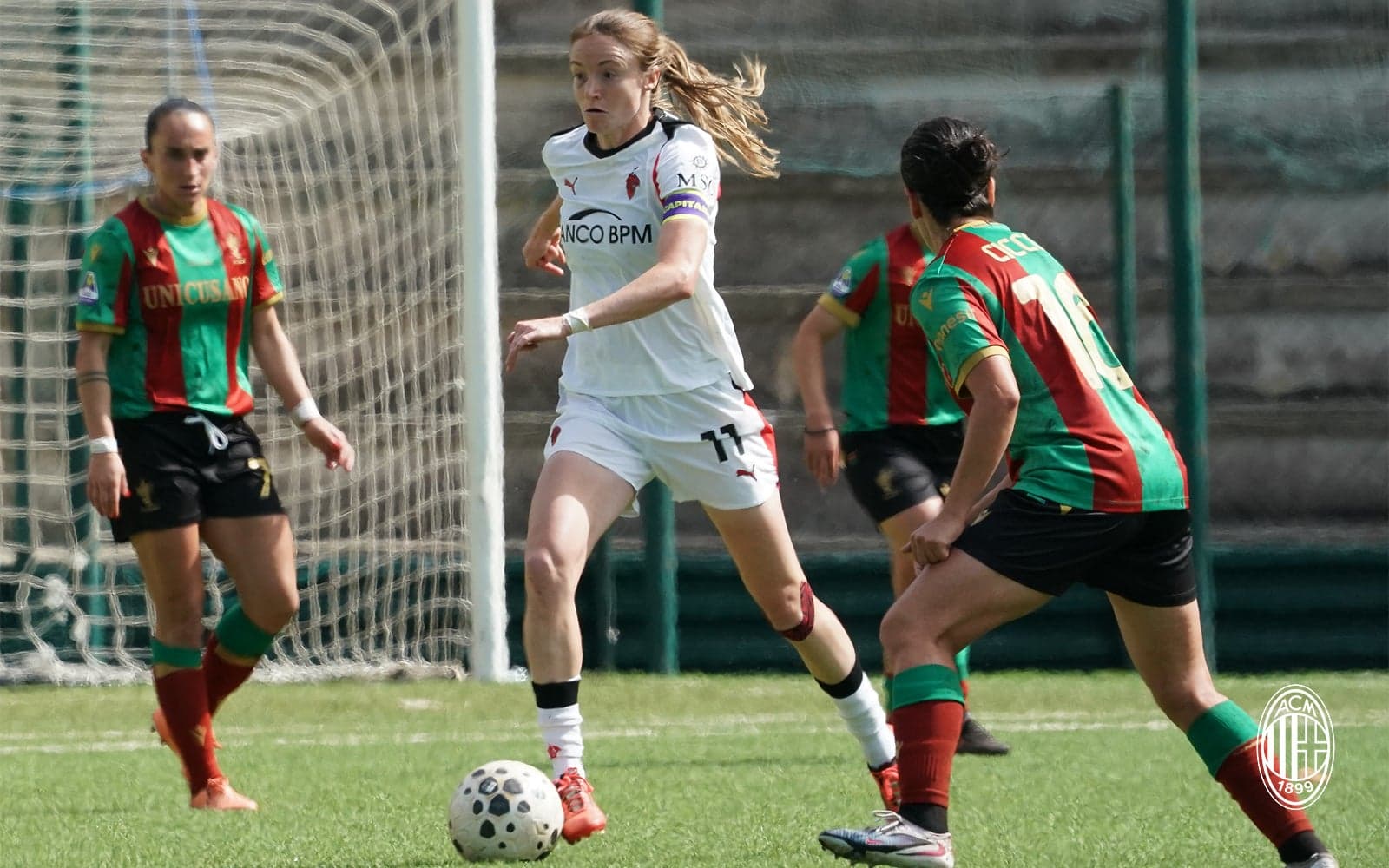
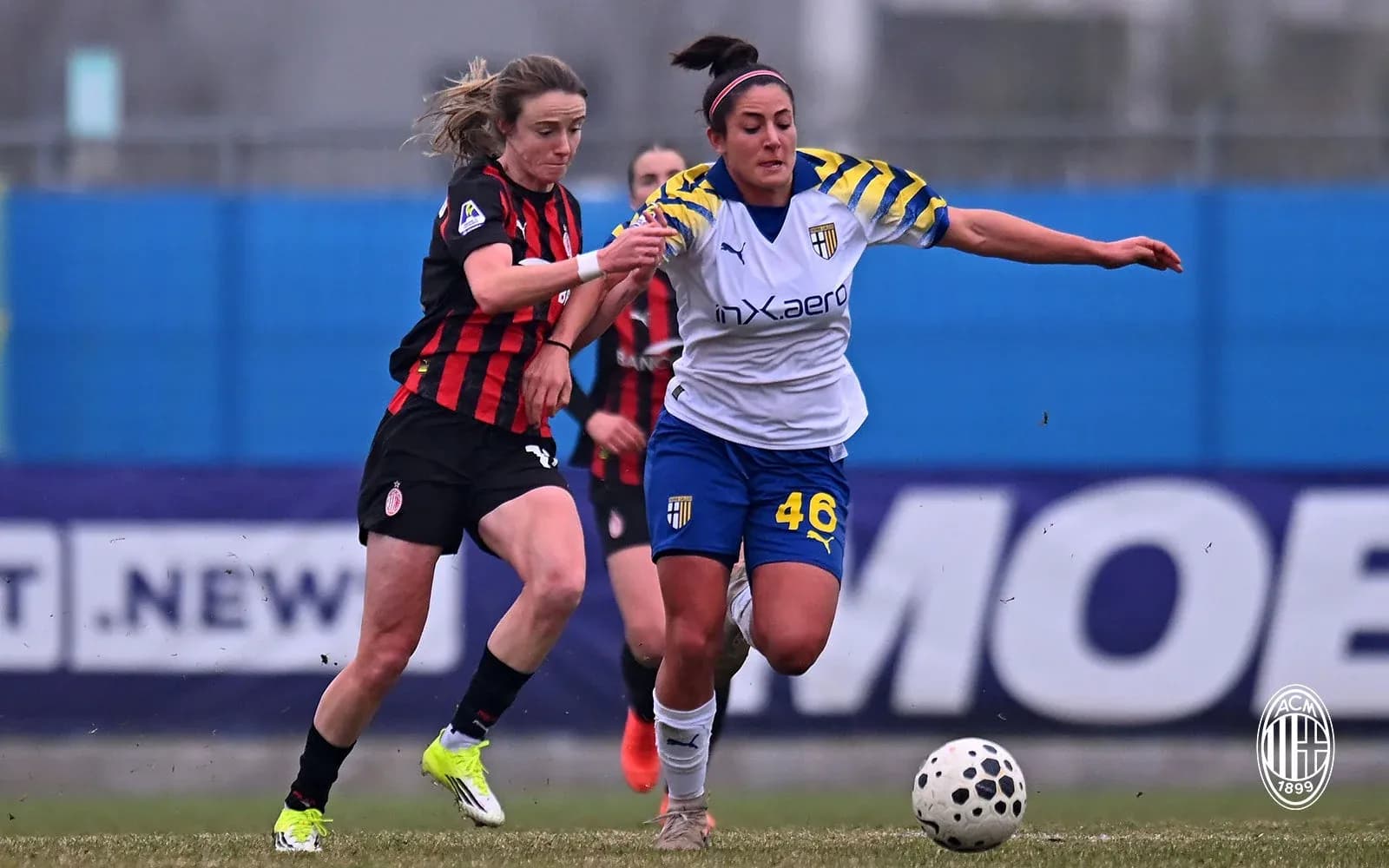
Under the grey Milan sky at Centro Sportivo Peppino Vismara, AC Milan W’s 3–1 win over Parma W felt less like a routine home victory and more like a snapshot of where these two seasons have diverged. Following this result in the Serie A Women regular season Round 21, the table tells a blunt story: Milan sitting 6th on 32 points with a goal difference of 6, Parma 10th on 16 points and a goal difference of -13. The numbers frame the narrative; the 90 minutes explain it.
Milan arrived with the profile of a side that has learned to live with volatility. Overall this campaign they have 9 wins, 5 draws and 7 defeats from 21 matches, scoring 31 and conceding 25. The arithmetic is simple and crucial: their overall goal difference of 6 is exactly 31 minus 25. At home they have been more expansive and a little more fragile: 18 goals for and 15 against in 11 home games, an average of 1.6 scored and 1.4 conceded. This is a team built to trade punches rather than suffocate contests.
Parma’s season, by contrast, has been defined by resistance and scarcity. Overall they have 2 wins, 10 draws and 9 losses from 21 matches, with 15 goals scored and 28 conceded; their goal difference of -13 is precisely 15 minus 28. At home they can at least threaten, with 13 goals in 10 games, but on their travels the attack has all but disappeared: only 2 away goals in 11 matches, an away average of 0.2. This is not just a blunt attack; it is an almost absent one.
Into that context walked two squads that, on paper, reflected their statistical DNA.
Suzanne Bakker’s Milan XI carried a spine of experience and edge. L. Giuliani in goal, protected by E. Koivisto, K. De Sanders, A. Soffia and M. Keijzer, formed a back line that has quietly underpinned Milan’s seven clean sheets overall this season. Keijzer, who has blocked 3 shots and made 10 interceptions across the campaign, started again on the left, her red-card history a reminder that her aggression must be managed as much as it is leveraged.
Ahead of them, the midfield blend was telling. G. Arrigoni and M. Mascarello, both starters, gave Milan a double pivot with bite and distribution. Mascarello, who has committed 15 fouls and collected 4 yellow cards this season, is Milan’s disciplinary barometer – the player who lives on the edge of duels to keep the team compact. Alongside them, C. Grimshaw offered verticality and timing between the lines. With 2 assists, 11 key passes and 10 successful dribbles overall, Grimshaw is the quiet connector in this side, the one who knits the build-up to the final third.
Up front, S. Stokic, T. Kyvag and C. Dompig formed a mobile, fluid line. Dompig is one of the league’s most intriguing paradoxes: a forward with 1 goal, 1 assist and a red card to her name, capable of decisive contributions and sudden volatility. She embodies Milan’s season-long profile – dangerous, but never entirely safe.
The bench, too, hinted at how Bakker wanted to control the narrative. K. van Dooren, Milan’s leading scorer in the league with 5 goals from midfield, waited among the substitutes. Her 18 shots, 12 on target, and 8 key passes this season underline her status as Milan’s “hunter” from deep. V. Cernoia and M. Renzotti added technical security if the game demanded control, while Park Soo-Jeong – the league’s top assist provider with 4 – remained an unused but significant creative card in the wider squad picture.
On the other side, Giovanni Valenti’s Parma XI reflected a team built first to survive. M. Copetti in goal stood behind a back three anchored by C. Ambrosi and D. Cox, with C. Minuscoli offering width and cover. In midfield, M. Gueguen and M. Uffren were tasked with both screening and sparking transitions. Uffren, with 7 yellow cards, 32 tackles, 34 interceptions and even a missed penalty this season, is Parma’s enforcer and emotional engine – a player whose defensive volume speaks to how often Parma are forced to defend deep.
Ahead of them, creativity and resistance converged in C. Prugna and G. Distefano. Distefano, with 2 assists, 16 key passes and 31 dribble attempts, is Parma’s primary outlet and pressure valve. Her 151 duels and 81 won underline how much of Parma’s attacking identity rests on her ability to hold, carry and draw fouls (50 this season) to relieve pressure and inch the team upfield.
Up top, A. Kerr led the line, supported by I. Rabot and L. Dominguez in the half-spaces. But the bench told its own defensive story: H. Cissoko, a substitute here, carries a disciplinary record of 1 yellow and 1 yellow-red, plus 2 penalties committed. She represents both a physical presence and a risk in late-game defending.
Tactically, the clash was always going to be about whether Milan’s home attacking average of 1.6 goals could break down a Parma side that, despite their struggles, have managed 6 clean sheets overall and conceded a total average of 1.3 goals per game. The 3–1 scoreline suggests Milan’s attacking patterns eventually overwhelmed Parma’s block, and the half-time score of 1–1 hints at a game that tilted decisively after the interval.
The “Hunter vs Shield” duel was symbolised by van Dooren’s threat – even from the bench – against a Parma defence that has conceded 14 goals away from home. On their travels Parma have an away goals-against average of 1.3, and they arrived in Milan with the memory of a 4–0 away defeat as their heaviest road loss. Against a Milan side whose biggest home win is 3–0, the question was whether Parma could keep the game within one goal long enough for Distefano or Uffren to tilt a key moment.
In midfield, the “Engine Room” battle between Milan’s trio and Parma’s double pivot shaped the rhythm. Grimshaw’s 79% passing accuracy and 11 key passes contrasted with Uffren’s 512 total passes at 82% accuracy and 110 duels. Mascarello’s 13 tackles and willingness to foul met Uffren’s 24 fouls committed in a contest that was always likely to be attritional.
Discipline loomed as a subplot. Milan’s season-long card distribution shows a late-game spike: 31.58% of their yellow cards arrive between 76–90 minutes, with red cards spread evenly across 46–60, 61–75 and 76–90, each range accounting for 33.33% of their dismissals. Parma mirror that late tension, with 29.17% of their yellows and 100.00% of their reds coming in the 76–90 window. This match did not descend into chaos, but the statistical backdrop explains why the closing stages always carried the risk of a decisive dismissal.
From an analytical standpoint, the result aligns cleanly with the season-long trends. Milan, with an overall goals-for average of 1.5 and goals-against average of 1.2, typically edge the xG balance in open games, especially at home where their attacking output rises. Parma, with an overall goals-for average of 0.7 and a staggering away average of 0.2, rarely generate enough chances to overturn deficits on the road.
Following this result, the squad analysis is stark. Milan’s depth – the ability to bring on van Dooren, Cernoia, Kamczyk or Sesay – gives Bakker multiple tactical levers, from adding a second creative midfielder to refreshing the press. Their defensive line, anchored by Keijzer’s 23 tackles and 3 blocks, has enough resilience to absorb spells of pressure while their forwards rotate positions and attack space.
Parma, by contrast, remain heavily reliant on the individual resistance of Uffren and the transitional artistry of Distefano. The bench options like Z. Kajan, A. Zamanian and C. Masu add variety, but the structural issue persists: too few goals on their travels, too much defending, and too many minutes spent clinging on.
In the end, the 3–1 in Milan was less an upset than a confirmation. A Milan side whose season has oscillated between control and chaos found enough of the former to impose their quality. A Parma team whose campaign has been defined by narrow margins and low scoring once again discovered that in Serie A Women, resistance alone is rarely enough.