.svg&w=384&q=75 "naujapitch logo")
Vancouver Prepares for FIFA World Cup 2026: Changes Ahead
Vancouver is about to feel like a host city.
Not in the abstract, not in bid books or glossy presentations, but on the streets, in the parks, outside B.C. Place, where scaffolding will rise, music will run late and the rules that govern daily life will quietly, and not so quietly, change.
On Wednesday, the city enters what officials are calling the FIFA World Cup “event period,” the legal switch that activates a powerful new set of tools under the FIFA World Cup 2026 Bylaw. The window runs from May 13 to July 20, 2026, covering the buildup, the seven matches at B.C. Place and the long tail of fan festivals and clean‑up.
At stake: a tournament the province expects will draw roughly 350,000 visitors to B.C. Place alone, and a bill for taxpayers estimated between $532 million and $624 million, with the city on the hook for up to $281 million.
The price of that “once‑in‑a‑generation opportunity,” as the city calls it, is already visible in the fine print.
A different city for 10 weeks
The bylaw gives Vancouver expanded powers over advertising, vending, noise, graffiti removal and the management of public space in and around key World Cup sites. It is, in effect, a temporary redrawing of who gets to do what, and where.
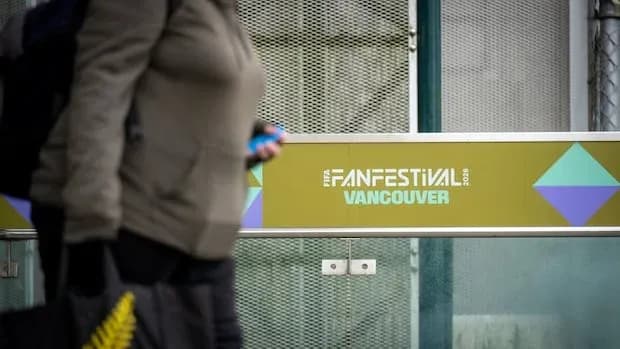
Most of the changes lock in around a two‑kilometre “controlled area” circling B.C. Place and the FIFA Fan Festival site at Hastings Park. Inside that bubble, the city can move faster, clamp down harder and clear space more aggressively than usual.
- Rules are relaxed for building temporary infrastructure. Fan zones, big screens, branded arches, sponsor signage and other installations can go up more quickly near stadiums and festival areas.
- Street vending, busking and certain kinds of advertising face new restrictions in designated event zones, tightening who can trade and perform in the most lucrative, high‑traffic spaces.
- Unauthorized commercial signs that clash with official FIFA branding can be removed more rapidly, protecting the tournament’s tightly controlled commercial ecosystem.
- Noise rules are stretched, particularly to accommodate international broadcast schedules and late‑running event operations, opening the door to louder nights in parts of the city.
- Truck routes and deliveries in the downtown core may be shifted to make room for security perimeters and event logistics.
For common violations, bylaw officers can issue tickets ranging from $250 to $1,000. Enforcement will be shared between the City of Vancouver and the Vancouver Police Department.
On paper, it is the machinery required to stage one of the world’s biggest sporting events. On the ground, it will decide whose version of the World Cup gets to flourish.
‘Privatization of public space’
That is where the tension begins.
Housing advocates and legal experts have zeroed in on the bylaw’s language around “clean, safe, and organized” spaces and beautification, warning that those words often land hardest on people with nowhere else to go.
“This is basically the privatization of public space,” said Penny Gurstein, professor emeritus at the University of British Columbia’s School of Community and Regional Planning. “I think people should be worried, especially people who are experiencing homelessness, living on the streets.”
The fear is not abstract. Major events around the world have a long history of clearing visible poverty from tourist corridors, whether or not the rules formally change. When “cleanliness” becomes a mandate, tents and makeshift shelters often become targets.
City officials insist that is not what this bylaw does. They say existing protections for unhoused residents remain in place and that people experiencing unsheltered homelessness will still be allowed to erect temporary overnight shelter in parks where current bylaws permit it.
On beautification, the city stresses it is talking about physical infrastructure: repairing sidewalks, dressing up construction sites, improving the look and feel of streets that will beam out to a global audience. In its own assessment, that work has “no assessed impact on human rights.”
The concern from advocates is less about the wording and more about how those powers will be used when the world is watching.
One city, very different tournaments
Margot Young, a constitutional law professor at UBC’s Allard School of Law, frames the World Cup’s impact as a question of who gets to enjoy the party and who gets moved aside to make room for it.
“There will be disruption, but that disruption will be different for different groups in the city depending really upon their … social and economic status,” Young said.
For wealthier residents, the disruption might feel like a thrill: tickets to matches, packed fan zones, late‑night celebrations in a city dressed for a global show. For those living on the margins, the same event period can mean intensified policing, displacement and a sudden tightening of the spaces they rely on every day.
“For those with money, they maybe can go to games, they can take part in the parties,” Young said. “But for individuals who are at the bottom of our ... income and wealth distribution … they will be moved around by the reordering of city space by FIFA.”
The city has promised “trauma‑informed” enforcement, a phrase now standard in official playbooks around homelessness and policing. Young questions how that promise will be tested.
“There's no system in place to sort of monitor what is happening with respect to the vulnerable populations,” she said.
Without clear oversight, the fear is that the drive to protect FIFA’s image and sponsors will override softer commitments made to residents with the least leverage.
Services promised, pressure guaranteed
City hall insists core supports will not disappear when the banners go up.
Officials say homelessness services and outreach programs will continue throughout the tournament, pointing to more than 1,500 shelter beds and approximately 8,100 supportive housing units in Vancouver, alongside outreach teams, hygiene services and storage programs.
Those numbers outline capacity, not comfort. The question for advocates is whether the World Cup’s temporary rules will push more people into that system under duress, or push them further out of sight with nowhere stable to land.
For the city and the province, the calculation is clear: seven matches, hundreds of thousands of visitors, a global broadcast footprint and a chance to present Vancouver as a polished, confident host on football’s biggest stage.
For residents already living at the edge of the city’s booming cost of living, the calculation is very different.
The scaffolding will come down. The fan zones will be dismantled. The FIFA signage will vanish from B.C. Place and Hastings Park.
What remains, long after the final whistle, is whether the World Cup leaves Vancouver more equal in who it welcomes into its public spaces—or more comfortable pushing some of its own people out of the frame.