.svg&w=384&q=75 "naujapitch logo")
USMNT World Cup Outlook: Injury Concerns and Midfield Challenges
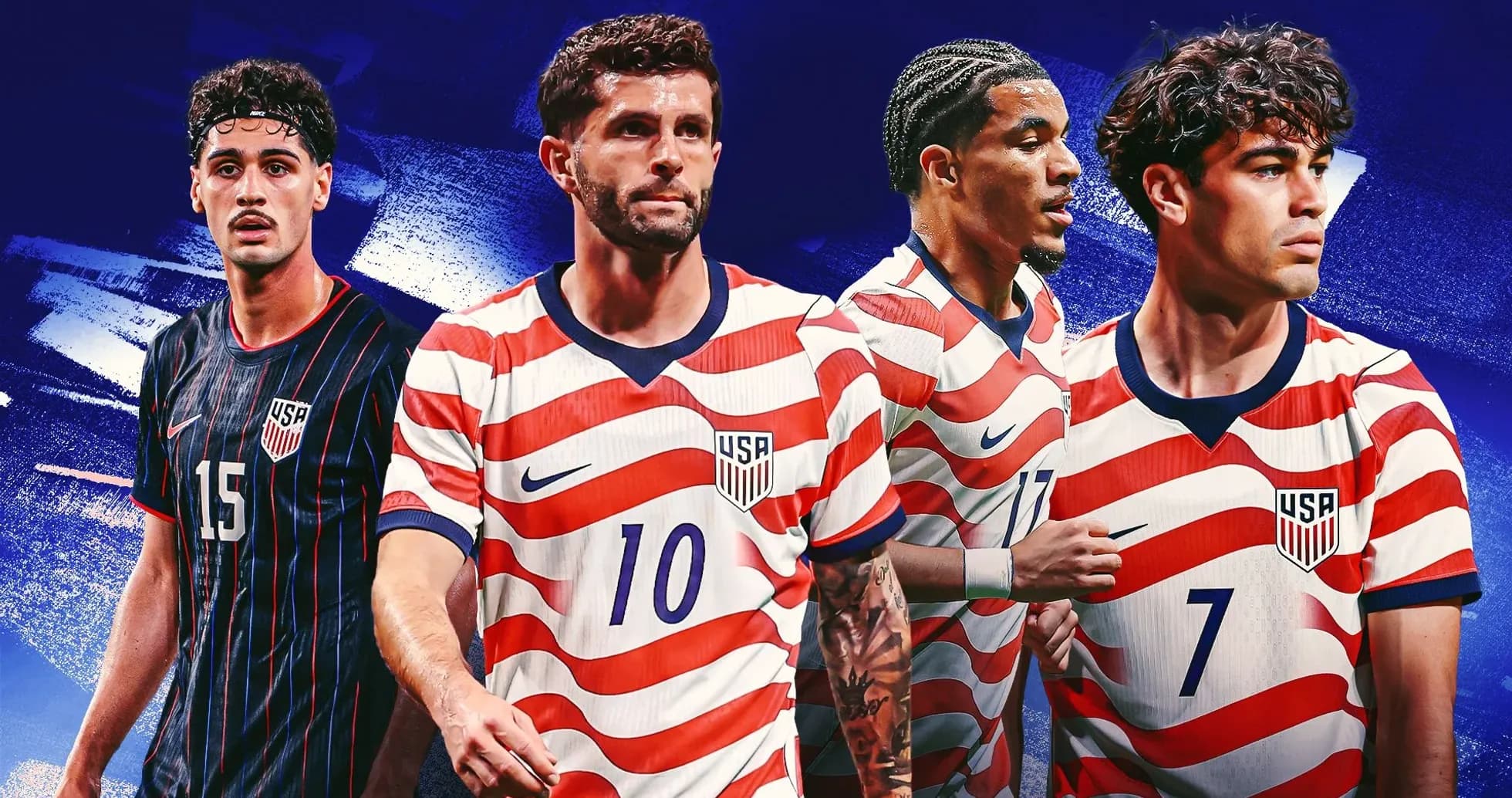
For the first time in a long time, there was a genuine jolt of optimism around Giovanni Reyna this weekend. Not a training-ground whisper. A goal.
He came off the bench for Borussia Monchengladbach and, in the dying minutes of a 3-1 defeat, finally found the net. His first club goal in nearly 18 months. A small moment in a losing effort, but a significant one for a player who has spent far too long watching games instead of deciding them.
Reyna has not truly imposed himself at club level since his move away from Borussia Dortmund. His last real burst of influence came in November with the USMNT, where, as ever, he looked more like the free, inventive playmaker American fans believe him to be. Since then, club minutes have been scarce, and even in March’s friendlies he was reduced to cameos, never really given the stage to dominate elite opposition.
And yet, his name never leaves the conversation.
That’s because Reyna offers something no one else in this pool quite does. He bends games. He unlocks low blocks. He has already helped deliver CONCACAF silverware, and the numbers are clear: the U.S. tends to look more dangerous with him than without him.
Still, in this version of the national team, he’s more luxury than load-bearing pillar. A “cherry on top” rather than a foundational piece. If he finds rhythm, the team’s ceiling rises sharply. If he doesn’t, the U.S. can still function thanks to the depth in those attacking midfield and wide areas. Which is where the conversation turns to Malik Tillman.
Tillman’s minutes dry up at the worst possible time
No one doubts Tillman’s talent. That debate ended months ago. The problem is the stopwatch, not the skill set.
Since the March international window, the Bayer Leverkusen attacker has featured in seven matches but logged only 77 minutes. In just two of those games did he even reach double digits on the pitch. Nathan Tella and Ibrahim Maza have become the preferred options in the roles just off the striker, leaving Tillman to watch the title charge from the fringes.
The timing could hardly be worse. Tillman is firmly in the frame to start for the USMNT this summer, and his case would be ironclad if he were arriving with fresh goals and assists. His last strike came on April 4, a late cameo goal against Wolfsburg that pushed him to six goals in 1,615 minutes for the season. Respectable numbers. Not the issue.
The issue is what has happened since. Or rather, what hasn’t.
The one piece of good news for the U.S. is Weston McKennie. The Juventus midfielder is in form and has shown he can operate higher up the pitch. If Tillman’s lack of minutes becomes too big a risk, McKennie can slide into that advanced role alongside Christian Pulisic, giving Gregg Berhalter — and his staff — a way to rebalance the attack without tearing it up.
Which brings the spotlight back to Pulisic himself.
Pulisic’s drought lingers, but his importance hasn’t shifted
Christian Pulisic has spoken about it more than once now. No goals in 2026. It bothers him. He admits that. But he insists he isn’t panicking.
From his point of view, what matters is not a spring slump in Milan but whether he delivers when the lights burn brightest this summer. The performances with his club, he argues, are only one piece of a much larger puzzle.
Still, there’s no getting around the reality: you want your stars in form when a World Cup arrives. Pulisic has not reached that level so far this year. The sharpness, the ruthless finishing that defined his best stretches for club and country, has flickered rather than burned.
The U.S. cannot afford for that to continue. Pulisic is not the only factor in the team’s World Cup ambitions, but he remains one of the central ones. He is a match-winner and, just as crucially, a tone-setter. When he plays with conviction, the rest of the group tends to follow.
There is still time for him to catch fire. The calendar hasn’t closed the door. But every week that passes without a goal nudges the concern level upward, even if the unique nature of the World Cup build-up means those worries should stop short of full-blown alarm.
Up front, the picture is cloudy. At the back, it might be even murkier.
Center-back questions pile up
Chris Richards looks nailed on. That much feels settled. Everything around him? Not so much.
Tim Ream brings authority and experience, but the question now is whether he has too much mileage in his legs and whether his recent injury leaves any lingering effects. Mark McKenzie is playing well in Ligue 1, yet his USMNT résumé still includes the odd lapse that can undo 89 minutes of solid work. Auston Trusty has carved out a place for himself at Celtic, but with only six caps, it’s fair to ask if he’s ready to anchor a World Cup back line.
Miles Robinson’s form is another unknown. And then there’s Noahkai Banks, the wild card who could arrive late, impress quickly, and throw the depth chart into chaos.
By this stage of a World Cup cycle, most countries have their central defensive hierarchy locked down. The U.S. does not. The final decisions may simply come down to who hits form at the right moment and who blinks as the tournament approaches.
As unsettled as center back feels, though, it’s not the biggest problem on the board.
Midfield hit hardest as Cardoso ruled out, Tessmann races the clock
In midfield, the U.S. had reason to feel cautiously optimistic. Two emerging options, Johnny Cardoso and Tanner Tessmann, were pushing hard to start next to Tyler Adams. Both had built strong cases in Europe. Both looked capable of handling the tempo and physicality of the biggest games.
Then the injury reports landed.
Fresh off a Champions League semifinal, Cardoso sprained his ankle. The margins were always going to be tight, but the final diagnosis was brutal: surgery, and with it, the end of his World Cup hopes. Atletico Madrid confirmed he will miss the tournament, ripping one of the most promising names out of the depth chart.
Tessmann’s situation is less severe but still unsettling. Lyon described his issue as a muscle strain, one that will sideline him for a spell but should not cost him the World Cup entirely. Even before that setback, though, his place in Lyon’s XI had been inconsistent in recent months. His rhythm was already under threat.
Those two injuries leave a glaring hole. The U.S. now faces very real uncertainty over who partners Adams in the engine room. Cardoso and Tessmann had their own question marks, of course, but their performances in Europe this season made them among the more reliable options in a position where true security is rare.
All good teams start in midfield. Right now, the USMNT is staring at the possibility of going into a World Cup with that area thinner, less settled, and more fragile than at any point in this cycle.
Mauricio Pochettino’s squad list will have to confront that reality head-on. The talent is there. The structure, on paper, exists. But with injuries biting and form fluctuating across key positions, this summer may come down to a single, unforgiving test: who can carry their club chaos into a coherent national-team performance when the world is watching?