.svg&w=384&q=75 "naujapitch logo")
Union Omaha's 4–2 Victory Over Fort Wayne: A Statement of Identity
Under the lights at Werner Park, Union Omaha’s 4–2 win over Fort Wayne felt less like a routine group game and more like a statement about identity. In the tight confines of the USL League One Cup’s Group 4, this was a clash between a side learning to live with chaos and another still being overwhelmed by it.
I. The Big Picture – A Group Stage Knife-Edge
Heading into this game, Union Omaha sat 2nd in Group 4 with 6 points from 3 matches. Their overall goal difference was -1, the product of 7 goals scored and 8 conceded, a reminder that their attacking verve has been constantly shadowed by defensive frailty. At Werner Park they had been especially volatile: at home they had scored 5 and conceded 7 across 2 matches, an average of 2.5 goals for and 3.5 against at home. This is a team built for open games, not for clean sheets.
Fort Wayne arrived as the group’s strugglers. They were 6th with 1 point from 3 games, their overall goal difference a stark -6 after 5 goals for and 10 against. On their travels, the numbers were even more unforgiving: away they had scored 3 and conceded 7 in 2 matches, an away average of 1.5 goals for and 3.5 against. Their form line – LLL – told the story of a team that could punch in moments but could not withstand sustained pressure.
The 4–2 scoreline in Omaha’s favor fit the seasonal DNA of both sides: high-scoring, defensively porous, and decided in the margins of game management rather than pure talent.
II. Tactical Voids – Discipline, Risk, and the Edges of Control
Across the group phase, Omaha’s discipline profile has mirrored their game model: aggressive, front-foot, and occasionally reckless. Their yellow cards are clustered in the middle and late phases: 25.00% of their cautions have come between 31–45 minutes, 50.00% between 61–75, and 25.00% between 76–90. There is also a red card on their ledger between 61–75 minutes, underlining how their intensity can spill over just as legs start to tire.
Fort Wayne’s disciplinary curve is even more telling. Their yellow cards spike late: 22.22% between 16–30 minutes, another 22.22% between 31–45, 11.11% between 46–60, and a heavy 44.44% between 76–90. They are a side that frays as the clock winds down, forced into last-ditch interventions as defensive structures loosen.
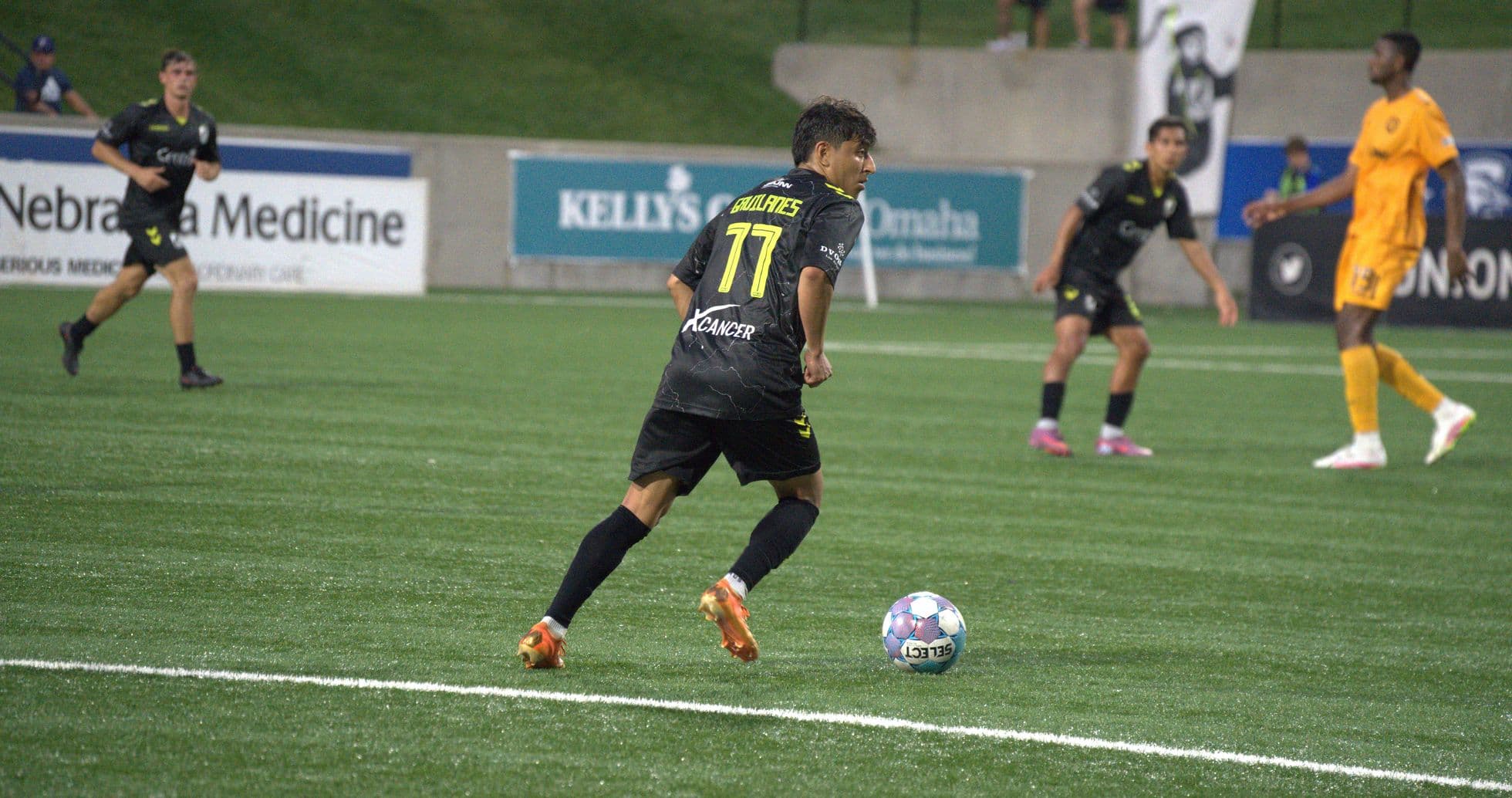
No official absences are listed, so both coaches had their full squads available. For Omaha, that meant a familiar core: C. Jensen leading the line in the No. 99 shirt, with creative and running power from Gabriel Cabral, S. Ors Navarro, A. Gavilanes, D. Borczak, A. Gomez and the focal point P. Botello Faz. At the back, C. Lawrence, S. Owusu, B. Malone and R. Jiba formed the defensive spine.
Fort Wayne countered with a starting group that blended direct threat and work rate: A. Echevarria, J. Thomas, D. Oyetunde and R. Becher offering forward options, while E. Nieto, J. Garay and K. Gafar carried the burden of linking midfield to attack. In reserve, they had B. Schipmann, J. Musa, L. Ricol, J. Jordan, C. Awoudor and N. Burns – enough depth to change patterns, but not yet the defensive assurance to close games.
III. Key Matchups – Hunter vs Shield, Engine Room vs Enforcer
The defining tactical intersection in this fixture lay in timing. Omaha’s goals-for minute distribution is remarkably even but with a subtle first-half lean: 28.57% of their goals have come between 31–45 minutes, with additional strikes spread across 0–15, 16–30, 46–60, 61–75 and 76–90 (each 14.29%). They are capable of scoring in almost every phase, but they grow particularly dangerous as the first half matures.
Fort Wayne’s defensive weakness maps ominously onto that profile. Their goals-against distribution shows early and late fragility: 22.22% conceded between 0–15 minutes, 22.22% between 16–30, 22.22% between 61–75, and 33.33% between 76–90. The opening quarter-hour and the closing stretch are especially treacherous for them.
That created a “Hunter vs Shield” dynamic in two windows:
- Early on, Omaha’s willingness to attack from the start, with runners like Gavilanes and Borczak around Botello Faz, directly probed a Fort Wayne back line that has already conceded 44.44% of its goals in the first 30 minutes.
- Late in the match, Omaha’s capacity to keep scoring into the 76–90 band (14.29% of their goals) collided with Fort Wayne’s late-game collapse zone, where a third of their concessions occur.
In midfield, the “Engine Room” battle revolved around Gabriel Cabral and S. Ors Navarro for Omaha against the likes of J. Garay and E. Nieto for Fort Wayne. Omaha’s overall average of 2.3 goals for per match, combined with having never failed to score in this campaign, reflects a side that reliably progresses the ball through the middle and into dangerous zones. Fort Wayne, for their part, average 1.7 goals for overall and have also not failed to score, but their structure without the ball – 3.3 goals against per match overall – betrays a lack of a true enforcer to shield their back line.
IV. Statistical Prognosis – Chaos Favors the Better Attack
From a statistical lens, this tie was always likely to be open. Both teams came in without a single clean sheet; both had scored in every match. Omaha’s under/over profile showed that in total this campaign they had gone over 1.5 goals in 2 of 3 matches and over 2.5 in 1 of 3, while their goals-against curve featured a late-game surge of 37.50% conceded between 76–90 minutes. Fort Wayne had gone over 1.5 in all 3 of their matches for goals against, and over 2.5 in all 3 as well.
In an xG projection, that blend of high attacking output and leaky defenses points to a game where both sides generate chances, but the side with more repeatable attacking patterns and finishing depth prevails. Omaha’s penalty record – 1 taken, 1 scored, 100.00% – adds another small edge in tight moments, even if no penalties were needed here.
Following this result, the numbers and the narrative align: Union Omaha remain a flawed but compelling attacking force, one that thrives when games become stretched. Fort Wayne, meanwhile, are still searching for a defensive platform sturdy enough to let their flashes of attacking quality matter. In a group defined by margins, this 4–2 at Werner Park underlined a simple truth: when the match descends into chaos, the team more comfortable living there usually walks away with the points.