.svg&w=384&q=75 "naujapitch logo")
Tottenham's Journey: From European Aspirations to Survival
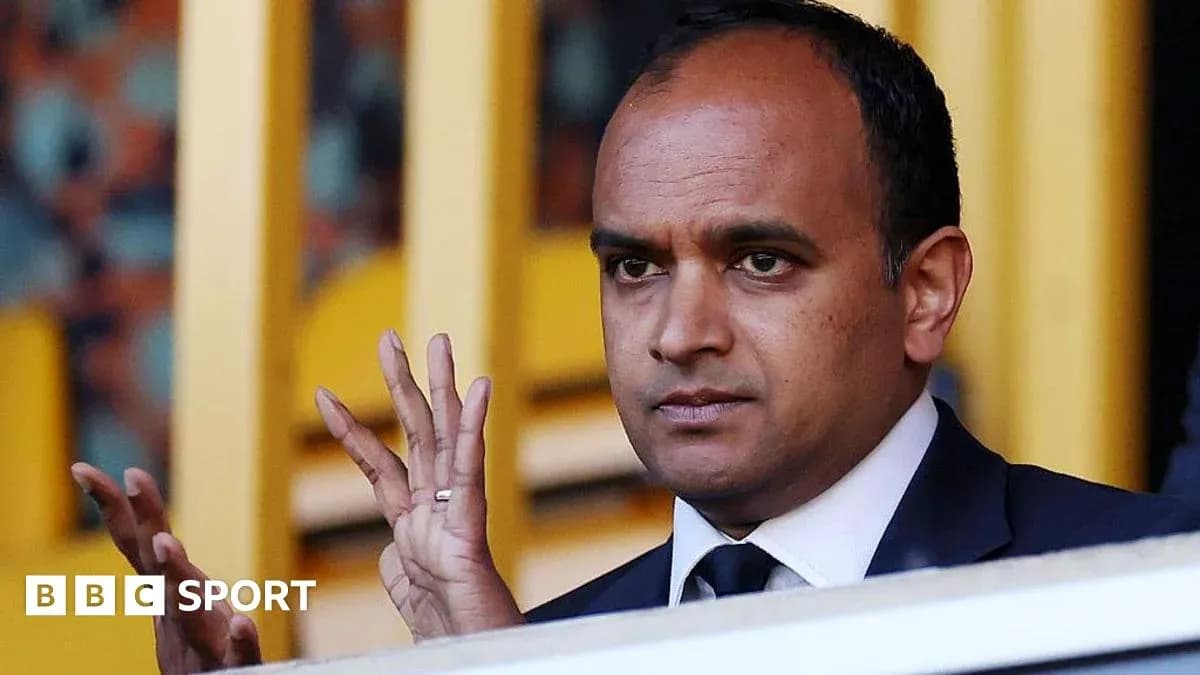
Vinai Venkatesham walked into Tottenham Hotspur last June talking about Europe. Eleven months later, he was talking about survival.
The club’s new chief executive had just watched his side scrape over the line on the final day, a nervy win over Everton sealing Premier League safety in the closing minutes of a season that veered from confusion to crisis.
“It was just a huge outpouring of relief,” he admitted afterwards. Relief, not celebration. Not at a club that had lifted the Europa League only a year earlier and still boasted a dressing room full of internationals.
“It’s nowhere near the standard of the football club,” he said. He knows the bar. He also knows how far Tottenham have fallen beneath it.
From European talk to a “complete reset”
On 1 June last year, Venkatesham arrived from Arsenal with a clear, ambitious brief.
“On my very first day, what I thought would be a realistic target for the men's first team would be competing for European places,” he said.
Tottenham had just finished 17th under Ange Postecoglou, but they had a European trophy in the cabinet and a squad that, on paper, looked built for more than a relegation scrap.
Reality hit fast.
“A few months after I joined, when I was no longer an outsider, I would have told you the club was in a significantly worse state in some places than I thought,” he admitted. This was not a tweak job. It was something far more drastic.
“It was very clear that this wasn't some form of turnaround that was required of the club in quite a few areas. It was really a complete reset.”
Off the pitch, he found strength. Stadium operations. Commercial. Infrastructure. All, in his view, in good shape.
On the football side, the story changed.
Over the last five years, the Premier League has accelerated. Clubs have modernised their structures, sharpened their recruitment, and squeezed every marginal gain out of performance environments. Tottenham, he found, had been left behind.
“When you look at where Tottenham were in many of those areas, compared to where I believe other Premier League clubs are, there was a significant gap. In some areas really quite worryingly so.
“I don't think that there was what I would call a relentless obsession with football success.”
He pointed at the training centre as the perfect symbol. Stunning. Gleaming. World-class facilities. But, in his words, more five-star hotel than ruthless high-performance hub.
“That will change over the summer,” he promised. Expertise, he said, was missing in too many key football areas. That, too, must change.
Thomas Frank: held on, then let go
The season itself told the story of a club stuck between old ambitions and harsh new reality.
Thomas Frank’s reign, on the surface, began well. After his appointment last June, Tottenham lost only one of their first 10 games in all competitions. The mood was calmer. The table looked healthier. For a moment, the crisis felt distant.
Then the slide began. Performances sagged, results followed, and by February, Frank’s position had become untenable. When the sacking finally came, many fans wondered what had taken the club so long.
“There's been plenty of coverage that the club was passive during this period. And that's absolutely not true,” Venkatesham insisted.
He and sporting director Johan Lange, he said, weighed everything. Results. The likelihood of Frank turning the season around. The impact a change might have on the January window. The fixture list. The risk of being forced into the thin and volatile interim market.
They held their nerve. Or, in the eyes of many supporters, they hesitated. The anger that had long been directed at former executive chairman Daniel Levy began to find a new target.
The De Zerbi pursuit and the Tudor gamble
Once Frank was gone, Tottenham moved quickly for their preferred option.
Venkatesham confirmed the club tried to bring in Roberto de Zerbi, who was leaving Marseille, as permanent head coach in February. The Italian, though, did not want to step in mid-season. Spurs had to pivot.
They turned to Igor Tudor.
The appointment was bold, left-field, and, as it turned out, short-lived. Seven games. Mutual consent. Another sharp turn in a season already full of them.
“We were very disappointed when it became clear that we wouldn't be appointing Roberto on a permanent basis [in February],” Venkatesham said.
Thrown into the interim market, they drew up a profile. Tudor had worked in high-pressure environments. He had a reputation for making an immediate impact. He had managed big clubs. He brought a very different personality to Frank, and the hierarchy felt the squad needed a jolt.
“But of course we were really aware he had no Premier League experience. Was it a risk in appointing him? Absolutely.”
Asked if he would call it a mistake, he didn’t dance around it.
“It didn't work out. I think it's very clear it didn't work out. And I don't think that is in question. I don't think anybody would argue anything else.”
The admission was blunt. The damage, though, had already been done. Another chaotic chapter. Another swing in direction. Another reason for supporters to doubt the people making the calls.
Under fire and under scrutiny
Levy’s departure in September ended a 25-year era and removed the traditional lightning rod for fan anger. The discontent didn’t disappear. It simply moved.
Two 17th-place finishes in a row will do that.
“I understand the frustration around supporters,” Venkatesham said. “It's clearly not good enough.”
He knows the numbers. He knows the history. Tottenham see themselves as a club that should be fighting for Europe, not clinging to survival on the final day.
“The club had some serious challenges that it needs to address on the football side. We know what those are. We are addressing them. We are fixing them. Those challenges have not disappeared overnight. They built up over many years.”
He spoke of wishing for a “magic wand”, then dismissed the idea as fantasy. This will take time. Patience, though, is in short supply in N17.
“So I have complete confidence in what we're doing, how we're doing it. But supporters are rightly impatient. So I have to weather that storm.”
The abuse has been fierce. Personal at times. Venkatesham, who has spent 15 years in football, including a long spell at Arsenal, is not naïve to the environment.
“It's not easy. You have to develop a thick skin,” he said.
Criticism, he accepts. It comes with the job. The problem, in his eyes, is when it crosses the line – for players, referees, executives alike. And at Tottenham this season, that line has been blurred more than once.
De Zerbi’s impact: belief from the wreckage
Behind the scenes, though, the tone shifts when staff talk about De Zerbi.
He eventually did take the job, stepping into a dressing room drained by months of struggle and uncertainty. Tottenham needed points. They needed clarity. They needed someone to reset the mood.
He delivered 11 points from seven games. It was not spectacular, but it was enough. Crucially, it came with something more important than numbers: belief.
“I think he has made an extraordinary impact so far,” Venkatesham said.
“It is hard to underestimate the scale of the challenge he walked into. And it's hard to describe what a significant impact he has had in the dressing room with all the players.
“I think he's an excellent coach, and we think that he plays the style of football that our supporters and the broader football public want to see.”
The caveats remain. “Early days,” as Venkatesham stressed. A very specific, high-pressure situation. No pre-season. No chance to shape the squad. Yet the effect has been immediate enough to convince the club he must sit at the heart of what comes next.
He will be fully involved in recruitment this summer. That is non-negotiable.
Raising the ceiling and rebuilding the squad
If De Zerbi is the figurehead of the reset, the squad is the raw material that must change around him.
“The squad needs work and the squad hasn't got the right balance,” Venkatesham said. The diagnosis was stark.
Experience is missing. Leadership, too. Physical robustness, the kind required to survive and thrive in what he called “the most demanding league that exists”, has to be added. Tottenham, in their current form, are too fragile.
To support that overhaul, the club have raised their wage ceiling. The intention is clear: attract a higher calibre of player, one that previously might have looked elsewhere.
Talks have taken place with Borussia Dortmund’s departed sporting director Sebastian Kehl as Tottenham look to strengthen their football structure off the pitch as well.
“We need to strengthen the club over multiple transfer windows,” Venkatesham said. “But this transfer window, in particular, is going to be critical.”
Critical for De Zerbi, who needs a squad that fits his intense, possession-driven style. Critical for Venkatesham, whose first season has lurched from optimism to firefighting. Critical for a fanbase that has heard promises before and now wants proof.
Tottenham have survived. That is all. The reset Venkatesham talks about starts now. The question is whether a club that has spent two seasons staring down the table can, at last, build a structure and a squad that allows it to look up again.