.svg&w=384&q=75 "naujapitch logo")
Tottenham's Final Day Drama: A Must-Watch Clash
The last day always lies to you.
You arrive for the permutations, the transistor‑radio tension, the phantom roar from three blocks over because someone, somewhere, has scored the goal that changes everything. You come for the 5-4 between two mid-table sides who should have been on the beach weeks ago but have instead decided to recreate peak Keegan-era chaos for no good reason at all.
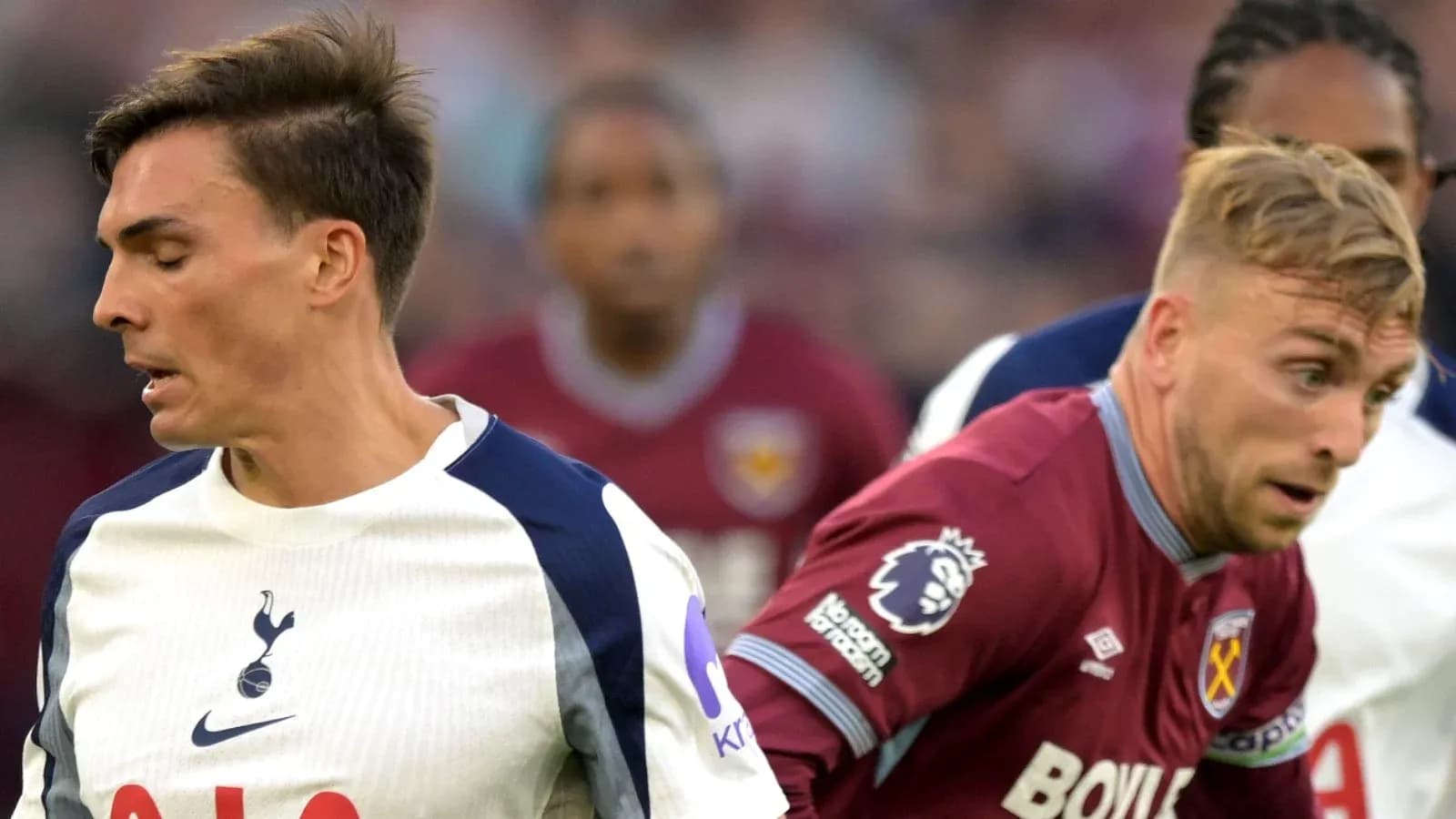
This time, the title race didn’t bother to show. The Race for Europe feels like admin. But thanks to Tottenham’s refusal to behave like a serious football club for more than five minutes at a time, the Premier League still staggers towards its finale with a proper relegation knife-edge.
Tottenham have saved the drama. And may yet pay the price for it.
Game to watch: Tottenham v Everton
James Maddison called it “embarrassing”. He wasn’t wrong. Here we are: Tottenham Hotspur, on the final day, in real danger of going down.
They sit on the same points tally with which they finished 17th last season. Back then, they were effectively safe by spring because three teams had vanished over the horizon in the wrong direction. This year there are only two of those. The trapdoor is open.
Last season’s late collapse came with a flimsy excuse: once they’d stitched together a three-game winning run in February, they leaned into the Europa League and let the league form drift. It was weak, but at least there was a logic to it.
This time? The only mitigation is an injury list that reads like a testimonial programme. Even that comes with its own indictment. Spurs already knew the squad was creaking in January. They had a catastrophic casualty count then as well, surveyed the wreckage, and chose to do almost nothing. Don’t panic, lads. How’s that working out?
The biggest failure sits out on the right flank. Selling Brennan Johnson early in the window for good money actually looked decisive, even smart. His performances for Spurs and then for Crystal Palace haven’t exactly made that decision look foolish. The real crime came next. Mohammed Kudus suffered a serious injury in the very next game and disappeared from the season. Spurs watched it happen. Then watched the rest of January drift by without properly replacing either of them.
If Sunday ends with Tottenham in the bottom three, those three weeks in January will dominate every post-mortem. In truth, they probably should anyway. Whether they survive or not, it’s hard to construct any defence of chief executive Vinai Venkatesham or sporting director Johan Lange after a campaign of such staggering mismanagement.
Roberto De Zerbi has at least given Spurs a recognisable structure and some attacking intent, but he is still trying to build a functioning forward line out of spare parts and wishful thinking. Once again he is likely to send out a front three of Richarlison, Mathys Tel and the desperately out-of-form Randal Kolo Muani, then glance over his shoulder and pray that Maddison is fit enough to rescue something when the game starts to tilt.
The midfielder’s brief cameos against Leeds and Chelsea have been a brutal reminder of what Spurs have missed. In each of those matches, the team looked sharper, braver, more dangerous in the 20 minutes Maddison managed than in the 70 without him. Yet he is clearly still nowhere near full sharpness. That contrast says plenty about everyone else.
On paper, this should be straightforward. One point keeps Tottenham safe, barring West Ham scoring a dozen against Leeds. Even Spurs surely can’t conjure that level of misfortune. Everton, for their part, have hit the wall. They haven’t won since early March, and what once looked like a plausible push for European football has dissolved into a weary stumble.
But nobody with even a passing knowledge of Tottenham’s recent history will call this safe. The psychology matters here more than any tactical chalkboard. Under De Zerbi, Spurs have shown how quickly their confidence drains away at the first sign of trouble. They were comfortable at Sunderland and Chelsea until they conceded; they shrank instantly. Against Leeds at the Tottenham Hotspur Stadium, they went from cruise control to rattled and second best the moment the visitors equalised.
They cannot afford to wait this time. They need to land the first punch. Quiet the noise. Deny West Ham the oxygen of belief.
Because everyone inside that stadium knows what happens if news filters through of a West Ham goal. You can already hear the sound: that jagged, panicked roar that has nothing to do with what’s in front of you and everything to do with what’s happening 200 miles away. You can already see it on the pitch: passes going backwards, legs turning to stone, a team that has spent a season wobbling suddenly staring into the abyss.
There are nine possible combinations of results between Tottenham and West Ham that decide this relegation scrap. Eight of them keep Spurs up. Only one sends them down.
This is Tottenham, though. You can’t quite shake the feeling they’ve got one last calamity in them.
If they lose – and they absolutely could – the whole thing swings to…
Team to watch: West Ham
West Ham United are clinging to the edge of the season with their fingertips. Their fate sits in someone else’s hands, and that someone else is Tottenham, which at least offers a sliver of hope.
Their assignment is brutal. Leeds, on current form, are a far nastier opponent than Everton. West Ham come into the game off three straight defeats, each more dispiriting than the last, the nadir a limp, apologetic surrender at Newcastle that left their supporters furious and their season on life support.
Leeds, by contrast, are eight unbeaten. They had nothing tangible to play for last weekend and still rolled over a Brighton side fighting for something. This is not a team that looks ready to clock off and start browsing holiday brochures.
So West Ham must hope that the final day scrambles everyone’s heads. That Leeds turn up in end-of-term mode. That the pressure of the occasion bites harder on their opponents than on them.
More than anything, they must do what they so conspicuously failed to do at St James’ Park: treat this like an all-or-nothing game. The plan writes itself. Strike first. Score early. Let the news seep into that nervous bowl in north London. Turn Tottenham’s afternoon into a test of nerve they have repeatedly failed this year.
The odds remain long. But if West Ham can win their own battle, the rest of the league will be watching the live table flicker and twitch.
Manager to watch: Pep Guardiola
One last time, Pep Guardiola will walk out as a Premier League manager. As with Ferguson, Wenger and Klopp before him, it feels impossible to imagine him prowling any other technical area in this league.
His Manchester City side face Aston Villa, the Europa League winners, in a game stripped of jeopardy. City’s laboured, scarcely deserved draw at Bournemouth in midweek killed any chance of a late charge at Arsenal and removed the final banana skin from the champions-elect’s path.
On the surface, Guardiola bows out with a domestic cup double and a team in transition that still found a way to collect silverware. By any normal standard, that is success. By his own, it is something less than that. This is the manager who turned the Premier League into a 95-point arms race, who claimed six titles in seven seasons at his peak and forced everyone else to chase his shadow.
To leave after a year without a title challenge and then a second in which the challenge never quite convinced will irritate him. He will know they fell short of their own benchmark. Yet he departs as the second-greatest manager this league has seen.
Given who sits at number one, that is hardly a bad place to be.
Player to watch: Mohamed Salah
Another farewell, this one far more strained. Mohamed Salah’s final season at Liverpool has played out with a sulky edge, a superstar drifting through games without Trent Alexander-Arnold’s overlapping presence, grumbling his way through interviews and occasionally picking fights that didn’t need to exist.
It is a waste. Salah is an all-time Premier League great, a modern Liverpool icon, and he leaves under an unnecessary cloud a year on from Alexander-Arnold’s own acrimonious exit. This should have been a lap of honour. Instead it has felt like a long argument.
For those of us watching, it does at least remove one problem: he will be the story whatever Jürgen Klopp decides to do with him. The “Player to watch” tag often dies on the team-sheet when managers rotate or injuries strike. Not with Salah. Not now.
Liverpool need a point to lock in Champions League football. Whether Salah starts, sulks on the bench, comes on for a late cameo or disappears from the matchday squad entirely, the cameras will hunt him down. Every gesture, every glance, every interaction with Klopp will be read for clues.
On a day of ten simultaneous games, he remains the central character even if he never steps onto the pitch. Perhaps especially if he doesn’t.
Football League game to watch: Hull City v Southampton Middlesbrough
The Championship play-off final rarely requires extra theatre. Promotion is worth around £200m; the stakes write the script. This year, though, the drama has already started before a ball is kicked, thanks to the farcical “Spygate” saga that has engulfed Southampton and Middlesbrough.
Southampton have paid heavily for a piece of astonishingly small-time cheating. No drones, no covert tech, just an intern with a phone and not enough imagination to blend in at a golf club while filming the opposition. For such amateurish nonsense to carry such a vast financial cost is almost impressive in its own way.
Middlesbrough, cast as victims in the affair, have also been spectacularly fortunate. While the debate rages over whether Southampton’s punishment fits the crime, it is just as valid to ask how much of a let-off Boro have enjoyed.
The true innocents are Hull City. They did it the old-fashioned way: won a two-legged semi-final, booked their place at Wembley, and waited. And waited. While Southampton and Middlesbrough at least knew they would either face Hull or not, Hull had no idea who would be standing opposite them until less than 72 hours before kick-off.
Southampton cheated. Middlesbrough lost. Under normal circumstances, both outcomes end your involvement. Yet here they are, back in the £200m match, while Hull have had their preparations shredded.
You don’t need to believe in fate to feel what’s coming. The logic of football chaos points in one direction: Middlesbrough, the first play-off semi-final losers ever to win promotion.
European game to watch: Bayern Munich v Stuttgart
Even Harry Kane’s medal collection has started to look respectable since his move to Germany. Now he stands one game away from another piece of silverware as Bayern Munich face Stuttgart in the DFB Pokal final.
It is easy to treat a Bayern win as inevitable. It would also be wrong. They have not lifted this trophy since 2020, their 20th triumph, and they have not even reached the final in the five seasons since. For a club that once treated the Pokal as a formality, that is a significant drought.
Stuttgart arrive as holders, chasing history of their own. Last year’s triumph was their fourth; now they stand in back-to-back finals for the first time. Twice before they have run into Bayern at this stage – in 1986 and 2013 – and twice they have left empty-handed.
Kane’s season has already been prolific. One more night, one more cup, and he walks away from his first year in Germany with the kind of haul Tottenham never gave him. On a weekend when Spurs stare at the drop, the contrast writes itself.