.svg&w=384&q=75 "naujapitch logo")
Spokane Velocity Defeats Boise in USL League One Cup
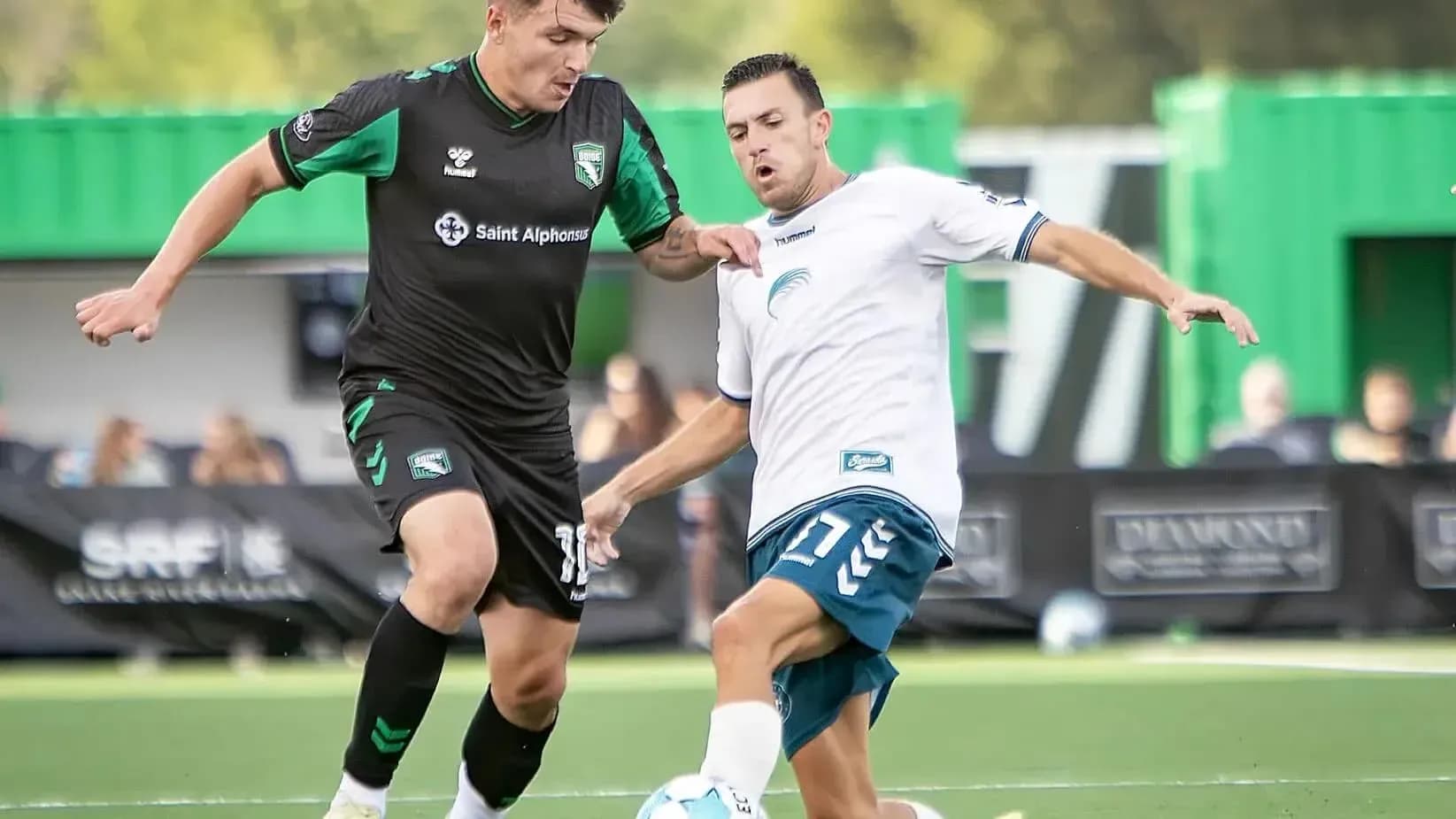
Under the lights at One Spokane Stadium, Spokane Velocity’s 2–1 win over Boise felt less like a routine group-stage fixture and more like a statement about who they are becoming in this inaugural USL League One Cup campaign. The numbers heading into this game painted a contrast: Spokane, second in Group 1 with 6 points and a negative goal difference of -2 (3 goals for, 5 against overall), versus a Boise side sitting third on 5 points with a far more explosive attacking profile, 10 goals for and 8 against overall for a positive goal difference of 2.
I. The Big Picture – Home fortress vs open-ice offense
Heading into this game, Spokane’s identity was clear: ruthless at home, fragile on their travels. At home they had played 2, won 2, with 3 goals for and just 1 against. That’s a home attacking average of 1.5 goals per game and a home defensive average of 0.5 conceded. Away, the story was harsher: 1 match, a 4–0 defeat, 0.0 goals for and 4.0 against.
Boise arrived as the group’s great entertainers. Overall they averaged 2.3 goals scored per match and 2.0 conceded. On their travels, they had played 2, winning 1 and losing 1, with 3 goals for and 3 against – an away average of 1.5 scored and 1.5 conceded. Their biggest away win was 1–2; their only defeat, a 2–1 reverse, hinted at a side that always leaves the back door slightly ajar.
This match finished 2–1 to Spokane, perfectly in line with those trends: Spokane just strong enough at home to withstand Boise’s chaos, Boise dangerous but ultimately exposed.
II. Tactical Voids and Discipline – Edges in the margins
With no official injury or suspension list provided, both coaches seemed to lean on their core groups. Leigh Veidman again trusted a spine built on familiarity. In goal, S. Lewis wore the number 1 shirt, fronted by a defensive unit anchored by S. Fitch and G. Margvelashvili, with C. Miller and D. Waldeck rounding out a back line that has been quietly effective at home.
In front of them, the dual presence of C. Fernandez and A. Lewis provided the platform for Spokane’s front four of S. John-Brown, L. Gil, J. Gallardo and the number 9, N. Brett. It is an eleven that feels balanced rather than star-studded, but at One Spokane Stadium that balance has translated into control.
Disciplinary trends added a subtle tactical undertone. Spokane’s yellow card distribution this season shows a clear spike between 61–75 minutes, where 42.86% of their yellows have been shown. Earlier intervals – 16–30, 31–45 and 46–60 – each account for 14.29%. There is also a single red card on their record, coming between 46–60 minutes (100.00% of their reds). It suggests a side that, as legs tire and the game stretches after the hour mark, is more likely to step into risky tackles to protect a lead.
Boise, meanwhile, spread their yellows more evenly but still with a notable front-half edge: 16.67% between 0–15, 33.33% between 31–45, and then 16.67% in each of the 46–60, 61–75 and 76–90 windows. They are combative throughout, but that 31–45 spike hints at a team that reacts emotionally as the first half closes.
III. Key Matchups – Hunter vs Shield, Engine Room battles
The “Hunter vs Shield” narrative here was Boise’s free-scoring front line against Spokane’s home defensive record. Boise had scored 7 goals in total, 4 at home and 3 away, with that away average of 1.5 goals per game. Spokane’s home defense, conceding just 0.5 per match, was the Shield.
On the Boise side, the attacking trident of B. Bodily, T. Amang and T. Moshobane gave them multiple points of penetration. Behind them, P. Mayaka and M. Ndiaye offered energy and ball-winning from midfield, while D. Kostyshyn’s number 10 shirt signaled his role as a link and creator.
Spokane’s answer lay in their structure and in the work of their own “Engine Room.” Fernandez and A. Lewis had to disrupt Mayaka and Ndiaye’s rhythm, while Gil and Gallardo drifted between lines, asking questions of Boise’s central defenders J. Yaro and J. Crull. On the flanks, S. John-Brown’s movement tested N. Moon and J. Ricketts, forcing Boise’s full-backs to choose between stepping high to press or dropping to protect the channels.
The bench options hinted at alternative plans. Spokane could turn to the craft of N. Vinyals and the energy of M. Hernandez or M. Mensah if the game demanded more verticality or pressing. Boise had the pace and penalty-box threat of Luan Brito, and the defensive reinforcement of H. Sargis and K. Oyler if they needed to shut down wide areas.
IV. Statistical Prognosis and What the Result Tells Us
From a probabilistic lens, the matchup always leaned toward a relatively high-event contest. Boise’s lack of clean sheets – 0 at home, 0 away, 0 in total – and their defensive average of 2.0 goals conceded overall meant Spokane were likely to score at least once, especially given their 1.5 home goals per game. Conversely, Spokane’s overall defensive average of 1.7 goals conceded per match, inflated by that 4–0 away defeat, suggested Boise would still find chances.
A 2–1 scoreline fits almost perfectly into that statistical corridor: Spokane hitting their home attacking average and Boise landing just below their overall scoring trend, pulled down by Spokane’s home solidity.
In xG terms, you would expect Spokane’s controlled home style – methodical build-up through Fernandez, Gil and Gallardo, plus Brett’s penalty-box presence – to generate steady, medium-quality chances rather than a barrage. Boise’s transitions, with Amang running channels and Bodily attacking half-spaces, would likely create fewer but higher-quality opportunities. The final 2–1 suggests Spokane edged the underlying numbers, turning their territorial control into enough shots to outstrip Boise’s more sporadic flurries.
Following this result, the identities of both teams sharpen. Spokane remain a side whose season will be defined by their home form: 3 goals for and 1 against at One Spokane Stadium, a fortress where structure and discipline trump chaos. Boise, even in defeat, reaffirm their profile as a dangerous, open team – capable of scoring against anyone, but still searching for the defensive control that turns entertaining football into winning football.