.svg&w=384&q=75 "naujapitch logo")
Real Madrid's Future After Carvajal: Academy Right-Backs Fortea and Jiménez
The Bernabéu will say goodbye to a captain on Saturday. Dani Carvajal, the relentless right-back who has come to embody Real Madrid’s modern era, is set to play his final game for the club in La Liga against Athletic Club. One more night in white. Then the curtain falls.
His departure cuts deeper than a simple change on the teamsheet. Madrid lose a reference point in the dressing room, a player whose experience, competitive edge and refusal to bend in big moments have framed an entire decade. They also lose a specialist in a position that has quietly underpinned so many of their greatest nights.
Trent Alexander-Arnold is expected to remain the first-choice right-back going forward, a marquee solution already in the building. But even with the England international in place, Madrid know they cannot walk into a long, gruelling season with no natural cover and no succession plan.
The market offers names, not solutions.
Pedro Porro at Tottenham and Diogo Dalot at Manchester United are admired in the corridors of Valdebebas. Both fit the profile: modern, athletic, technically secure. Both are also wrapped in layers of difficulty – price, contracts, negotiating clubs unwilling to weaken themselves. Inside the club, those moves are considered highly complicated, bordering on unrealistic.
So the gaze turns inward, towards La Fábrica. Towards two very different right-backs who might soon be asked to step into one of the most demanding roles in world football.
Fortea – the prodigy Madrid broke a pact for
Jesús Fortea is the bold option. The gamble with upside. The 19-year-old, 1.75m tall and wired to attack, is one of the brightest talents in the academy and carries a story that already carries weight.
To sign him, Real Madrid tore up a long-standing non-aggression pact with Atlético Madrid, lifting him from their neighbours’ academy when he was just a teenager. You do not break that kind of agreement for a squad player. From the moment he walked through the door at 15, people around the club whispered the same phrase: “Carvajal’s heir.”
The path since then has not been straight.
Instead of moving smoothly up to Castilla, Fortea found himself held back with Real Madrid C, stuck in a holding pattern while others advanced. When he finally made the jump, the adaptation bit hard. He struggled to lock down the right-back spot, to impose his game in a team full of players chasing the same dream.
But he did not fade. He fought his way into the side and became an important figure in the Juvenil A team that lifted the UEFA Youth League. On those European youth nights, his qualities flashed in full colour: speed, skill, constant aggression down the flank. He plays on the front foot by instinct.
That instinct still needs polishing. Defensively, there is work to be done – positioning, duels, the small details that separate an exciting full-back from a reliable one at elite level. Inside the club, they see him as a big long-term bet, not a finished article. His contract runs until 2029, a clear sign that Madrid are prepared to give him time to grow into the role.
If Real choose Fortea, they choose risk and reward. They choose a right-back who can stretch games, who can pin opponents back, but who will inevitably make the kind of mistakes that come with youth. They also choose continuity with their own idea: a homegrown, aggressive full-back in the Carvajal mould, updated for a new era.
Jiménez – the quiet captain waiting his turn
On the other side of the equation stands David Jiménez, the calm to Fortea’s storm. Less noise, more certainty.
Jiménez joined La Fábrica in 2013 from Móstoles URJC, a boy with Álvaro Arbeloa as his idol. That choice of role model tells you plenty. He is not the type to flood highlight reels; he is the type to satisfy coaches.
Year by year, he climbed through the youth categories. No great fanfare, no dramatic leaps. Just steady, reliable progress until he pulled on the captain’s armband at Castilla. Around Valdebebas they describe him as a complete team player, “the silent leader” – the one who rarely speaks loudest, but sets the tone with his professionalism and attitude.
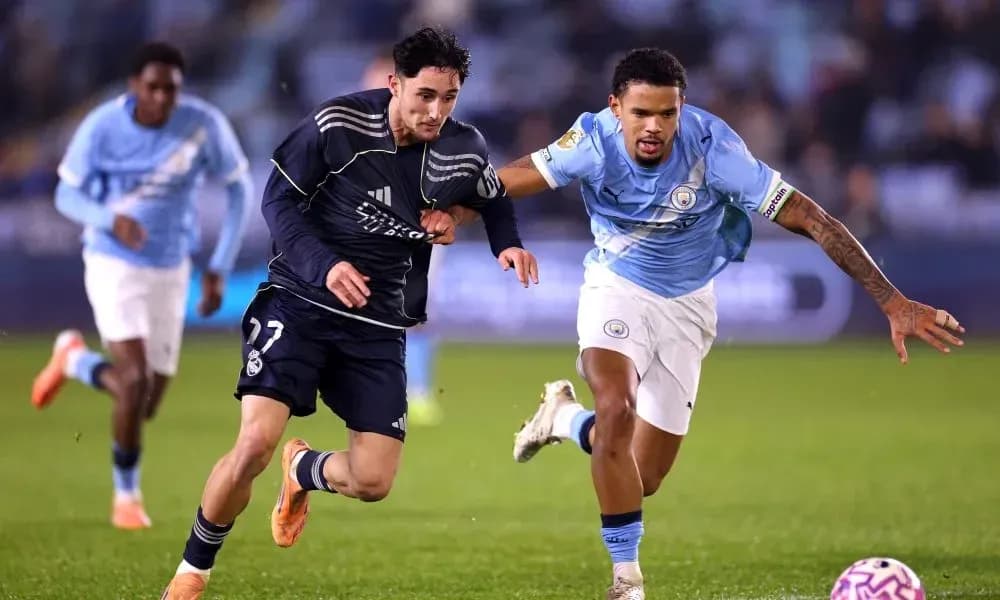
On 17 December, Jiménez finally crossed the line every academy player dreams of, making his first-team debut in the Copa del Rey against Talavera under Xabi Alonso. It was not a ceremonial cameo. He has since featured in three more matches, including a start against Valencia, a fixture that always tests a defender’s mettle.
His profile is clear. Solid. Disciplined. Rarely spectacular. He does not dominate the eye like an attacking full-back, but he does not betray his team either. Comparisons inside the club drift towards Nacho Fernández – another quiet guardian who built a career on reliability, versatility and an almost total absence of errors.
Choosing Jiménez would be choosing security. A player who can drop into the side without disrupting structure, who understands the defensive demands of a Madrid back line and who already carries the trust that comes with the captaincy at Castilla.
Two paths, one position
Carvajal’s exit leaves more than a vacancy. It opens a philosophical question for Real Madrid’s right flank.
Do they back the daring, offensive energy of Fortea, betting on his ceiling and accepting the growing pains that will follow? Or do they reward Jiménez’s years of service and leadership, leaning on a defender who may never dominate headlines but rarely lets anyone down?
There is a third way, of course: the market. If an external opportunity suddenly becomes viable, Madrid have the financial power and sporting appeal to move. But as it stands, the most realistic solutions are already training every day in Valdebebas, waiting for a call that could change their careers.
Carvajal will walk out at the Bernabéu this weekend knowing his chapter is almost written. Somewhere behind him, one of these two academy right-backs is preparing to pick up the pen.