.svg&w=384&q=75 "naujapitch logo")
Qatar vs Switzerland: Tactical Analysis of a 1-1 Draw
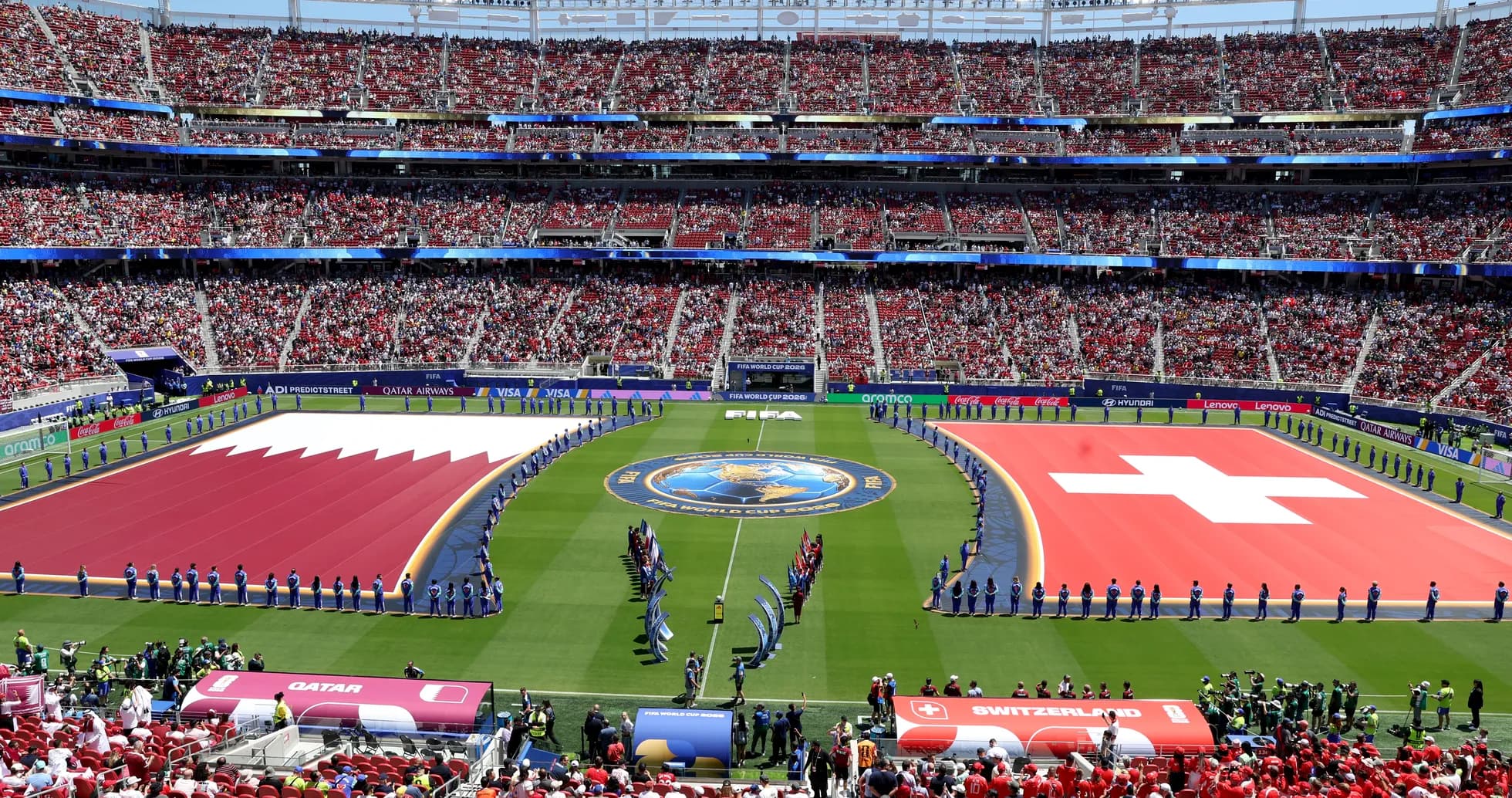
Qatar’s 1-1 draw with Switzerland at Levi's Stadium unfolded as a classic clash between compact defending and high-possession territorial dominance. Switzerland controlled the game with 68% of the ball, a 575–275 passing advantage and a huge 26–7 shot count, yet needed only a VAR-confirmed early penalty to score. Qatar, in a 4-3-3 under Julen Lopetegui, absorbed pressure for long spells, then stole a point with a 90+4' equaliser, maximising a low-xG attacking plan (0.76 vs Switzerland’s 3.24). The match became a test of structural resilience, goalkeeper reliability and late-game game-management.
Switzerland's Strategy
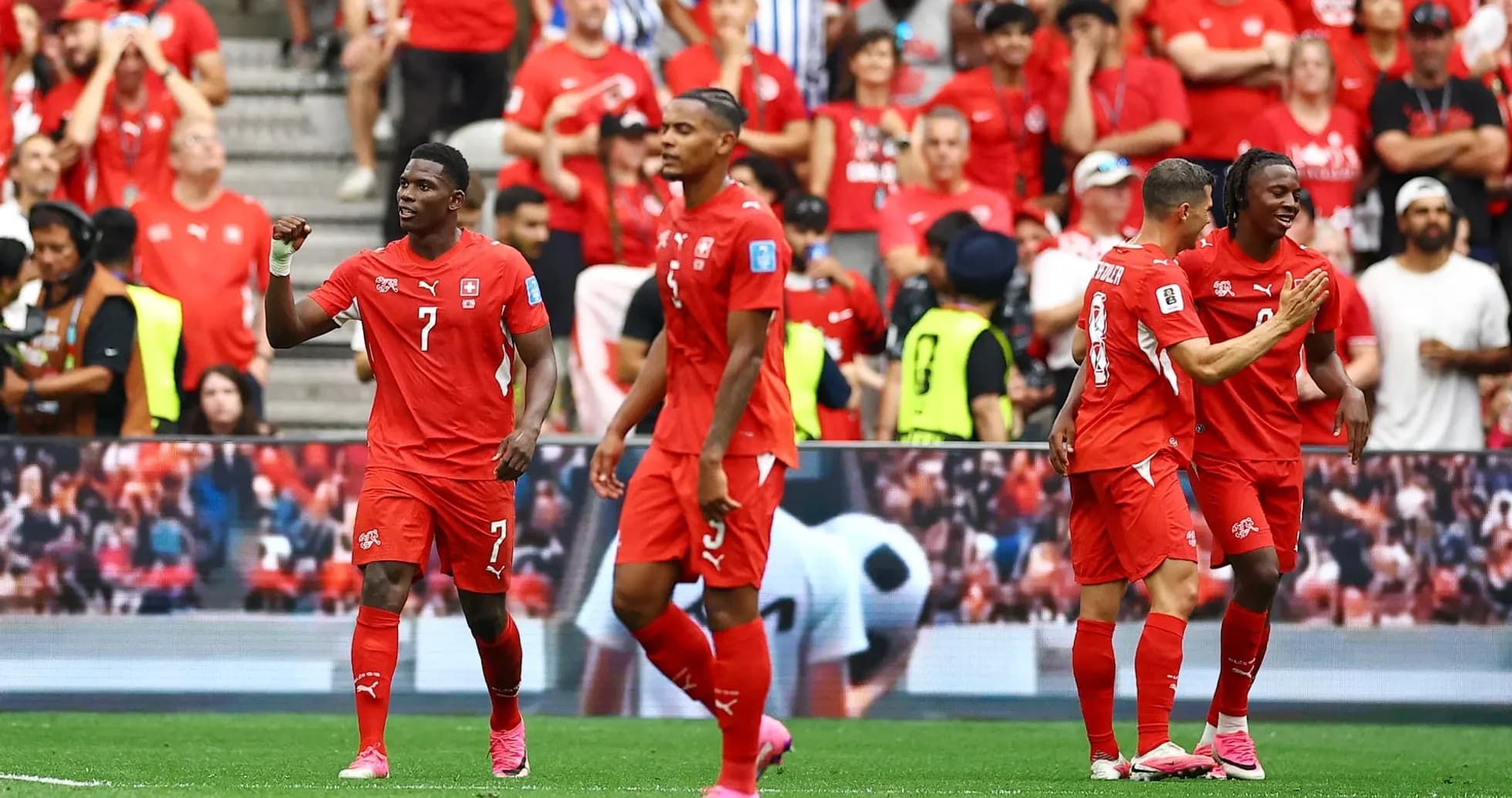
Switzerland’s 4-3-3 was built around Granit Xhaka as the central distributor and a very high territorial block. With 91% passing accuracy (575 passes, 522 accurate), Murat Yakin’s side circulated the ball methodically, using Manuel Akanji and Nico Elvedi to step into midfield and compress the pitch. Full-backs Denis Zakaria and Ricardo Rodríguez pushed high to pin Qatar’s wingers, while Michel Aebischer and Remo Freuler supported between the lines, enabling Dan Ndoye and Rubén Vargas to receive in advanced half-spaces. The result was a constant wave of pressure: 18 shots inside the box and 9 blocked efforts underline how often Switzerland managed to reach the final third and shoot through traffic.
Qatar's Response
Qatar’s response was a deep, disciplined 4-3-3 that often resembled a 4-5-1 without the ball. The back four of Homam Al-Amin, Boualem Khoukhi, Pedro Miguel and Ayoub Al Oui stayed narrow, protecting central zones and inviting crosses. The midfield trio of Jassem Gaber Abdulsallam, Assim Madibo and Issa Laye were tasked with screening Xhaka and denying direct passing lanes into Embolo’s feet. With only 32% possession and 275 total passes (196 accurate, 71%), Qatar accepted long spells without the ball, prioritising verticality and quick transitions through Akram Afif and Edmilson Junior when they could break.
Turning Point
The game’s early turning point came in the 16th minute: under sustained pressure, Qatar’s attempt to slow the tempo saw Mahmud Abunad booked for “Time wasting”, immediately followed by a VAR check that confirmed a Switzerland penalty for Remo Freuler. Breel Embolo converted at 17', and from there Switzerland could lean even harder into controlled dominance. Their front three stretched Qatar horizontally, while Xhaka recycled possession and repeatedly reset attacks, forcing Qatar’s block to shift side to side and gradually fatigue.
Qatar's Offensive Structure
Qatar’s offensive structure before the hour mark was limited: just 7 total shots, 5 inside the box, and 3 corner kicks across the match show how rarely they could sustain pressure. The front line of Afif, Yusuf Abdurisag and Edmilson Junior was often isolated, with long distances to cover in transition. Lopetegui’s key adjustment came on 60 minutes with a triple substitution vector that changed both energy and roles: Ahmed Alaaeldin (IN) came on for Yusuf Abdurisag (OUT), Karim Boudiaf (IN) came on for Jassem Gaber Abdulsallam (OUT), and Ahmed Fathi (IN) came on for Ayoub Al Oui (OUT). Boudiaf’s introduction added physicality and experience in midfield, while Alaaeldin offered fresher legs to press and run channels.
Switzerland's Substitutions
Switzerland tried to refresh their own press and maintain intensity with a 65' double change: Johan Manzambi (IN) came on for Dan Ndoye (OUT), and Fabian Rieder (IN) came on for Michel Aebischer (OUT). Later, at 79', Zeki Amdouni (IN) came on for Rubén Vargas (OUT), and in the 89th minute Miro Muheim (IN) came on for Ricardo Rodríguez (OUT) while Ardon Jashari (IN) replaced Remo Freuler (OUT). These moves were clearly aimed at preserving the front-foot structure, but they did not significantly alter the shot quality profile: Switzerland kept shooting, but increasingly against a packed, low block.
Goalkeeping Performance
In goal, Mahmud Abunad (Qatar) was central to the result. He made 5 saves and, combined with Qatar’s shot-blocking and compactness, helped limit the damage despite Switzerland’s 7 shots on target and 3.24 xG. The goals prevented metric of 0.43 underlines that he outperformed the underlying shot quality. At the other end, Gregor Kobel (Switzerland) faced far fewer clear threats, making 3 saves behind a dominant defensive structure that allowed only 4 shots on goal and 0 blocked shots against.
Disciplinary and Game Management
The disciplinary and game-management side also shaped the tactical rhythm. After Abunad’s early booking, Qatar’s midfield aggression was visible in Jassem Gaber Abdulsallam’s yellow card for “Foul” at 23', a by-product of trying to disrupt Swiss combinations. Switzerland’s only card came at 42', when Denis Zakaria was booked for “Foul”, reflecting how often he was exposed to defensive duels as an advanced full-back stepping into challenges high up the pitch.
Late Phases
The late phases highlighted contrasting risk profiles. Switzerland, ahead 1-0, maintained their expansive posture, continuing to commit numbers forward and trust their structure rather than dropping into a low block. Qatar, having injected fresh legs again at 79' with Mohamed Naceur Almanai (IN) for Assim Madibo (OUT), and at 88' with Hassan Al Haydos (IN) for Edmilson Junior (OUT), finally generated sustained pressure. The decisive moment came at 90+4': from a rare advanced spell, Homam Al-Amin delivered the key contribution from full-back, assisting centre-back Boualem Khoukhi, who stepped up to score the equaliser. It was a textbook example of a low-possession side leveraging set structure and late attacking risk to convert a single high-impact chance.
Statistical Overview
Statistically, Switzerland’s superiority was clear: more possession, more passes, vastly more shots, and a much higher xG. Yet Qatar’s defensive index – combining low blocked shot count against, high goalkeeper saves, and a goals prevented figure of 0.43 – shows a team that executed a containment game plan with precision. Tactically, the draw reflects efficiency versus volume: Switzerland produced enough to win comfortably on most days, but Qatar’s structure, Abunad’s performance, and Lopetegui’s timed substitutions allowed them to turn a low-volume attack into a critical point in the group stage.