.svg&w=384&q=75 "naujapitch logo")
The Premier League's Biggest Missed Transfers
The Premier League’s history is written by the players who came… and by the ones who almost did.
For every banner unfurled and statue raised, there’s a ghost transfer that might have redrawn the map of English football. Title races, dynasties, legacies – all hanging on a phone call, a handshake, a fax, or in one case, a volcano.
Here are 15 of the biggest deals that never quite made it over the line.
Blackburn’s Sliding-Doors Era
Before Manchester United made Roy Keane their heartbeat, Blackburn Rovers had him. Or thought they did.
In 1993, Keane had shaken hands with Kenny Dalglish, the contract was effectively in place, and the Irishman went back home believing he was bound for Ewood Park. Then Old Trafford called. Keane admitted years later that his “mistake” was saying he would sign for United after already committing to Blackburn. It turned out to be one of the most consequential U-turns in Premier League history: seven league titles, four of them as captain, and the defining midfield presence of an era – all in red instead of blue and white.
Blackburn’s what‑ifs didn’t end there.
Two years later, fresh from winning the 1994/95 title, Dalglish wanted to reinforce his champions with a young French midfielder from Bordeaux: Zinedine Zidane. Zidane and Christophe Dugarry even turned up at the training ground. Tim Sherwood remembers seeing them there, remembers the conversations with owner Jack Walker. The move was vetoed. Walker’s infamous line – “Why do you want to sign Zidane when we have Tim Sherwood?” – has echoed ever since. Three years later, Zidane was a World Cup winner and Ballon d’Or holder. Blackburn, meanwhile, were sliding away from the summit they had briefly conquered.
Fast-forward to 2010 and Blackburn were again on the brink of something extraordinary. This time it was Robert Lewandowski, a prolific young striker at Lech Poznan. Talks had gone well, a proposal was in place, and Lewandowski was due to fly to England to seal the deal. Then Eyjafjallajokull erupted. Flights across Europe were grounded by the ash cloud. “I could not fly to Blackburn because of the volcano,” Lewandowski later explained. Had he made that trip, he admits, seeing the club and stadium might have made Rovers his first choice. Instead, he joined Borussia Dortmund, then Bayern Munich, then Barcelona – and became one of the most ruthless scorers the Champions League has ever seen.
Three near-misses, three generational players, one club left wondering what might have been.
Arsenal’s Nearly XI
Few managers have watched more world-class talent slip through their fingers than Arsene Wenger.
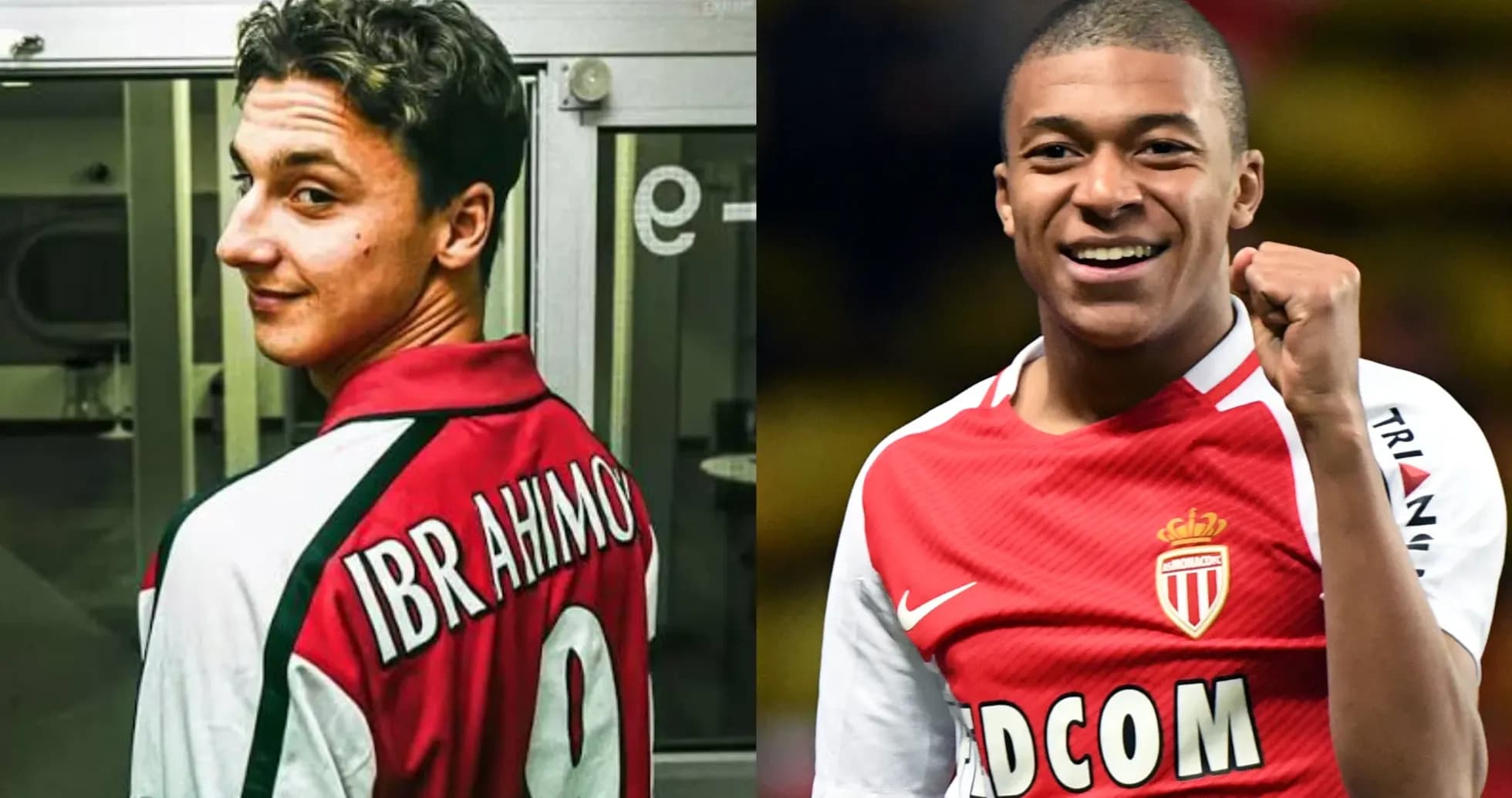
At the turn of the millennium, a 17-year-old Zlatan Ibrahimovic flew in from Malmo to talk to Arsenal. He posed in a No 9 shirt with his name on the back, the deal seemed close enough for the cameras. Then came the sticking point. Wenger wanted a trial. Ibrahimovic didn’t. “Zlatan doesn’t do auditions,” he would later say. The Swede walked away, and England wouldn’t see him in the Premier League until 2016, when he arrived at Manchester United instead.
In 2003, another future powerhouse pulled on an Arsenal shirt without ever signing for the club. Yaya Toure, then at Beveren, turned out in a pre-season friendly against Barnet. Wenger wanted him, the agreement was there, but the work permit dragged on. Toure grew impatient and chose Metalurh Donetsk, where he could move without paperwork complications. Years later, he would return to England with Manchester City, winning three Premier League titles and dominating midfields in the way Arsenal had once imagined he might do for them.
That same year, Wenger came even closer with Cristiano Ronaldo. The 17-year-old winger from Sporting Lisbon visited Arsenal’s training ground with his mother, toured the facilities, received a shirt with his name on the back. Wenger has called missing out on Ronaldo the biggest regret of his tenure. The deal came down to the transfer fee, and Arsenal stepped aside. Manchester United did not. Ronaldo went on to win three Premier League titles at Old Trafford and five Ballons d’Or across his career.
More than a decade later, Wenger was still chasing the next great forward. In 2016, he flew to the south of France to sit in Kylian Mbappe’s family home, trying to sell the Arsenal project to a teenager yet to sign a professional contract with Monaco. The pitch wasn’t enough. Mbappe chose Paris Saint-Germain, won a World Cup with France, and only later made his move to Real Madrid.
Arsenal got plenty right under Wenger. But the team of players he almost signed could have changed the entire landscape of the league.
United’s Missed Empires
Manchester United’s dominance under Sir Alex Ferguson was built on transfer coups. Yet even they have a catalogue of almosts.
In 1996, Alan Shearer sat down with both Ferguson and Newcastle United’s Kevin Keegan on the same day. By his own admission, he was “90 per cent” certain he would join United from Blackburn. Instead, a late call from Keegan pulled him back to his boyhood club. Shearer chose St James’ Park, scored 148 Premier League goals for Newcastle, and left Old Trafford to wonder how many more titles they might have won with the league’s all-time record scorer leading their line.
Seven years later, United were again on the verge of adding a Brazilian superstar. Ronaldinho had decided to leave Paris Saint-Germain at the end of the 2002/03 season, and Ferguson publicly admitted they were “very close” to a deal. The expectation was that the magician would light up Old Trafford. Then Barcelona moved. Sandro Rosell asked Ronaldinho for a promise: if he became Barca president, would the playmaker join? Ronaldinho said yes. He went to Camp Nou, won the Ballon d’Or in 2005, and delivered the Champions League in 2006.
The pattern has repeated in the post-Ferguson era, often with a sting.
In December 2019, Ole Gunnar Solskjaer flew to Austria to try to bring Erling Haaland from Red Bull Salzburg to Old Trafford. Solskjaer knew him well from their time together at Molde and had even urged United to sign him 18 months earlier, before he exploded on the European stage. The club didn’t move then. By the time they did, “everyone was there,” as Solskjaer later put it. Haaland chose Borussia Dortmund instead, then crossed the city divide to Manchester City, where he has already claimed two Premier League titles and three Golden Boots.
United’s charm offensive was just as intense with Jude Bellingham. At 17, the Birmingham City midfielder and his family were invited to Carrington. Solskjaer was joined by Ferguson, Bryan Robson and Eric Cantona – a roll call of club royalty – to sell the vision. Robson recalls leaving the meeting convinced Bellingham would sign. He didn’t. Dortmund won that race too, and Real Madrid followed.
Even earlier, United had been sure they had Aaron Ramsey. The club’s website announced an agreement with Cardiff City in 2008, describing the teenager as one of Wales’ brightest prospects. Within 10 days, Ramsey had chosen Arsenal instead. A personal touch from Wenger – flying him out during Euro 2008, finding time between TV duties to lay out his plans over lunch – swung it. Ramsey spent 11 years in north London and scored three FA Cup final winners’ goals.
For a club built on ruthless recruitment, those are a lot of near misses at the very top end of the market.
Chelsea’s Almost Midfield of Dreams
In 2005, Chelsea were European champions in waiting, fuelled by Roman Abramovich’s money and Jose Mourinho’s ambition. One player stood at the heart of Mourinho’s grand plan: Steven Gerrard.
Fresh from dragging Liverpool to that improbable Champions League triumph in Istanbul, Gerrard was the perfect fit for Mourinho’s vision. The Portuguese coach later admitted he dreamed of a midfield trio of Claude Makelele, Gerrard and Frank Lampard – power, control, goals, everything in one unit. The pursuit was so serious that Gerrard handed in a transfer request at Liverpool. He has since written about how Mourinho “turned my head” and how the idea of playing for him was hugely tempting.
The pressure from home changed everything. After talks with his family, Gerrard reversed his decision, signed a new four-year deal at Anfield and stayed for another decade. Chelsea went on to win titles without him. Liverpool kept their captain, and with him, their identity.
Bolton’s Bold Gamble That Never Was
Few transfer stories feel as surreal in hindsight as Rivaldo to Bolton Wanderers.
Two years after lifting the World Cup with Brazil and already a Ballon d’Or winner, Rivaldo was a free agent in 2004. Bolton, under Sam Allardyce, were building a reputation for audacious deals and big-name resurrections. Chairman Phil Gartside revealed he had a fax in his pocket from Rivaldo saying he wanted to come. The financial terms were agreed. Rivaldo himself spoke of the “challenge” of trying to lead Bolton into Europe for the first time in their history, calling it an exciting time.
The move never reached the signing stage. Instead, Rivaldo joined Olympiacos and the Premier League never saw him in its colours. For Bolton, it remains the ultimate almost – a global icon nearly turning the Reebok Stadium into a stage for one last act.
Liverpool’s Missed Shot at Mbappé
Liverpool’s recruitment under Jurgen Klopp has been widely praised, but even they couldn’t land Kylian Mbappe.
In 2017, with Mbappe exploding at Monaco, Klopp and Liverpool went all-in. He has spoken about the effort: a private jet, flying in circles, talking with Mbappe and his family, sharing a meal and outlining the project. The pitch was bold, the charm offensive intense. Arsenal had tried the year before; Liverpool pushed even harder.
Mbappe chose PSG. He dominated Ligue 1, became a World Cup winner with France in 2018 and turned into one of the defining forwards of his generation before eventually heading to Real Madrid. Liverpool, already a formidable force, can only imagine what their attack might have looked like with him alongside Mohamed Salah and Sadio Mane.
West Ham’s Trial That Turned Down a Ballon d’Or
Before Andriy Shevchenko became a global star at AC Milan and later joined Chelsea, he was a teenager on trial at West Ham United.
Harry Redknapp arranged a game against Barnet’s reserves. Shevchenko scored twice. The talent was obvious, but so was the price tag: around £1 million for a 17-year-old. Redknapp and assistant Frank Lampard Snr decided it was too much of a gamble. West Ham walked away. Years later, Shevchenko would win the Ballon d’Or and eventually arrive in the Premier League with Chelsea, long after the Hammers had passed on him for a fee that now looks laughably small.
Football history is built on fine margins. A handshake honoured or broken. A fax sent or delayed. A plane grounded by ash drifting across Europe.
The Premier League we know – its champions, its heroes, its storylines – could have looked utterly different if just a handful of these deals had gone through.