.svg&w=384&q=75 "naujapitch logo")
Premier League 2026/27: A Season of Uncertainty and New Beginnings
The 2025/26 Premier League season barely has a full stop on it, yet the next chapter is already looming into view. That’s what happens when a campaign ends not with closure, but with a cliff-edge. Stories everywhere, tension to the final whistle, and the feeling that nothing is quite settled.
Here’s why 2026/27 already crackles with intrigue.
Life After Pep: City Step Into the Unknown
For the first time in more than a decade, the Premier League will start without its defining figure on the touchline. No Pep Guardiola in the technical area. No familiar silhouette pacing the Etihad, orchestrating another title charge.
Manchester City now face the question every dynasty dreads: what comes next?
Arsenal shrank in the years after Arsene Wenger. Manchester United are still wrestling with the void left by Sir Alex Ferguson. City have spent years as the model of stability and success, a machine built in Guardiola’s image. Strip out the architect and the whole structure gets tested.
The players, the hierarchy, the recruitment – they all carry the weight of avoiding the post-legend slump. For a fanbase used to relentless control, this next chapter feels unusually uncertain. And that, for everyone else, makes it compelling.
Carrick’s Manchester United: From Promise to Proving Ground
Across town, Manchester United have made their call. Michael Carrick is no longer the interim, no longer the caretaker, no longer the experiment. He is the permanent head coach.
Now the hard part starts.
Carrick’s first full summer will show how he really wants his team to look. His tactical ideas, his non-negotiables, his influence in the transfer market – all of it will be on display before a ball is kicked. Then comes the real test: the calendar.
United played just 40 matches in all competitions in 2025/26. Arsenal, by comparison, slogged through 63. That gap is gone now. Champions League football returns to Old Trafford, and with it a schedule that bites into legs and minds.
Can this squad handle the extra load? Can Carrick rotate without losing rhythm? The “Carrick-Ball” highlights have already whetted the appetite, but the jump from neat ideas in a lighter season to sustained excellence across four fronts is enormous. Momentum is fragile at Old Trafford. He has to show he can protect it.
Alonso at Chelsea: A New Voice, A New Power Structure
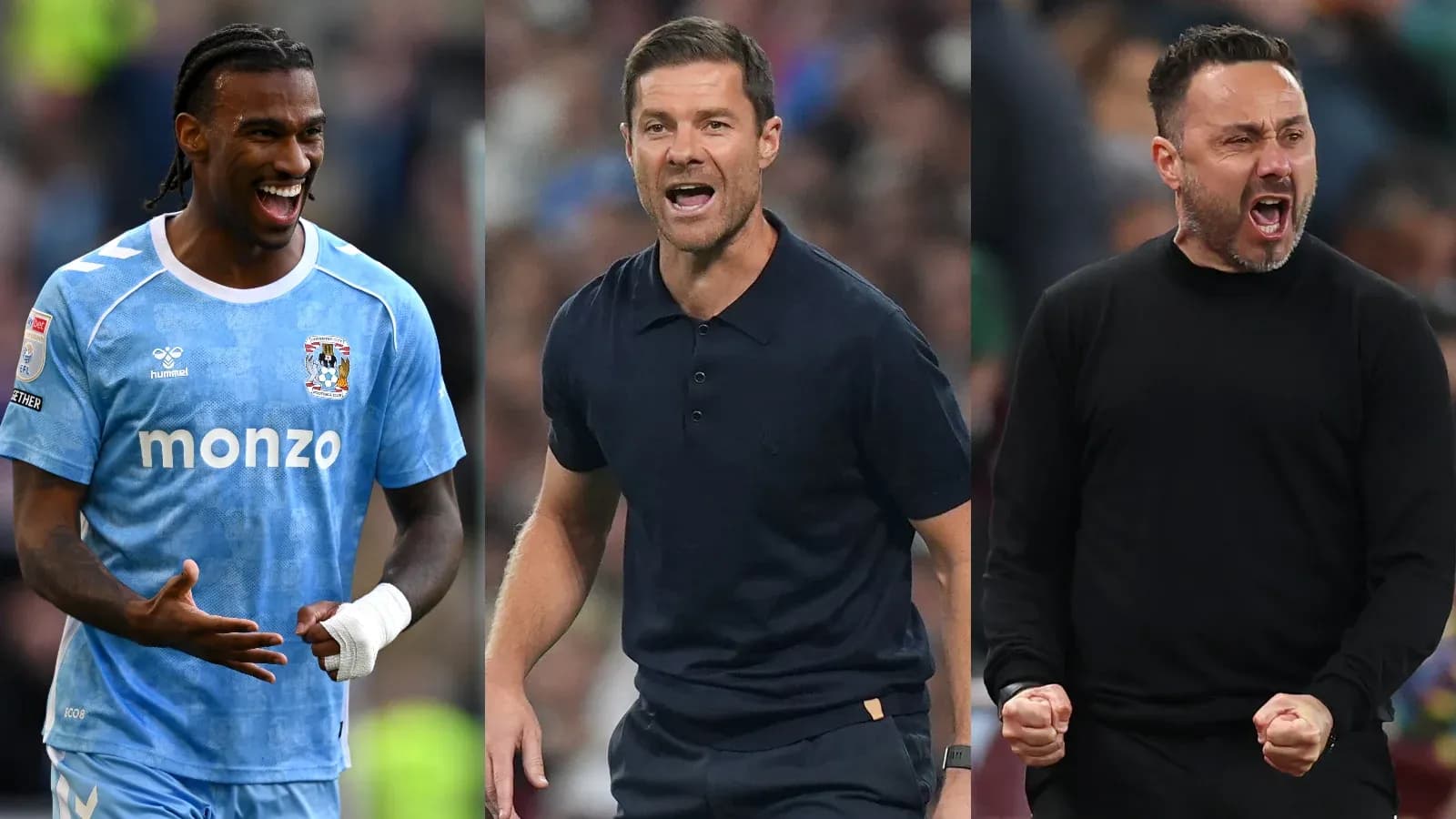
Down in west London, Chelsea have pressed reset yet again – but this time with a twist. Xabi Alonso arrives not just as head coach, but as manager. The wording matters at a club where job titles often hint at who really holds the power.
Tenth place last season left Stamford Bridge restless and disillusioned. Alonso’s arrival changes the mood. One of Europe’s most coveted young coaches, handed the reins at a club desperate to feel relevant at the top again.
The summer transfer window becomes his launchpad. Chelsea’s recruitment has been scattergun in recent years; this is a chance to align it with a clear footballing identity. No European football means free midweeks, a luxury in a league where Thursday-Sunday can shred a squad.
With a coherent window and clear training time, Alonso’s Chelsea will not be setting modest targets. The expectation is simple: move quickly, climb fast, and make those empty midweeks feel like an advantage, not a reminder of failure.
De Zerbi and Spurs: From Survival Scramble to Ambition
Tottenham Hotspur ended last season staring over the edge. Safety only secured on the final day. Seventeenth in the table. Again.
Then Roberto De Zerbi arrived and, quietly, the mood shifted.
Eleven points from the final six matches. Only Manchester United, Arsenal and Bournemouth collected more over that late stretch. It wasn’t a revolution, but it was a jolt – enough to make supporters look at the table and see something other than doom.
Now comes the rebuild.
Spurs have to drag themselves away from the relegation fight and back towards relevance. De Zerbi’s football is bold, risky, and demanding. Over a full campaign, that style will either energise the club or expose the cracks. Those final six games offered a glimpse. The next 38 will reveal whether that bounce was a rescue act or the start of something far more ambitious.
Coventry and Hull: Old Names, New Energy
The Premier League always feels different when fresh stories walk through the door. This time, they’re not entirely new – just long-missed.
Coventry City are back in the top flight for the first time since 2000/01. In the years between, they’ve plunged as low as League Two and clawed their way back. Now they return as champions, a comeback tale that stretches over a generation.
Hull City’s wait has been shorter but still significant: a decade away from the Premier League. Their route back is intriguing for another reason. Opta’s “Expected Points” model had them all the way down in 23rd in the 2025/26 season. The table, of course, told a very different story.
Both promoted clubs have recent examples to follow. Sunderland burst back onto the scene and took a place in the UEFA Europa League. Leeds United secured safety with matches to spare. Coventry and Hull will want to blend survival with statement, to prove they are not here just to make up the numbers.
Liverpool: The End of an Era, Again
Liverpool were already braced for a significant summer. Then Arne Slot left, Andoni Iraola walked through the door, and the word “rebuild” stopped feeling big enough.
This is a reset of the club’s entire footballing identity.
The tactical clarity that once defined Liverpool has faded in recent seasons, and supporters have felt it. Now, on top of that drift, come heavyweight departures: Mohamed Salah, Andy Robertson, Ibrahima Konate. Each one a pillar of the recent era. Together, they mark a line in the sand.
Jurgen Klopp’s exit once felt like the single great turning point. 2026/27 might be just as pivotal. Iraola must restore intensity, redefine the team’s structure and rebuild a spine, all while the rest of the league grows more ruthless.
Will this be another year of turbulence like 2025/26, or the start of a revival that echoes the heights of the Klopp years? Anfield will not tolerate drift. This season forces a direction.
Europe’s Pull: A Table That Refuses to Settle
The Premier League’s chaos is no accident. Nine clubs will again juggle European football in 2026/27, and that strain keeps the table in constant motion.
Spurs, Chelsea, Newcastle United and Nottingham Forest all felt the squeeze of continental commitments last season. Fatigue, injuries, stretched squads – the usual cocktail. While some stumbled, others seized the moment.
Bournemouth, Brighton & Hove Albion and Sunderland all punched above their traditional weight to earn European places. The middle of the table compressed into a fist: just two points separated seventh from 11th.
There’s little reason to expect clarity this time. With so many clubs playing midweek and weekend, the league will likely twist again. Runs of form will vanish overnight. The table will lurch, not glide.
Arsenal and the Art of Nerve
At Arsenal, the debate is as much psychological as tactical. Three consecutive second-place finishes, then the title finally won – but with a style that split opinion.
Were Mikel Arteta’s cautious, controlled performances a deliberate strategy, or a team gripped by the tension of chasing history?
Next season should give the answer.
Arsenal must defend their crown, and Arteta must decide whether to double down on the risk-averse approach that delivered it, or loosen the handbrake now the weight of expectation has shifted. Play with the same discipline, or allow more freedom and expression.
This is no minor tweak. It’s a choice about identity at the very top of the game.
Guardiola has gone. Liverpool are rebuilding. United are evolving. Chelsea are recalibrating. Spurs are trying to rise. Coventry and Hull are back. Europe will keep pulling teams apart.
In a league this volatile, how Arsenal choose to play as champions might shape not just their season, but the balance of power for years to come.