.svg&w=384&q=75 "naujapitch logo")
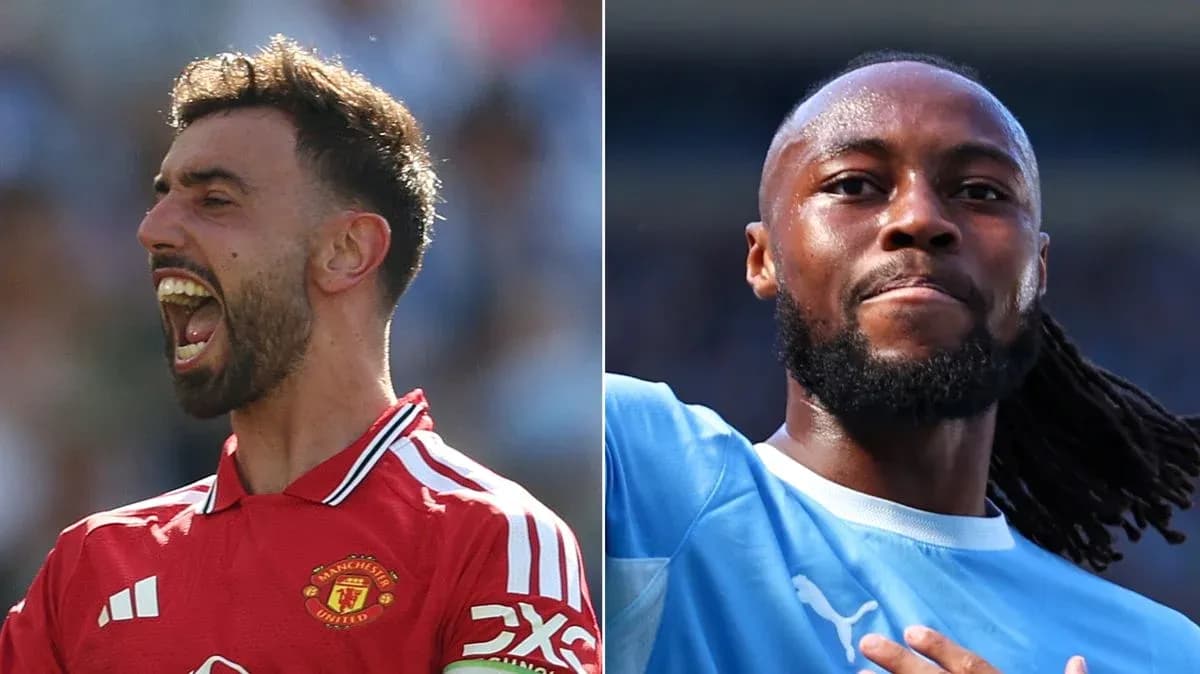
Carrick’s United vs Maresca’s City: Fixture D-Day
The Premier League barely pauses to catch breath. Less than a month since the 2025/26 season closed and with a World Cup still raging in the background, England’s top flight is already dragging the conversation back home.
At 10am, Manchester United and Manchester City discover the shape of their 2026/27 campaign. Eight months of storylines, pressure points and potential title swings will be mapped out in a few clicks.
For both clubs, the calendar will say as much about ambition as it does about logistics.
Carrick’s Second Act
Old Trafford has not felt this buoyant in years.
Michael Carrick walked into the job in January as a mid-season solution and ended it as the man trusted to lead United back among Europe’s elite. He did more than steady the ship. He pushed it into the Champions League with room to spare.
Now comes the harder part: proving it wasn’t a surge on adrenaline.
United finished last season nine points behind City and 14 adrift of champions Arsenal. That gap defines the challenge. Third place might have restored some pride, but for a club of United’s size, it is a waypoint, not a destination.
Carrick will want the fixture computer to show a gentle incline rather than a cliff face. A relatively forgiving opening run could let his side extend the momentum built since January, keep belief high and turn optimism into expectation. Last year’s start – Arsenal, City and Chelsea in the first five games – left United fighting uphill from the first month. Seven points from 15 was respectable in context, nowhere near enough in the bigger picture.
This time, they will be desperate for a launchpad, not a stress test.
City Between Eras
Across town, the mood is different. Not flat. Not panicked. Just unfamiliar.
For the first time in a generation, Manchester City step into a season without Pep Guardiola. The club that made dominance look routine now has to prove that “business as usual” is more than a slogan.
Enzo Maresca is expected to be the man handed that responsibility, even if his appointment is still waiting for the final signature. The former Chelsea manager arrives with a reputation for tactical clarity and calm authority, but he also inherits a squad and a fanbase used to winning the Premier League as standard.
City’s last campaign underlined how fragile that aura can become. They opened with a 4-0 demolition of Wolves, only to lurch into back-to-back defeats against Spurs and Brighton. A 3-0 derby win over United and a 1-1 draw with Arsenal stabilised things, yet the sense of invincibility had already taken a dent.
This season, the remit is blunt: get back to the top. No transition pass. No soft landing.
The fixture list will immediately show how kindly – or cruelly – the league has treated Maresca’s first weeks at the Etihad. A brutal opening could turn the Guardiola afterglow into pressure in a hurry.
New Faces, Old Demands
City and United will look at the list with one eye on tradition and another on novelty. Wolves, Burnley and West Ham have dropped out. In their place come three very different stories.
Coventry City return to the Premier League as Championship winners, 11 points clear of Ipswich Town. The Sky Blues are back under the guidance of Frank Lampard, who has rebuilt his managerial reputation by steering them to the summit of the second tier. A trip to the Ricoh or a home date with Lampard’s side will carry a nostalgic edge and a reminder that no promoted side arrives just to make up the numbers.
Ipswich’s own rise was sealed on the final day, with former United assistant Kieran McKenna at the helm. His decision this summer to stand down and take time away from football has jolted the club just as they re-enter the top flight. Ole Gunnar Solskjaer, another United favourite, is in the frame to replace him. If that appointment lands, United’s calendar will suddenly feature a reunion loaded with sentiment.
Hull City’s route back was the most chaotic of all. Sixth in the Championship, they charged through the play-offs, beating third-placed Millwall over two legs and then watching the landscape explode around them. Southampton were kicked out of the play-offs for spying on semi-final opponents Middlesbrough, who were reinstated, only for Hull to triumph at Wembley thanks to a last-minute winner from Oli McBurnie. It’s the sort of backstory that makes a newly promoted side particularly dangerous. They’ve already lived through chaos and come out smiling.
None of these fixtures will be circled as automatic wins at Carrington or the CFA.
Inside the Fixture Machine
The calendar might look like a simple list when it drops at 10am. It is anything but.
Work on the 2026/27 schedule began six months ago. The Premier League’s scheduling operation – a much-talked-about “supercomputer” backed by human constraints – has to juggle Champions League dates, police advice, travel considerations and local clashes, then spit out a sequence that keeps the competition credible.
There are hard rules. In any block of five matches, clubs must have either three home and two away games, or the reverse. No team will play more than two home or away fixtures in a row. Nobody starts or finishes with back-to-back home or away dates, in the name of fairness.
The league also tries to maintain a Saturday home-away rhythm where possible, and around FA Cup ties and international breaks clubs are generally given one home and one away game to ease the strain.
The Christmas period remains its own puzzle. Last season’s decision to stage just one Boxing Day fixture – United’s 8pm home meeting with Newcastle – infuriated traditionalists. The league pointed to a shrinking number of available weekends, the expansion of European competitions and knock-on changes to the FA Cup, insisting the calendar had become a 33-weekend squeeze for 380 matches.
This year, Boxing Day falls on a Saturday, and the league has already promised more fixtures on the date that defines the English festive schedule. Rest periods between rounds 18, 19 and 20 will be increased, with a firm commitment that no club plays again within 60 hours of a previous game.
Player welfare has finally forced its way into the conversation, and the fixture list is where that debate becomes real.
A Late Start, A Long Run
One of the most striking details this time is when it all begins.
The Premier League will kick off on Saturday, August 22 – a week later than 2025/26. The league has framed the decision as a nod to player welfare in an increasingly congested global calendar. The later start creates 89 clear days from the end of last season and 33 days from the FIFA World Cup 2026 final.
The domestic campaign will run through to Sunday, May 30, with the Champions League final set for June 5 at the Metropolitano Stadium in Madrid. United and City already know those European dates will carve up their season, even if they don’t yet know who will stand in their way.
The new Champions League format means both Manchester clubs will play eight league-phase fixtures. The Premier League has already locked in the key midweek windows:
- 8–10 September
- 13–14 October
- 20–21 October
- 3–4 November
- 24–25 November
- 8–9 December
- 19–20 January
- 27 January
For Carrick and, presumably, Maresca, the real scrutiny will fall not just on those European nights, but on what comes immediately after. Managers hate long away trips off the back of a midweek Champions League game, and they fear heavyweight domestic clashes even more.
United, in particular, will be scanning for those “after Europe” fixtures. Avoiding gruelling away journeys and title-defining showdowns in those slots could be the difference between a title challenge and another year of “nearly”.
United’s Aim, City’s Obligation
Strip away the noise and the objectives are brutally simple.
United must close the gap. Third place and a Champions League return have restored a sense of direction, yet nobody at Carrington will pretend that nine points to City and 14 to Arsenal is an acceptable distance. Carrick has already shown he can organise, energise and modernise this side. The next step is to turn that into sustained pressure on the teams above.
Whatever the order of games, that has to be the aim.
For City, this season carries a different kind of weight. The club has built an era on the certainty that Guardiola would find a way. That safety net has gone. Maresca, or whoever ultimately takes the seat, must show that the Etihad is a machine, not a one-man show.
To prove it, they probably have to win the league.
Anticipation in Manchester
As the clock ticks towards 10am, the mood on both sides of the city is charged, but not identical.
At Old Trafford, there is open excitement. Carrick is no longer the caretaker or the clever stop-gap. He is the permanent head coach, already off the mark with a comfortable final-day win over Brighton that felt like a soft launch for the new era. The fixture list will be read as a roadmap for how far and how fast his United can travel.
At the Etihad, there is a sliver of uncertainty that has been absent for years. Guardiola’s exit has created a void, and the delay in confirming Maresca has only underlined that this is a step into the unknown. The squad remains packed with talent, but the rest of the league will be watching closely for any sign that City’s grip is loosening.
Soon, the theory ends. The routes to May will be fixed in black and white.
Then one question will hang over Manchester all season: whose path leads back to the summit first?