.svg&w=384&q=75 "naujapitch logo")
Morocco vs Scotland: A Crucial World Cup Clash
Morocco arrived at this World Cup with the weight of history on its shoulders and a reminder of what it once was. Fourth in 2022, still chasing a first win in 2026.
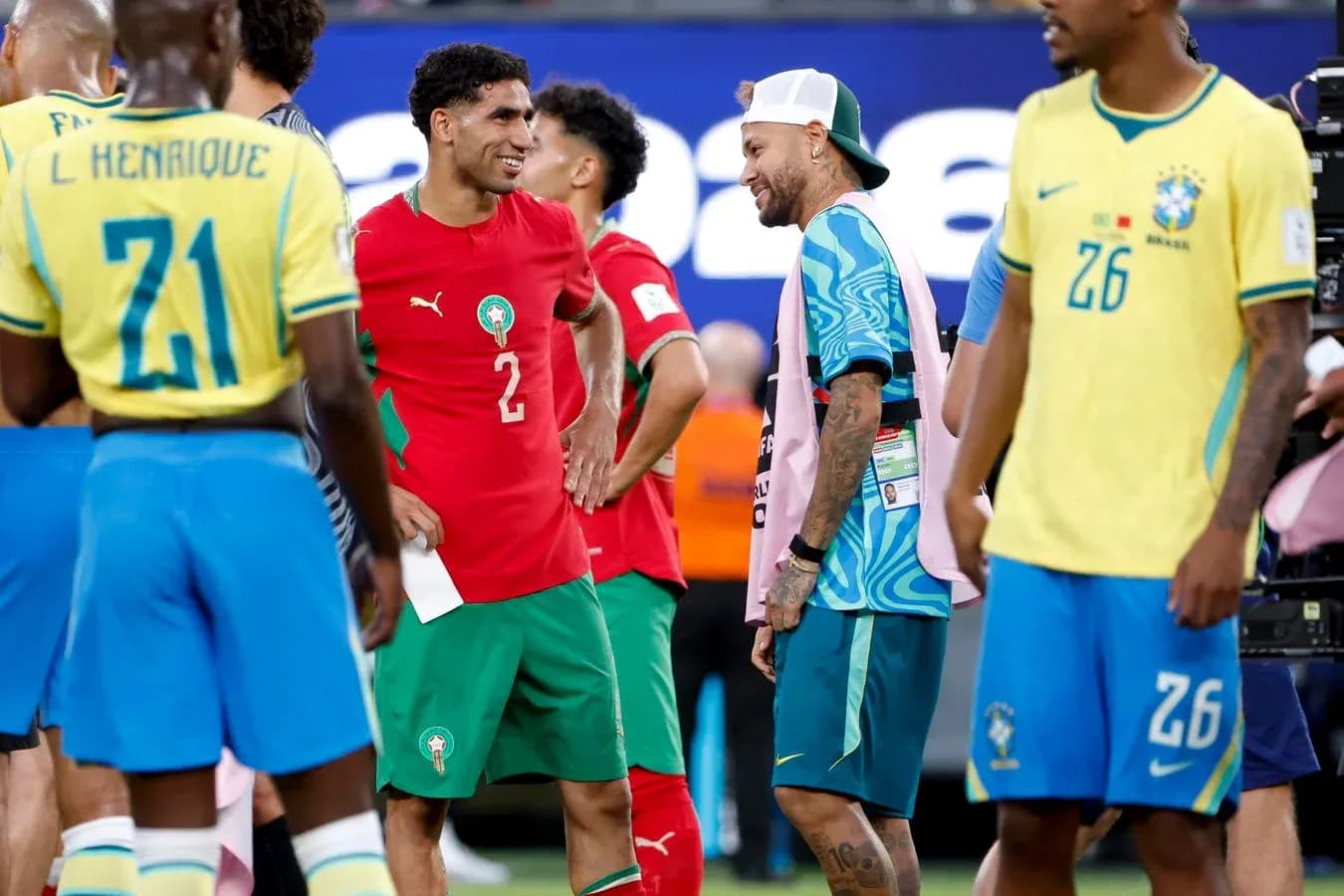
The opening act against Brazil in Group C underlined both sides of that story. Morocco struck first, Ismael Saibari finishing off a move that briefly silenced one of the tournament favourites and revived memories of Qatar. The lead did not last. Vini Jr. levelled in the 32nd minute, and from there the game hardened into a contest Morocco could not quite bend to its will. One point, not three. Promise, not statement.
Now comes Scotland, and a very different kind of test.
A Tartan wall in Foxborough
Gillette Stadium in Foxborough will feel like a slice of Glasgow on June 19. Scotland, backed by a heavy Tartan Army presence, top Group C after beating Haiti in their opener and suddenly see a door ajar that has always slammed shut in the past.
Eight World Cup appearances. Never beyond the group.
Morocco know that storyline well enough. They also know they can help extend it.
Mohamed Ouahbi is unlikely to rip up his blueprint after standing toe-to-toe with Brazil. The projected XI looks settled, built around the same spine that frustrated the South Americans and still carries the scars and steel of 2022.
How Morocco are expected to line up
In goal, there is no debate. Yassine “Bono” Bounou, now with Al-Hilal, remains the reference point. His calm under pressure and big-tournament pedigree anchor everything in front of him.
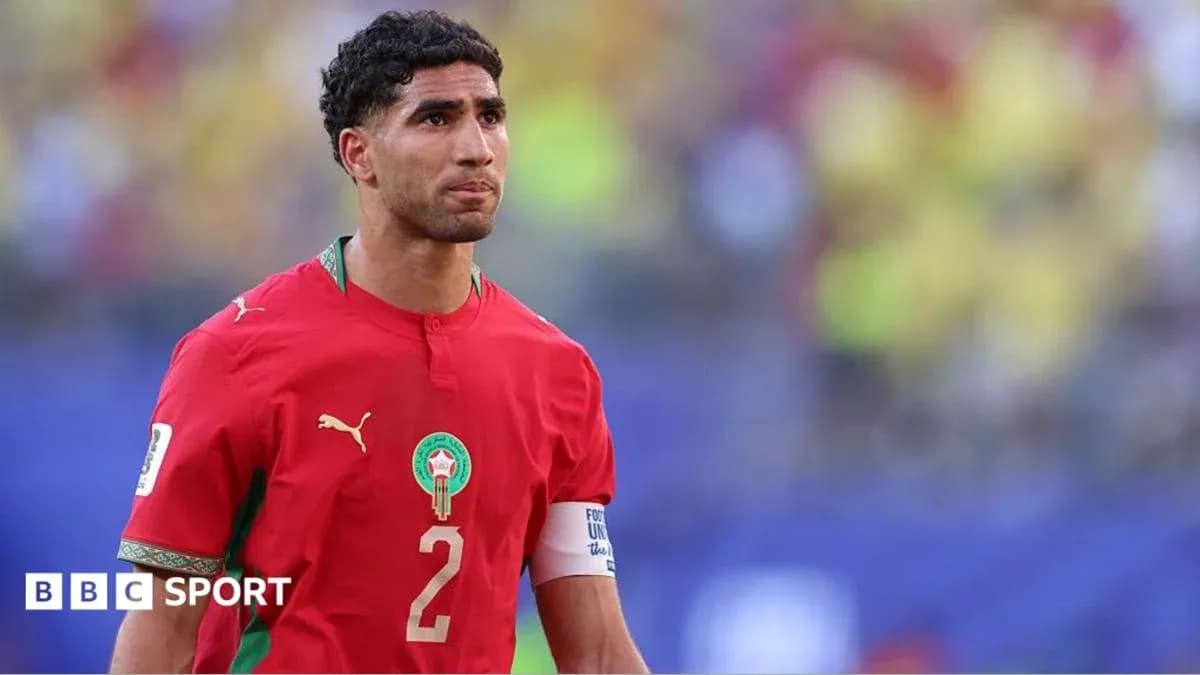
The back line offers both experience and thrust. Achraf Hakimi, the ever-restless PSG full-back, should start on the right, with Noussair Mazraoui, now at Manchester United, operating on the opposite flank. Between them, Issa Diop of Fulham and Crystal Palace’s Chadi Riad bring Premier League hardness and aerial presence, a pairing designed to handle Scotland’s direct surges and set-piece threat.
Just ahead, Morocco will likely lean on a double pivot that can both destroy and build. Ayyoub Bouaddi, the Lille midfielder, and Neil El Aynaoui of Roma are tipped to sit deepest, tasked with snapping into tackles, closing passing lanes and feeding the more expressive talents further forward. Their work rarely makes the highlight reels, but against a Scotland side that thrives on rhythm and second balls, it could decide the tone of the night.
The creative burden falls on a trio that can hurt any defence when the angles open. Brahim Diaz, the Real Madrid playmaker, drifts between the lines, looking for those half-spaces where a single touch can break a block. Azzedine Ounahi, now at Girona, offers glide and guile, carrying the ball through pressure and linking midfield to attack. Bilal El Khannouss of Stuttgart adds a modern edge: quick feet, sharp turns, and a willingness to take risks in the final third.
Up front, Saibari is expected to lead the line again. Nominally a striker, he brings more than penalty-box instincts. His movement, dropping off centre-backs and dragging them into uncomfortable zones, opened the door against Brazil. Morocco will want the same against Scotland, who can be drawn out and exposed if forced to defend wide and deep.
Fixtures that will define a group
This second group game already feels pivotal for both nations.
Morocco face Scotland on June 19 in Massachusetts, then travel south to Atlanta for a meeting with Haiti at Mercedes-Benz Stadium on June 24. The margins are clear: fail to beat Scotland and the final match could become a nerve-ridden scramble; win, and the path to the knockouts begins to resemble the one they walked so defiantly in 2022.
Ouahbi has options across his squad if he needs to tweak the approach. Behind Bono, Munir El Kajoui (RS Berkane) and Ahmed Reda Tagnaouti (AS FAR) provide depth in goal. At the back, beyond Hakimi, Mazraoui, Diop and Riad, he can call on Anass Salah-Eddine (PSV), Youssef Belammari (Al Ahly), Nayef Aguerd (Marseille), Redouane Halhal (Mechelen), Zakaria El Ouahdi (Genk) and Marwane Saâdane (Al Fateh), with Saâdane drafted in after Aguerd’s withdrawal.
Midfield is equally stacked. Samir El Mourabet (Strasbourg), Sofyan Amrabat (Real Betis) and others can rotate into the engine room alongside Bouaddi, El Aynaoui, Ounahi, El Khannouss and Saibari, offering fresh legs or a more conservative shape if game-state demands it.
Up front, the options stretch wide. Chemsdine Talbi (Sunderland), Soufiane Rahimi (Al Ain), Ayoub El Kaabi (Olympiacos), Brahim Diaz, Gessime Yassine (Strasbourg), Ayoube Amaimouni (Eintracht Frankfurt) and Amine Sbaï (Angers) give Morocco a mix of pace, penalty-box instinct and technical flair. Sbaï has stepped in for Abde Ezzalzouli after the Real Betis forward’s withdrawal, a late change that slightly alters the profile of the wide threat but not the overall ambition.
The structure is there. The talent is there. The memory of that run to the last four in 2022 is still fresh enough to sting and to inspire.
What Morocco lack, for now, is a win in 2026.
In front of a roaring Tartan Army in Foxborough, against a Scotland side chasing its own piece of history, they will not get many better chances to claim it.