.svg&w=384&q=75 "naujapitch logo")
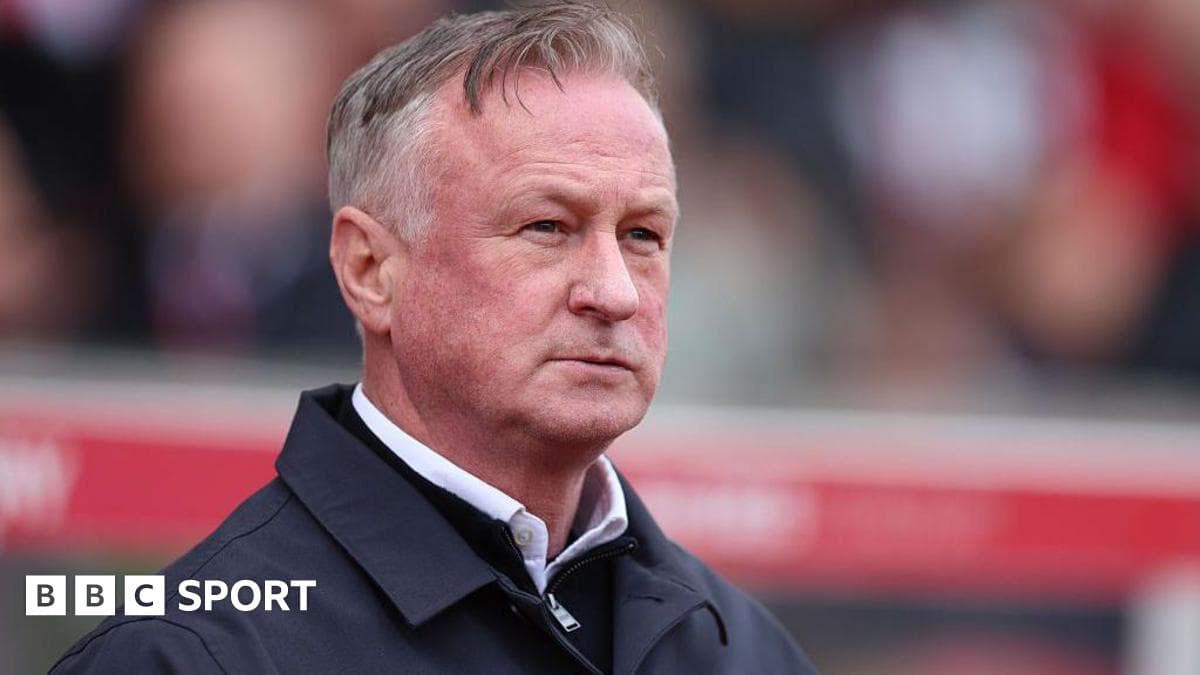
Michael O’Neill Commits to Northern Ireland for Euro 2028
Michael O’Neill has turned his back on club management – for now – and thrown his full weight behind Northern Ireland’s bid to reach Euro 2028.
The 56-year-old will not take the Blackburn Rovers job on a permanent basis, ending any prospect of a long-term dual role and confirming what he had hinted at for months: one job had to go.
A brief rescue act at Ewood
When O’Neill walked into Ewood Park in February as interim head coach, Blackburn were sliding. The remit was blunt: keep them in the Championship.
He did exactly that. Fifteen games, five wins, five draws, five defeats. No glamour, no great flourish, but enough. Rovers finished 20th in the second tier and stayed clear of the trapdoor.
All the while, he continued to lead Northern Ireland. Training camps in Belfast, relegation battle in Lancashire, back to international duty. It was a demanding juggling act and he never pretended otherwise. Repeatedly, he said the arrangement could not last beyond the short term.
The decision has now landed.
“Following discussions with the club, Michael has decided to continue his long-term commitment to his role as Northern Ireland head coach,” Blackburn confirmed in a statement, adding that his focus would be on leading the national team towards qualification for Euro 2028.
O’Neill’s own words carried the tone of a man who enjoyed the job, but knew where his future lay.
Blackburn, he said, is a “historic football club with a proud tradition and passionate supporters” and he had “thoroughly enjoyed” working with players and staff. But after “careful consideration”, his “long-term focus” had to remain with Northern Ireland and the European Championship journey ahead.
Rovers will now start the search for a new permanent head coach, with the club promising updates “in due course”. Crucially, they have time on their side before the 2026-27 campaign.
Northern Ireland get their man – again
If Blackburn lose an experienced hand, Northern Ireland gain clarity and continuity.
Across his two spells in charge, O’Neill has overseen 104 games, winning 38, drawing 23 and losing 43. Those numbers include the landmark run to Euro 2016 – the country’s last appearance at a European Championship – and the hard reset that followed his return in 2022.
The Irish FA made no attempt to hide their satisfaction.
“We are delighted Michael has decided to stay on as Northern Ireland manager,” read their statement. They hailed an “exciting squad of players” and spoke of building on current momentum through the Nations League this autumn and into the Euro 2028 qualifiers, “with Michael at the helm”.
Supporters will share that sense of relief. In March, O’Neill had spoken of “returning to the status quo” for the June fixtures when asked about his future. By April, he admitted a decision was still to be made. That shift set nerves jangling. A prolonged saga could easily have bled into preparations for the summer and beyond.
Instead, the call has come early. Northern Ireland can now plan. So can Blackburn.
A young squad, a familiar builder
O’Neill’s second stint has echoed his first in one crucial way: he inherited a struggling side.
He took over from Ian Baraclough with Northern Ireland short on results and confidence. They missed out on Euro 2024. They also failed to reach this year’s World Cup. But the team that has emerged under his watch looks sharper, bolder, more competitive.
The numbers underline the shift. The average age of his starting XI for the World Cup play-off defeat to Italy in March was just 22.5 – the second youngest Northern Ireland side on record since World War Two. Strip out three key absentees that night – Conor Bradley, Dan Ballard and Ali McCann – and the age profile barely moves. The ceiling for this group sits high.
Friendlies against Guinea in Cadiz and France in Lyon in June will sharpen the edges of that youthful squad before the Nations League begins in September. Northern Ireland have been drawn in Group B2 alongside Hungary, Georgia and Ukraine, a section that will test both their resilience and ambition.
For the Irish FA, the stakes in O’Neill’s decision were obvious. The job, thanks largely to his own rebuilding work since 2022, now looks far more attractive than when he returned. A vacancy would have drawn interest. It also would have brought upheaval just as a promising core of players starts to take shape.
Instead, they keep the architect.
O’Neill once built a side that climbed, step by step, to a European Championship. He now has another emerging group, another long runway, and a tournament on home shores in 2028 as the distant target.
The choice has been made. The question now is whether he can conjure that same surge a second time.