.svg&w=384&q=75 "naujapitch logo")
Mexico Dominates South Africa in World Cup Opener
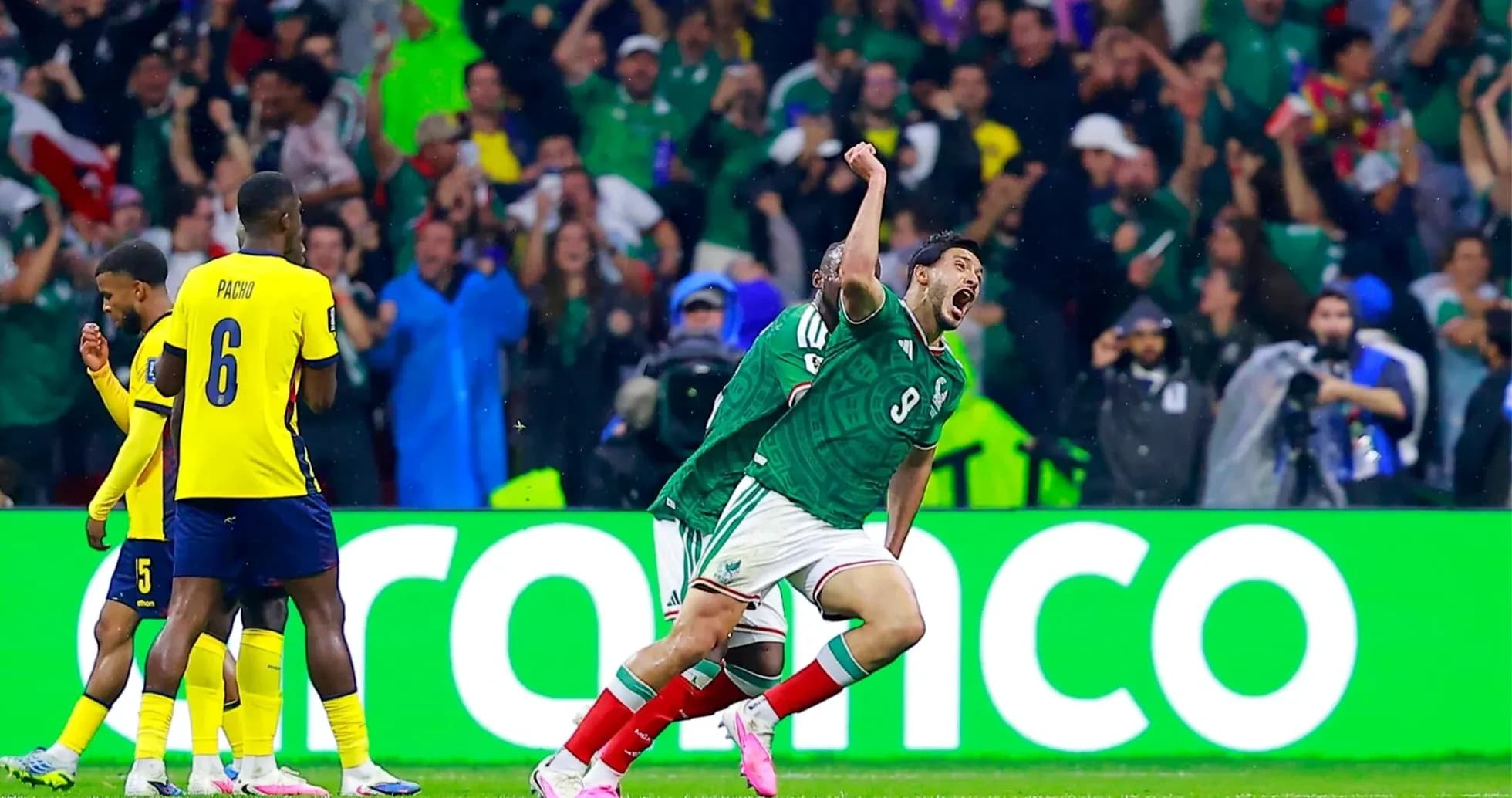
Under the heavy evening air of Mexico City, Estadio Azteca felt less like a neutral World Cup venue and more like a cauldron built specifically for Mexico’s opening statement. Following this result, a 2–0 win over South Africa in Group A, Javier Aguirre’s side sit 1st in the group with 3 points and a goal difference of 2, their campaign already carrying the imprint of a team with a clear tactical identity: front-foot, ball-dominant, but anchored by a disciplined midfield spine.
I. The Big Picture – Mexico’s 4-1-4-1 versus South Africa’s 5-3-2
On paper, this was a clash of philosophies. Mexico lined up in a 4-1-4-1, a structure they have now used in all their fixtures this World Cup, with Érik Lira as the lone pivot shielding a back four of I. Reyes, C. Montes, J. Vásquez and J. Gallardo. Ahead of Lira, a fluid line of four – R. Alvarado, B. Gutiérrez, A. Fidalgo and J. Quiñones – rotated around the central reference point of Raúl Jiménez.
South Africa, by contrast, arrived in a compact 5-3-2 under Hugo Broos. The back five of K. Mudau, N. Sibisi, I. Okon, M. Mbokazi and A. Modiba sat narrow, with Teboho Mokoena, Y. Sithole and J. Adams trying to compress central spaces behind a front pair of I. Rayners and L. Foster. It was a design built to absorb and spring, but it never truly escaped Mexico’s grasp.
Overall this campaign, Mexico have played 1 match, scoring 2 and conceding 0. Both goals have come in total at home in this fixture context, giving them an overall average of 2.0 goals scored and 0.0 conceded per game. South Africa, on their travels in this World Cup, have played 1, scored 0 and conceded 2, with an overall defensive average of 2.0 goals against and 0.0 scored. The numbers mirror the final scoreline and underline how this game unfolded: Mexico imposing their structure, South Africa trapped in damage control.
II. Tactical Voids and Discipline – Where the Game Tilted
There were no listed pre-match absences for either side, so the story of “who wasn’t there” is really about those who removed themselves through discipline.
Mexico’s season card profile already hints at a team that can flirt with the edge. Overall, they have 1 yellow card, arriving between 16–30 minutes (100.00% of their yellows in that window), and a red card shown between 91–105 minutes (100.00% of their reds in that late span). In this match context, B. Gutiérrez embodied that early bite: 2 fouls committed, 1 yellow, and then withdrawn after 66 minutes. C. Montes, meanwhile, sits in the red-card leaders list with 1 dismissal this campaign, a reminder that even within a clean sheet defence, there is a volatility Aguirre must manage.
South Africa’s discipline was far more damaging. Their yellow-card distribution is split: 1 yellow between 16–30 minutes (50.00% of their total yellows) and another between 61–75 minutes (50.00%). But it is the reds that define their narrative: one between 46–60 minutes and another between 76–90 minutes, each accounting for 50.00% of their total reds. Sphephelo Sithole and Themba Zwane are both on the red-card ledger, with Sithole committing 3 fouls and blocking 2 shots before his dismissal. Reduced numbers turned a reactive game plan into survival mode, stripping South Africa of any real counter-punch.
III. Key Matchups – Hunter vs Shield, and the Engine Room
Hunter vs Shield: Raúl Jiménez against South Africa’s back line
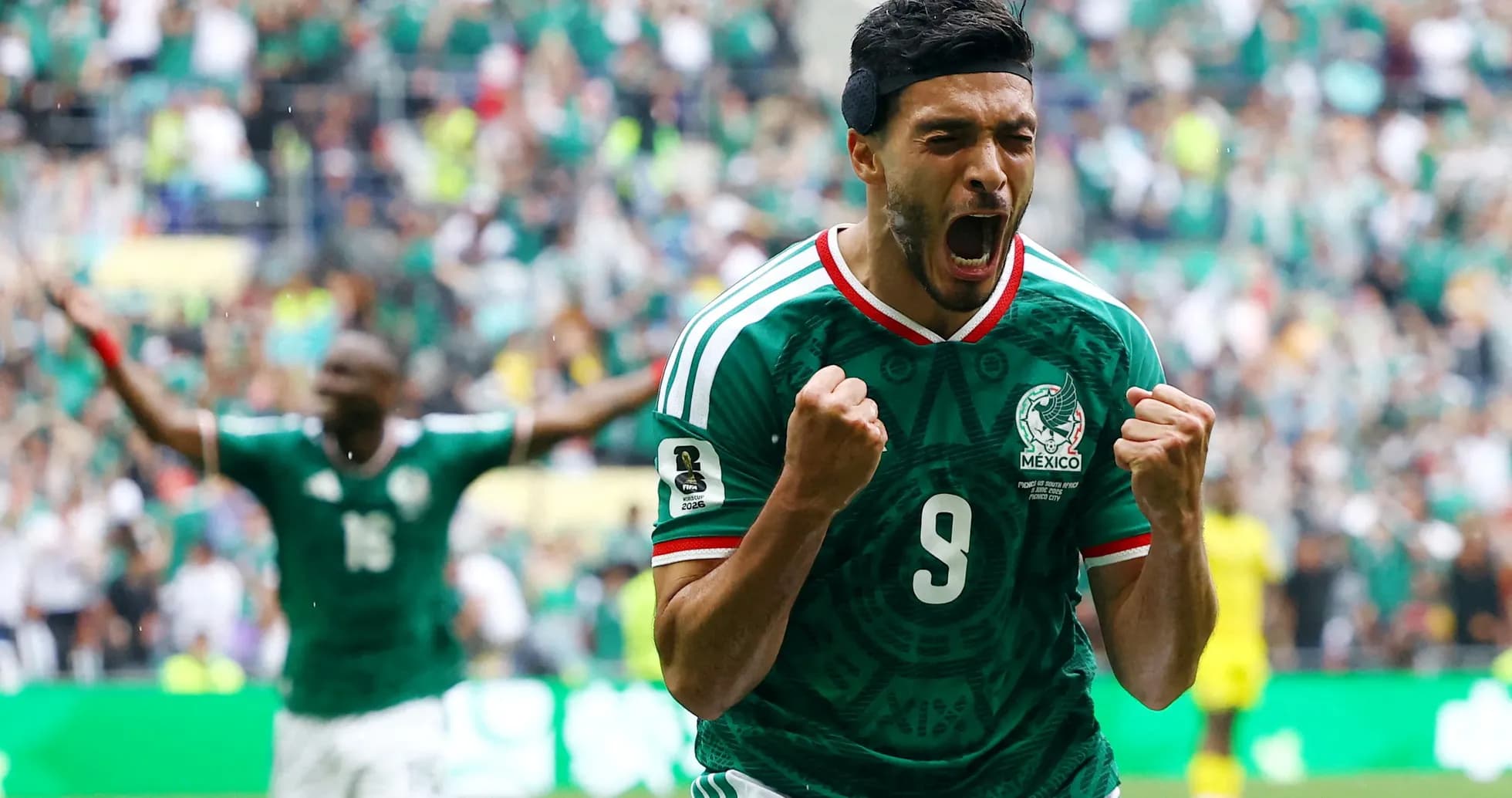
Heading into this game, South Africa’s overall defensive record was untested at this World Cup. Following this result, they have conceded 2 goals in total, all away, with an away average of 2.0 goals against per match. Jiménez, already among the top scorers, showed why he is Mexico’s “hunter”. In 76 minutes, he scored 1 goal from 3 shots (2 on target), won 6 of 10 duels and created 2 key passes. He pinned Sibisi and Okon, forcing the back three to retreat deeper and deeper.
Sibisi, who took a yellow card and recorded 50 passes at 82% accuracy, was often Mexico’s primary target zone. With A. Fidalgo and J. Quiñones drifting into the right half-space, they repeatedly asked Sibisi to step out of the line. Each time he did, Jiménez attacked the channel; each time he stayed, Mexico combined in front of him. It was a lose-lose scenario engineered by movement rather than sheer pace.
Julián Quiñones, meanwhile, blurred the line between winger and second striker. He scored 1 goal, took 4 shots (2 on target), completed 5 of 6 dribbles and won 7 of 10 duels. His ability to receive under pressure, roll markers and drive at the heart of South Africa’s block turned their back five into a back line constantly backpedalling.
The Engine Room: Lira and Alvarado vs Mokoena and Sithole
If Jiménez and Quiñones were the finishers, Érik Lira and Roberto Alvarado were the metronomes and enforcers. Lira’s profile across the opening match is that of a modern pivot: 45 passes at 93% accuracy, 1 assist, 1 tackle, 1 interception, and 4 of 4 duels won. Positioned just ahead of Montes and Vásquez, he prevented South Africa’s counters from ever developing, stepping in front of Foster and Rayners before they could turn.
Alongside him, Alvarado stitched together the right side. In 90 minutes he delivered 1 assist, 35 passes at 91% accuracy, 2 key passes, 4 tackles, and won 8 of 13 duels while completing both of his dribbles. He is already among the top assist providers, and his dual role – creator and ball-winner – allowed Mexico to overload Mokoena and Sithole centrally.
South Africa’s midfield trio had moments of resistance. Mokoena completed 42 passes at 92% accuracy and won 4 of 7 duels, while Sithole added 1 interception and those 2 blocked shots. But the red card to Sithole shattered their balance. Once down a man, Mokoena was forced to shuttle wider, leaving central spaces for Fidalgo and Gutiérrez to exploit between the lines.
IV. Statistical Prognosis – What This Win Says About Mexico
Following this result, Mexico’s overall numbers are pristine: 1 win from 1, 2 goals scored, 0 conceded, a goal difference of 2, and 1 clean sheet. They have not yet taken a penalty (0 total, 0 scored, 0 missed), so there is no evidence of either strength or weakness from the spot. More telling is the spread of contribution: Jiménez and Quiñones share the goals, Lira and Alvarado share the assists, and multiple substitutes – L. Chávez, G. Mora, A. Vega, A. González, E. Álvarez – entered and maintained passing accuracy at or near 100% in small but controlled cameos.
South Africa, conversely, leave the Azteca with 0 goals scored, 2 conceded, and 0 clean sheets. They have failed to score in their only away fixture so far, and their reliance on late attacking substitutions like Evidence Makgopa and Oswin Appollis did not materially change their threat profile, even if both showed bright individual duels (Makgopa winning all 3 of his duels, Appollis winning his only one).
From an xG-style lens – even without explicit values – the pattern is clear. Mexico’s shot volume and quality, anchored by Jiménez and Quiñones, plus the territorial control of Lira and Alvarado, point to a side that will consistently generate chances against similar or weaker blocks. Their defensive solidity, with zero goals against overall and only sporadic disciplinary scares, suggests that when they control tempo, they are hard to break down.
As Group A unfolds, this 2–0 is more than an opening win. It is a template: a 4-1-4-1 that maximizes Mexico’s creative depth, a hunter in Jiménez who thrives against back fives like South Africa’s, and an engine room that can outthink and outwork midfields built primarily to destroy rather than create. For South Africa, the tactical preview is harsher: unless discipline improves and their 5-3-2 evolves into a system that can release their forwards earlier, they risk spending this World Cup permanently on the back foot.