.svg&w=384&q=75 "naujapitch logo")
Messi Leads Argentina to 2026 World Cup Final
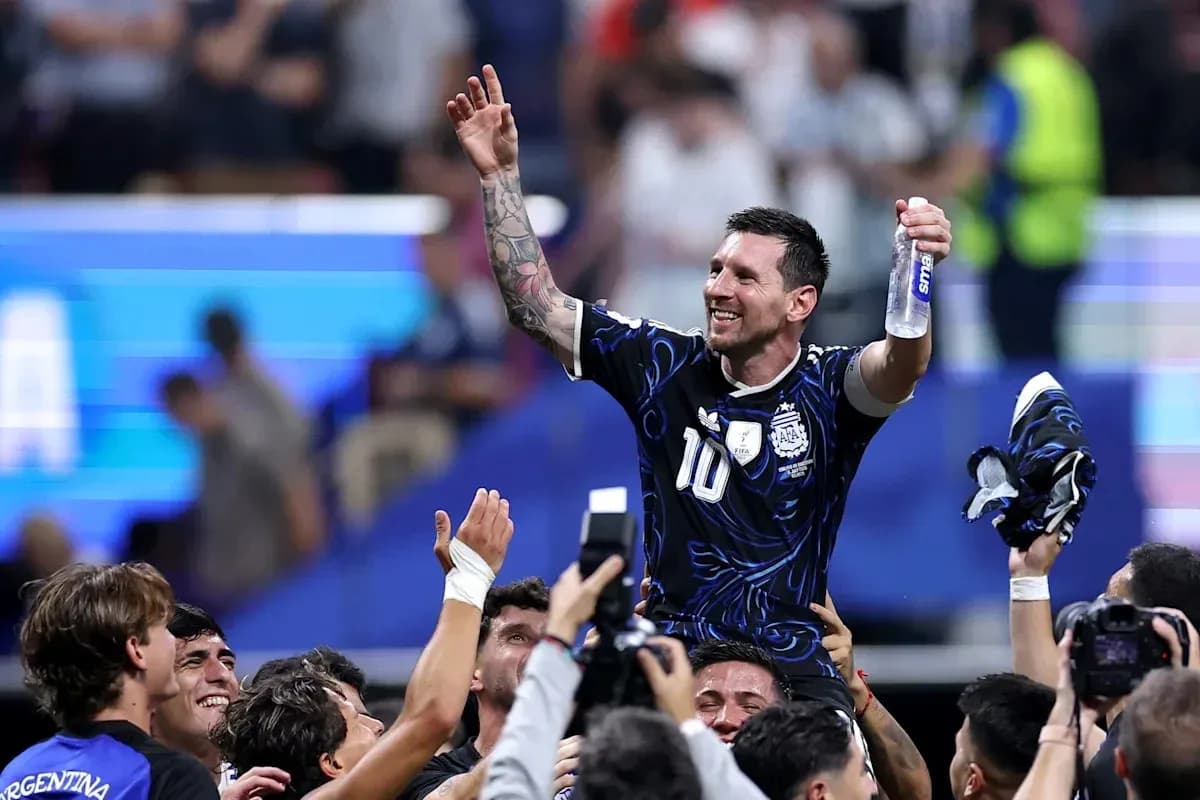
Lionel Messi stood in the middle of the chaos, eyes glassy, voice breaking. Argentina had just torn up the script in the final minutes against England to reach the 2026 FIFA World Cup Final, and the captain went looking for one man.
He found Rodrigo De Paul, pulled him in, and held on.
“I love you guys, we weren’t going to leave, man… We were going to do it.”
No podium. No microphones. Just a raw confession in the heart of the celebration, a line that said as much about this Argentina as any tactical breakdown ever could.
Messi drags Argentina back from the brink
For an hour, England had Argentina where they wanted them. A goal up, disciplined, compact, edging closer to a famous win. Argentina, the reigning champions, were staring at the end of a cycle, the end of an era, the end of Messi’s last great chase on the biggest stage.
Then the game tilted.
Messi, quiet by his own standards for long stretches, suddenly began to bend the night to his will in the final 30 minutes. He dropped deeper, demanded the ball, threaded passes into gaps that barely existed. Every touch carried threat. Every turn dragged Argentina higher up the pitch.
The pressure finally told in the closing stages. Enzo Fernández, who had once written a heartfelt plea for Messi not to walk away from the national team, became the man to keep this dream alive. One of Messi’s late flourishes opened the door, and Fernández stepped through it, striking the equaliser that yanked Argentina back from the edge and, in a sense, repaid a six‑year‑old debt.
Argentina surged. England staggered.
With the clock running down, Messi again found the angle, the timing, the moment. Lautaro Martínez delivered the finish that flipped the stadium on its head and sent Argentina to yet another World Cup final. Two chances, two ruthless conversions, both born from the No. 10’s imagination when the holders were 1-0 down and running out of time.
De Paul in the storm, Messi at the centre
The comeback was not just about the goalscorers. De Paul, sent on in the 72nd minute, hurled himself into the contest. He pressed, harried, knitted together the midfield as Argentina chased a way back. When the equaliser went in, he was in the thick of it; when the winner landed, he was already running on emotion.
So when Messi wrapped him in that embrace after the final whistle, De Paul’s own composure cracked. The midfielder who so often acts as Messi’s bodyguard on the pitch now looked like a fan again, overwhelmed by what they had just pulled off together.
This is where Messi’s authority in this dressing room really lives. Not in speeches, not in slogans, but in moments like that — built on years of shared scars and shared dreams.
A generation that grew up on Messi’s pain
Most of this squad grew up watching Messi fall short with Argentina. They remember the promise of 2006, the frustration of 2010, the cruelty of 2014. They lived through the doubts, the criticism, the questions over whether the greatest of his era would ever conquer the World Cup.
Enzo Fernández was one of them. In 2018, as a teenager, he wrote a public tribute begging Messi not to retire from international football after the Round of 16 exit. He asked him to stay, to keep fighting, to carry a nation’s hope a little longer.
Eight years on, he has become a central figure in the very campaign he once pleaded for, scoring the goal that kept Argentina’s 2026 journey alive.
The bond runs both ways. Messi’s leadership is no longer just about being the best player on the pitch; it’s about a mutual pact. Love, respect, admiration — and a shared understanding of what it took to get here.
They finally broke the curse in 2022. Now, in 2026, they stand one win away from something even more staggering.
Ninety minutes from immortality
Argentina will face Spain in the World Cup Final with history looming over every pass. Win, and they become the first nation in 64 years to defend the World Cup title. Win, and this group steps out of the long shadow of their predecessors and into a different conversation altogether — not just champions, but a dynasty.
One more match. One more performance. For Messi, for the players who idolised him as kids, for the generation that refused to let this story end quietly.
They weren’t going to leave. They were going to do it.
Now they are 90 minutes from proving it on the biggest stage of all.