.svg&w=384&q=75 "naujapitch logo")
Mauricio Pochettino's Journey with the USMNT: From Heartbreak to Success
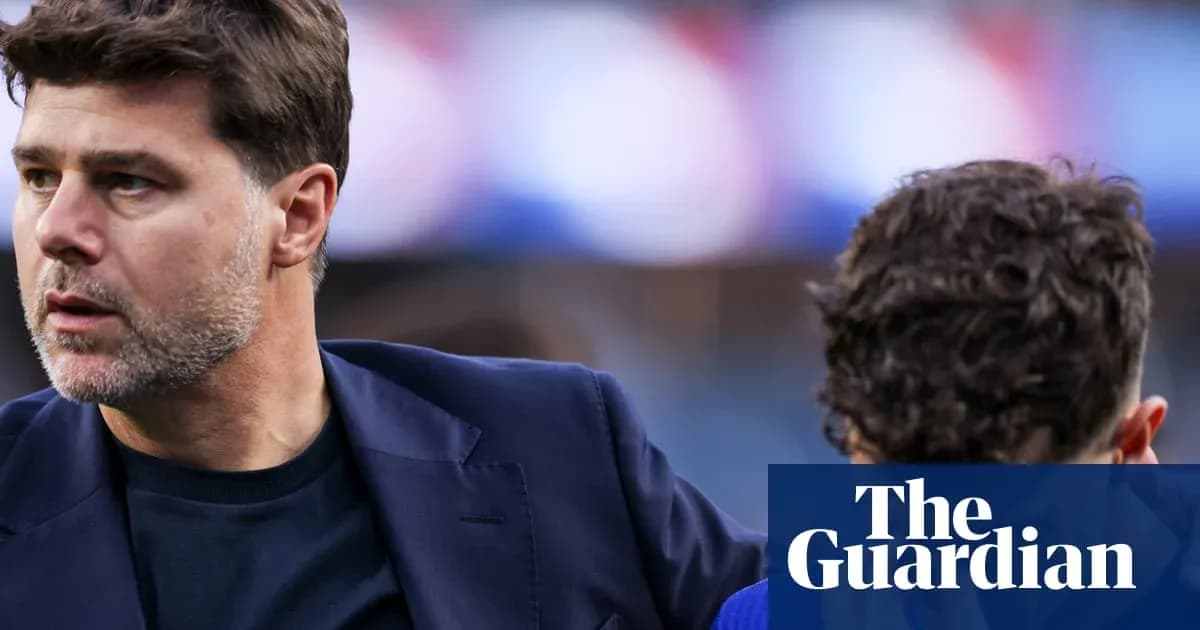
Mauricio Pochettino stood on the touchline in Houston with tears in his eyes. His US team had just lost the 2025 Gold Cup final to Mexico, the old enemy, in a match that was supposed to crown the regional king but instead stripped bare something more uncomfortable.
It wasn’t just the defeat. It was the sound.
In one of the largest metro areas in the United States, his players walked out for a home final and heard almost nothing for them. The noise, the color, the venom — all Mexico’s. For a coach who had managed Tottenham, it was like walking into a north London derby and finding the home stands drowning in Arsenal red.
A year from a home World Cup, Pochettino was hit by a reality that stung more than the 90 minutes. His team weren’t just a work in progress on the pitch. They were fighting for space in their own sporting culture.
“Being honest, maybe we didn’t feel or see how difficult the process would be… We were so naive,” he admitted this week. “We misjudged the situation. It was worse than we really believed. When we arrived here, we received a big bang, punch, and we were knocked out for a while. We said: ‘What the fuck?’”
That “punch” had landed months earlier. And it would be the first of three blows that reshaped the US men’s national team.
A crash in an empty stadium
March 2025. Concacaf Nations League. On paper, the route looked familiar: beat Panama in the semi-final, then deal with Mexico or Canada in yet another regional final. The US had won all three previous editions of the new competition. This was supposed to be routine.
They didn’t even make it to the showpiece.
Against a disciplined, fired-up Panama, the US labored. The football was flat. The atmosphere, worse.
“It was empty,” Pochettino recalled. “You remember the game, Panama? It was the Mexican people in the stands because they played after us.”
The symbolism was brutal. A team that had dominated Panama for decades — 17-4-2 as of mid-2021 — watched their grip loosen. Panama claimed a fourth win in six against the US, adding to the 2023 Gold Cup semi-final and a 2024 Copa América group game. This time they punished a mental lapse and scored with just their third shot.
“That was a good crash, no?” Pochettino said. “And it was good to see. When people say, ‘Yeah, but you have bad results.’ Yeah, yeah: bad results. No worries. We know what we are going to do. When we detect all the problems, we go for the solution. And we knew that the solution would arrive.”
One of those problems, he decided, lay in the culture of the group. Comfort. Entitlement. A sense that certain players could dip in and out as they pleased.
So when Christian Pulisic approached him before the Gold Cup, asking to skip the tournament but still join the pre-tournament friendlies against Turkey and Switzerland, Pochettino drew a hard line. No.
He wanted one group from day one of camp to the final whistle of the tournament. No half-measures. No passengers.
The decision sparked a back-and-forth between star and coach. Then came decisive defeats in those friendlies. Pressure rose. Questions followed.
But the message was clear: be all-in, or watch from home.
New faces, new edge
The Gold Cup, for all its heartbreak, gave Pochettino something more valuable than a trophy: a spine.
With some of the old guard absent, Malik Tillman finally stepped into the role of primary creator, the chief playmaker his talent had long promised. Matt Freese seized the No 1 shirt, then outlasted the legendary Keylor Navas in a shootout. Alex Freeman emerged as a young full-back Pochettino didn’t want to drop. Sebastian Berhalter forced his way into the midfield rotation.
The coach changed too. International football often feels like sporadic cameos — three or four days together, then everyone scatters. A month-long tournament is different. It’s closer to club life. Every day on the grass. Every day in the meeting room. Every day to drill ideas into muscle memory.
Pochettino used that time. He sharpened his pressing triggers, refined the rotations, pushed his players to live inside his system.
They lost the final to Mexico. The tears came. But inside the dressing room, his message cut against the heartbreak.
“Keep improving, but please don’t change,” he told them.
He still had Houston on his mind. The hostility. The sense of being outsiders in their own house.
A few days later, in Columbus, he found his answer in an unexpected place: a college football game. Ohio State vs Texas. Seventy thousand fans. A wall of noise.
“We were in Columbus watching Ohio State against Texas,” he said, still sounding a little stunned. “There were 70,000 fans there. And my question was, you know, why not? If the fans are very passionate, why not with us, with soccer? Because if the support is with us, they will be and show the same passion. It’s massive. It’s so powerful for the player.”
From that night, a mantra took hold inside the camp.
Why not us?
Showtime takes shape
By September, Pulisic and the rest of the established names were back. With them returned the chance to fuse the Gold Cup discoveries with the core of the program.
Pochettino rolled out a new base shape. Not a rigid formation, but a living, shifting structure. Lines blurred. Full-backs tucked in and then flew wide. Midfielders drifted into the half-spaces. Forwards dropped, spun, and attacked gaps. The team hunted the ball, then snapped into quick switches from side to side.
Fearless when the door opened. Restless when it didn’t.
Showtime, in his words.
Results arrived. A 2-0 win over Japan in September. A draw with Ecuador and a win over Australia in October. Then a November window that announced something more serious: victory over Paraguay and a 5-1 demolition of Uruguay to close 2025.
Momentum built. Then came the third lesson.
Europe’s reminder
This March, the US ran headfirst into the elite. Two games, two defeats. A 7-2 aggregate scoreline that looked ugly on paper and felt even worse in moments on the pitch.
The defense buckled. The structure wobbled. Against Belgium, they even reverted to an older, more porous shape in search of stability. Pulisic, mired in the worst goal drought of his career, started at center-forward against Portugal and barely left a mark.
From the outside, it looked like the old story. The USMNT that could wow for a window or two, then crumble. A team as capable of being outclassed by giants as they were of stumbling against minnows.
Inside the camp, the tone was different.
“I feel like we’ve always bought in,” Chris Richards said this week, “but I really feel like the March camp that we had was really important. I think we really gave, you know, two really good teams in Europe a really strong game.”
Pochettino defended his group but didn’t sugarcoat the gap.
“Belgium and Portugal have, in the top 100 players, a few or some players in that top 100. I think we don’t have any.”
The criticism outside grew louder. Why schedule Senegal and Germany in the final pre-World Cup window? Why risk another dent to confidence?
Pochettino didn’t flinch.
No,” he replied when asked if he had any regrets. “That is good for us. It’s going to measure our level.”
The response on the field backed him. A 3-2 win over Senegal. A 2-1 defeat to Germany that felt less like a setback and more like a tune-up. The edges sharpened. The ideas clicked.
Then the World Cup started.
From hard knocks to headliners
Paraguay never knew what hit them. The US ripped into their opener with a 4-1 bulldozing that felt like a statement as much as a scoreline. Australia followed. A 2-0 win, controlled and ruthless.
By the time they reached Thursday’s dead rubber against Turkey, the job was already done. Two games, two wins, a combined 6-1 scoreline. Top of Group D secured with a match to spare. Only four teams at this World Cup wrapped up their groups that quickly: Argentina, Germany, Mexico — and Pochettino’s US.
The atmospheres this time? Different. Loud. Proud. The kind of noise he’d envied in Columbus, now wrapped in stars and stripes.
The players feel it. So does their coach. The same man who once stood in Houston and wondered who, exactly, his team were playing for now sees a home tournament starting to behave like one.
“It’s not going to be figured out overnight, it’s not going to be figured out in one camp, or sometimes in six months, or 12 months, maybe not as fast as everybody wanted,” defender Mark McKenzie said. “I think we’re showcasing that it’s a process.”
The process has taken them from an empty Nations League semi-final, to a hostile Gold Cup final, to a World Cup where they sit alongside global heavyweights at the top of their group.
They have already earned one luxury: a World Cup game with no stakes. Whether that proves a blessing or a curse will depend on what comes next.
The school of hard knocks has done its work. Now we find out how far “Why not us?” can really go.