.svg&w=384&q=75 "naujapitch logo")
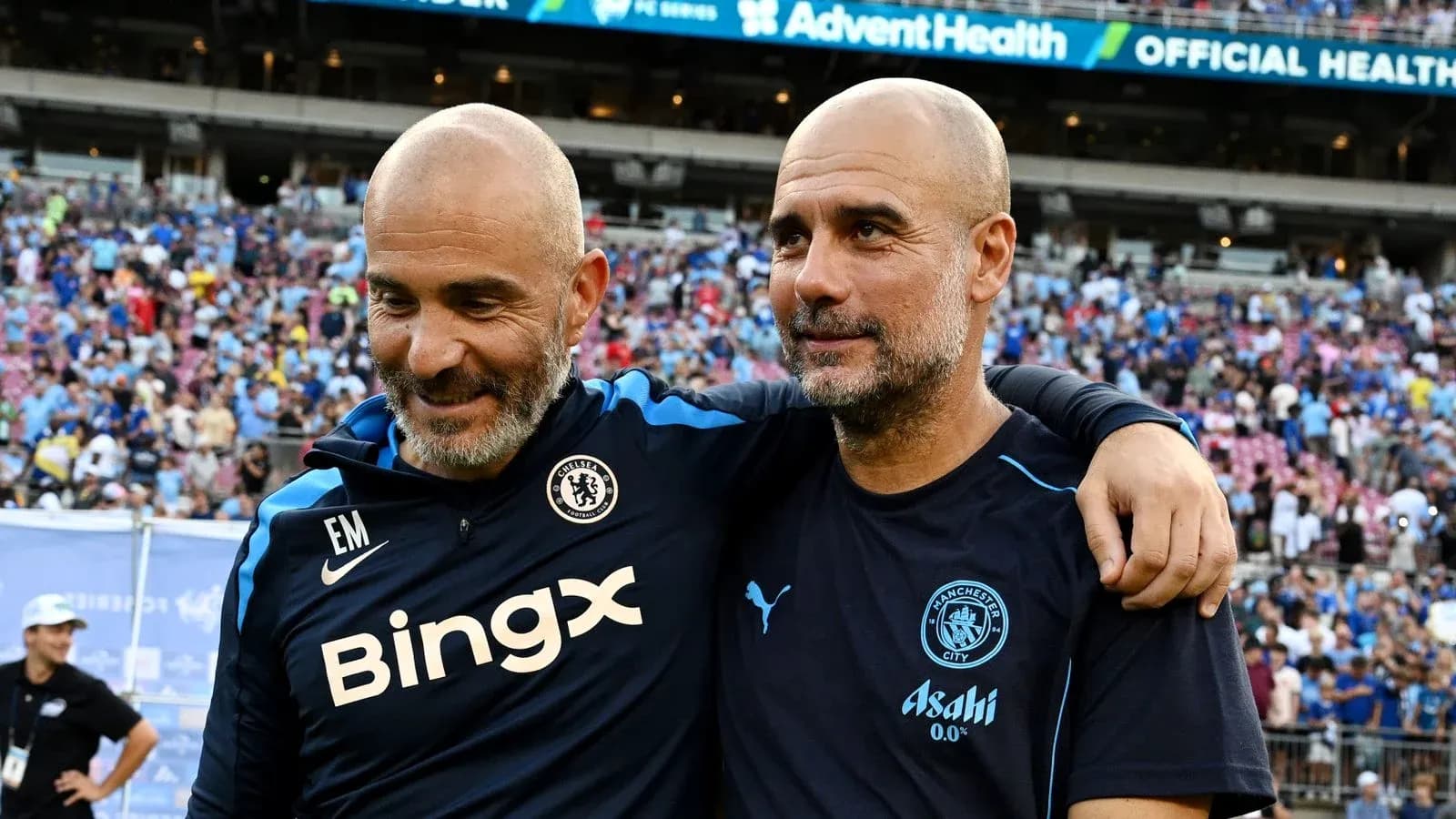
Manchester City's New Era: Maresca Takes Charge
Manchester City have gambled on the familiar. In the summer when the Premier League’s elite reshuffled their dugouts, the champions turned back to a man who already knows the corridors, the training pitches and the weight of expectation at the Etihad: Enzo Maresca.
This is his third spell at City. Once an academy coach, then an assistant during the historic Premier League–Champions League–FA Cup treble in 2022-23, now the man tasked with proving he can deliver trophies on his own nameplate rather than riding shotgun on someone else’s.
He inherits a “dream situation,” as he called it, and he’s right. But it is a dream with teeth.
Soft Landing, Hard Expectations
The fixture list has done Maresca a favour. Bournemouth, Crystal Palace and Coventry City in his first three league games: it’s as gentle an introduction as a new City manager could hope for.
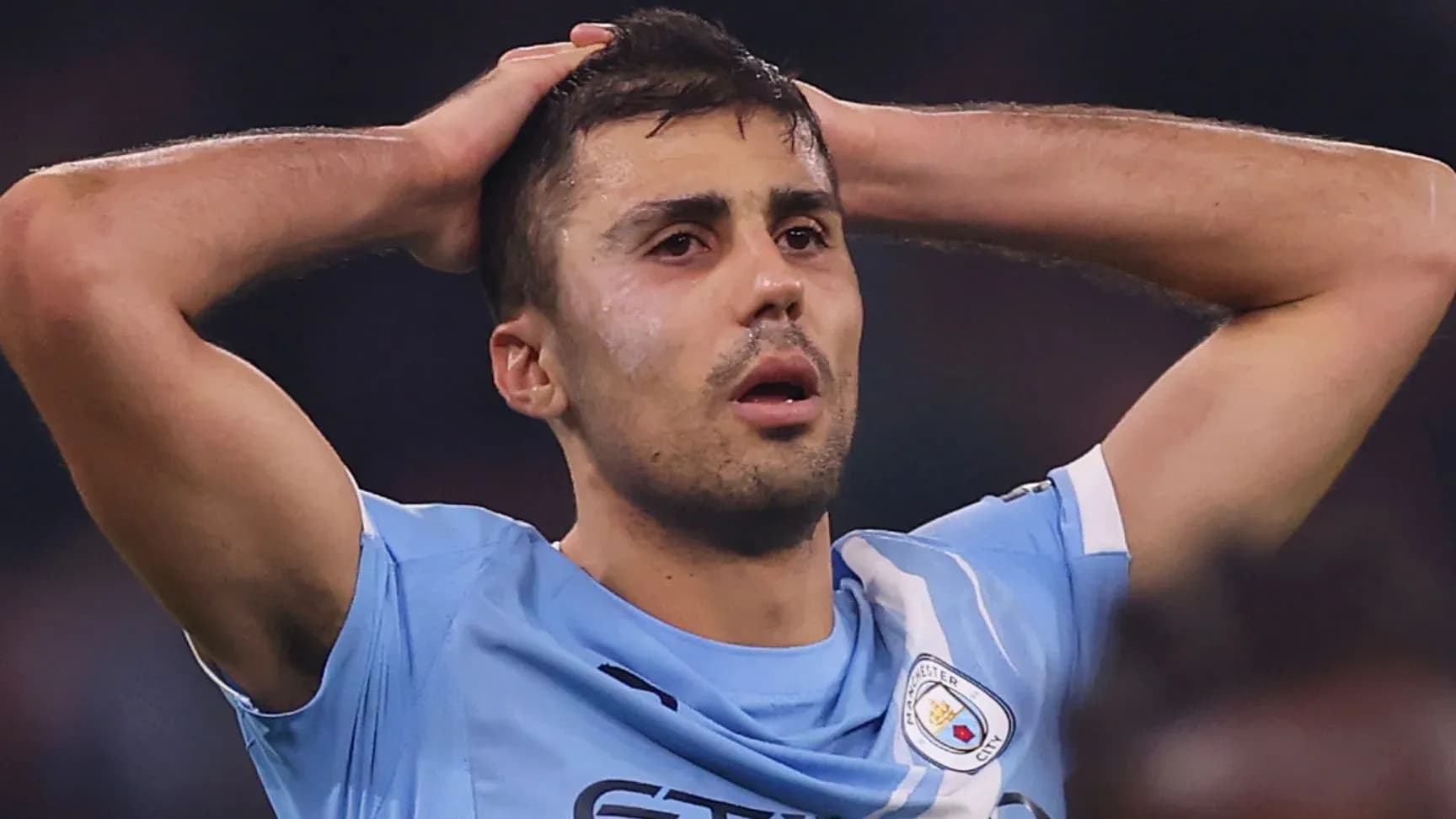
That run buys him something rare at this level – time to breathe, time to bed in his ideas, and crucially, time for his World Cup-worn stars to recover. No one needs that more than Rodri, the heartbeat of Spain’s triumphant campaign and the player City can least afford to break.
Those early matches are winnable even without him. They should allow for a phased return, a carefully managed workload, and a squad that can ease itself back into club intensity rather than be thrown straight into the fire.
But that kindness comes with a twist. These are games City are expected to win. Comfortably. Drop points here and the questions start early, especially with Manchester United and Liverpool looming in two of the next three fixtures in September. Those are not just games; they are temperature checks on a new regime and emotional markers for a fanbase still adjusting to life after Guardiola.
The demands, though, have not changed. The bar remains the same: win, and win with style. The difference is that Maresca does not arrive with Guardiola’s unique job security or the decade-long courtship that preceded it. The Italian enjoys a strong relationship with chairman Khaldoon Al Mubarak, but he will not manage on his own terms in the way his predecessor did. Not yet.
Familiar Ideas, Sharper Edges
On the pitch, this will not be a clean break from the Guardiola years. The footballing language is broadly the same: possession, control, aggressive pressing, a team that suffocates opponents with the ball and without it.
Where Maresca diverges is in his structure and how he wants to use the width of the pitch. He leans towards a more rigid 4-2-3-1, with wingers pushed high and wide to stretch defences. Under Guardiola, City’s wide players increasingly moved inside, rotating into central pockets to overload the middle and let full-backs or centre-backs step into advanced zones. Positions blurred; defenders became midfielders, midfielders played like forwards, and the lines of the formation dissolved.
Maresca’s version is more defined. Roles are clearer. The system demands a true No 10 to knit everything together. At Chelsea, that role belonged to Cole Palmer, who thrived in the space between the lines.
At City, Maresca has different tools. Phil Foden looks the natural heir to that creative slot, with Rayan Cherki another option if the Italian wants a similar setup to the one he trusted at Stamford Bridge. The question is how quickly this squad, conditioned for years to the fluidity of Guardiola’s positional play, can adapt to a structure that asks them to be a little more traditional, a little more disciplined in where they stand and how they combine.
The ideas are not alien. The details are. That is where the early weeks will be won or lost.
Younger, Leaner, Still Ruthless
City’s squad has been quietly reshaped over the last two or three windows under sporting director Hugo Viana. The average age has dropped from 29 to just over 25. The club has moved aggressively to refresh without losing quality.
The price has been a leadership void. Bernardo Silva and John Stones have gone this summer, following Kevin De Bruyne out of the dressing room. Those were the voices that carried weight when pressure spiked and the margins shrank.
Rodri and Ruben Dias now carry even greater responsibility, while last season accelerated Erling Haaland’s evolution into more than just a goalscorer. He is becoming a reference point for the dressing room as much as for the attack. Marc Guehi and Josko Gvardiol add stability and maturity at the back, Mateo Kovacic offers experience in midfield. The spine remains formidable.
Recruitment has been expensive, but calculated. Elliot Anderson has arrived from Nottingham Forest for huge money, a bet on power and longevity in midfield. Jeremy Monga has been taken from Leicester, another nod to the future.
City still want a right-back and a winger. They are tracking Lille teenager Ayyoub Bouaddi, who impressed for Morocco at the World Cup, though Arsenal are watching him too.
On the flip side, the club is open to outgoings if valuations are met. Savinho, Omar Marmoush, Nico Gonzalez, Jack Grealish, Tijjani Reijnders and Rico Lewis are among those whose futures could hinge on offers in the coming weeks. With the World Cup now over, the market around City is expected to move quickly.
Maresca’s first season will be shaped not only by his ideas, but by how cleanly this squad is trimmed and tuned before the window closes.
The First City Without a Map
Since the Abu Dhabi takeover, City have always had a plan. For a decade, everything pointed towards one man. The academy, the style of play, the staffing, the recruitment – all of it was constructed with a single objective: bring Pep Guardiola to the Premier League and give him the perfect environment.
That chapter is closed. The vision that defined a generation has been fulfilled and filed away. Now the question hangs over the club: what does Manchester City look like when it is no longer just Guardiola’s project?
The culture remains brutal in its clarity. Silverware is the currency. Anything less, over time, is failure. Supporters come to the Etihad expecting to be entertained, but entertainment without trophies will not sustain patience for long. That balance – between spectacle and substance – was where Maresca’s Chelsea faltered.
He does, though, walk into a league full of new faces in big jobs. Andoni Iraola at Liverpool. Xabi Alonso at Chelsea. Michael Carrick at Manchester United, to a lesser extent. All of them talented, all of them unproven at this specific scale.
This is a Premier League with the hierarchy in flux. The natural order is up for negotiation again. For a coach with ambition and a squad like City’s, that is not a threat. It is an opening.
Sink or swim territory. But the water is the same for everyone.
The Cloud Over the Project
Hovering above all of this are the 115 Premier League charges still hanging over Manchester City. Maresca cannot influence the outcome, but he will have to live with the noise.
Guardiola turned those moments into a shield for his players. He confronted, deflected, and controlled the narrative. Years at Barcelona, Bayern Munich and City had hardened him to scrutiny. He knew the press pack, knew when to bite back and when to shut things down.
Maresca has dealt with pressure before, but mainly on footballing grounds. This is different. The questions will be persistent, the tone hostile at times, the headlines relentless. How he handles that glare – how he protects his squad from it – will colour perceptions of his first season, especially if a verdict lands in the next 12 months.
He cannot win titles in a press conference, but he can lose authority there if he misjudges the moment.
Maresca has the squad, the structure and the platform to succeed. He also has the hardest act in modern English football to follow and a club stepping into its first truly undefined era in more than a decade.
The pieces are in place. The fixtures offer a runway. The league is wide open at the top.
Now we find out whether Manchester City’s next great cycle is built around a familiar face – or whether the post-Guardiola age will expose just how hard it is to keep winning when the map has finally run out.