.svg&w=384&q=75 "naujapitch logo")

Loudoun United's Statement Win Over Richmond Kickers
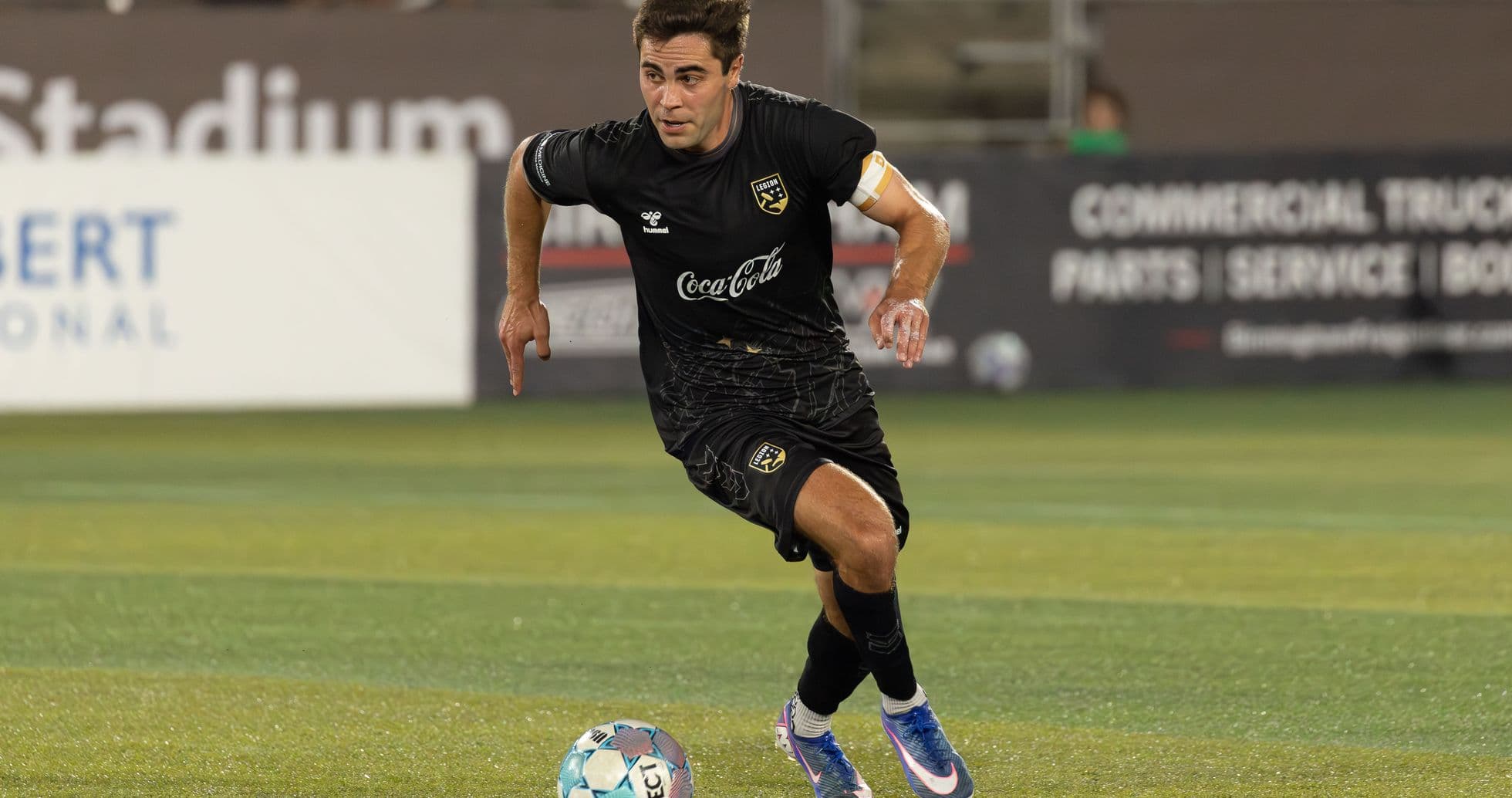
Under the lights at Segra Field, Loudoun United’s 2–0 win over Richmond Kickers felt less like a routine group-stage result and more like a statement about where these two squads stand in the USL League One Cup’s Group 6 hierarchy.
Following this result, Loudoun sit 4th in the group with 3 points, their goal difference at +1 after scoring 3 and conceding 2 overall. Richmond, by contrast, are anchored in 6th, still pointless after 3 matches, their goal difference a stark -7 from 1 goal scored and 8 conceded in total. The numbers sketch one story; the lineups and patterns of play hint at where these squads are headed.
I. The Big Picture – Loudoun’s emerging identity vs Richmond’s crisis of confidence
Loudoun’s season DNA at home is becoming clear. Across 2 home fixtures they have 1 win and 1 loss, with 3 goals scored and 2 conceded at Segra Field. Their home attacking average sits at 1.5 goals per game, while they allow 1.0 on average. That balance between ambition and control was visible again here: a side willing to commit numbers forward, yet organized enough to protect a lead.
Anthony Limbrick’s starting XI was built around stability through the spine. J. Farr in goal, a back line anchored by N. Adnan, A. Essengue and S. Mazzaferro, and a midfield triangle featuring the power of B. Akinyode and the craft of P. Santos and J. Panayotou. Ahead of them, J. Murphy, A. Aboukoura and T. Ulfarsson offered movement and vertical threat rather than a classic target man.
Richmond arrived with the numbers stacked against them. Heading into this game they had played 3 fixtures in total, losing all 3, with only 1 goal for and 8 against. At home they have averaged 0.5 goals for and 3.0 against; on their travels, 0.0 scored and 2.0 conceded. Darren Sawatzky’s XI – J. Sneddon behind a defensive unit of M. Murana, S. Vinberg, B. Howell and D. Moore – was tasked with stabilizing a side whose biggest defeat so far has been 0–4 at home and 2–0 away.
In front of that back line, N. Seufert and T. Pannholzer were asked to provide technical security, while A. Amer and O. O’Malley supported the wide channels and L. Johnson and J. Kirkland carried the attacking burden.
II. Tactical Voids – Discipline, fatigue and hidden vulnerabilities
With no official injury or suspension list provided, the absences are less about who was missing and more about what these squads lack structurally.
For Loudoun, the statistical blind spot is discipline. Their yellow-card profile shows a pronounced late-half spike: 60.00% of their cautions come between 46–60 minutes, with another 40.00% between 76–90. That pattern suggests a team that can become ragged when the intensity spikes after half-time and in the closing stretch. Even in a controlled 2–0 win, that tendency would have forced Limbrick to manage the emotional temperature of his midfield, especially someone like Akinyode, whose role naturally drags him into duels.
Richmond’s disciplinary curve is even more revealing. Their yellows are spread across the match, but the 46–60 window again stands out: 37.50% of their bookings arrive just after the break, with 25.00% between 31–45 and smaller spikes at 0–15 and 16–30 (12.50% each). This is a side that often starts on the back foot and then over-corrects with aggression as the game settles. In a fixture where they were chasing both the scoreline and their own form, that volatility risks turning tactical plans into firefighting.
Neither side has been involved in penalties this campaign – both Loudoun and Richmond have 0 total penalties, with 0 scored and 0 missed – so there was no safety net from the spot to tilt the contest.
III. Key Matchups – Hunter vs Shield, Engine Room battles
Without official top-scorer data, the “Hunter vs Shield” narrative pivots to team-level profiles. Loudoun’s home attack, at 1.5 goals per game, went up against a Richmond defense that, heading into this tie, had conceded 8 in 3 matches overall – an average of 2.7 per game in total, 3.0 at home and 2.0 away. The outcome – another 2 goals shipped by Richmond – fits the pattern of a back line that struggles to absorb sustained pressure.
The Shield cracked in familiar ways. Richmond’s biggest defeats this season – 0–4 at home and 2–0 away – underline that once they concede, they rarely recover their shape. Players like B. Howell and D. Moore were again left to defend large spaces as the midfield line was pulled apart by Loudoun’s rotations between Santos, Panayotou and Murphy.
In the “Engine Room,” the duel between Loudoun’s central trio and Richmond’s midfield was decisive. Akinyode’s presence as a screening midfielder allowed Santos to drift into half-spaces and dictate tempo, while Panayotou connected defense to attack with vertical passes. For Richmond, N. Seufert and T. Pannholzer had to both build and protect; under Loudoun’s press, they were often forced long toward Kirkland and Johnson, which played into Essengue and Mazzaferro’s strengths.
On the flanks, the interplay between C. Torres and Aboukoura on one side, and the defensive work of Murana and Vinberg on the other, shaped the territorial battle. Loudoun’s wide players did not need to overwhelm Richmond; they only needed to pin the full-backs deep, preventing the Kickers from ever establishing sustained width of their own.
IV. Statistical Prognosis – Where the squads go from here
From an xG-style perspective, Loudoun’s underlying numbers suggest a side trending upward. At home they are averaging 1.5 goals for and 1.0 against, with 1 clean sheet in 2 home games and no fixtures in which they have failed to score. Their biggest home win so far is 2–0; their heaviest home loss is 1–2. That narrow band of results points to a team that is almost always competitive and now learning how to close out matches.
Richmond’s prognosis is more troubling. Across 3 fixtures they have failed to score in 2, and they have yet to keep a clean sheet. With a total attacking average of just 0.3 goals per game and 2.7 conceded overall, their xG differential is almost certainly negative. The defensive structure is leaking too many high-quality chances, and the attack is not generating enough volume to compensate.
Squad-wise, Loudoun look like a group with a clear spine: Farr in goal, a settled defensive core, Akinyode as the enforcer, and creative profiles like Santos and Murphy to tilt games in their favor. The substitutes’ bench – players such as E. Bandre, L. Herrera-Rauda, R. Aman, A. Souper, J. Erlandson and L. Piras – offers depth across the pitch, allowing Limbrick to adjust without compromising the team’s identity.
Richmond’s bench – Y. Fillion, D. Espinal, T. Freeman, H. Anderson, Lucca Dourado, S. Layton and A. Gallegos – has options, but the issue is less personnel than structure. Until Sawatzky can reduce the defensive exposure highlighted by their goals-against averages and smooth the disciplinary spikes after half-time, this squad will remain in survival mode.
Following this result, Loudoun United emerge as a quietly efficient cup side whose numbers and cohesion are starting to align. Richmond Kickers, by contrast, leave Segra Field with their season story unchanged: a squad searching for balance, leaking chances, and in urgent need of a tactical reset before Group 6 slips completely out of reach.