.svg&w=384&q=75 "naujapitch logo")
Kylian Mbappe Leads France to World Cup 2026 Semifinals
Boston, United States – By the final whistle, a curious sight unfolded outside the stadium. Morocco shirts, flags and painted faces drifted toward the exits, but the talk on many lips was of one man in blue. Kylian Mbappe had just broken their hearts again, and a fair few Moroccans were ready to sign up to his fan club on the spot.
He had earned it. One devastating strike, one ruthless assist in the space of six second-half minutes, and France were through to the World Cup 2026 semifinals with a 2-0 win. The scoreboard was familiar. The feeling for Morocco even more so.
“France are an unstoppable force,” said Yaseen Maroufi, a Morocco supporter, his voice carrying more resignation than anger as he shuffled away from the stands. He spoke of a team that not only starts with 11 top-class players but can turn to a bench that might be the strongest in the tournament. “France are the team to beat, and it’s very hard to beat them at the moment.”
Revenge was supposed to be the theme of this first quarterfinal on a scorching East Coast afternoon. The memory of the 2022 semifinal defeat had travelled with every Moroccan fan to Boston, stitched into flags and wrapped into songs. This time, they told themselves, would be different: a younger side, a new coach, a belief that lessons had been learned. And a quiet hope that Mbappe might finally have one of those rare, human off-days.
For half an hour, it looked as though their prayers might be answered.
When the French captain placed the ball on the spot in the 29th minute, the stadium braced. Then it waited. Player encroachment, movement around the box, the ball nudged from its mark – the penalty dragged into a long, tense pause. Mbappe hesitated in his run-up and rolled a tame effort towards goal. Yassine Bounou, Morocco’s ever-reliable last line, guessed right and gathered the weak strike with ease.
The Moroccan end erupted. A roar of defiance, of “not this time”.
That save summed up the first half. Tight. Nervy. Both teams wary of opening up too early, both sets of defenders more inclined to shuffle and screen than to gamble. Chances came in half-glimpses, not clear sights. The game felt like it was waiting for someone, anyone, to grab it by the throat.
After the break, Morocco tried to be that team.
They pushed higher. The Atlas Lions snapped into tackles, moved the ball quicker, dared to camp in French territory. Their one effort on target after the interval drew a save, but more importantly, it hinted at a shift in mood. The Moroccan fans roared them on with “Dima Maghreb”, the familiar chant rolling around the stands like a drumbeat of belief.
Then came the price of ambition.
As Morocco committed bodies forward, gaps opened behind them. Against most opponents, you might get away with that for a while. Against France, those spaces are an invitation. Against Mbappe, they are a gift.
Suddenly, he came alive on the left. The touches grew sharper, the runs more direct. Moroccan defenders who had kept him largely quiet in the first half now found themselves turning, chasing, guessing. On the hour mark, the dam burst. Mbappe sliced through the left side, the move unfolding at that terrifying speed only he seems to possess, and France finally broke through. His finish brought his World Cup 2026 tally to eight, and with it, Moroccan resistance sagged.
Six minutes later, he twisted the knife.
This time, Mbappe turned provider, carving open the defence and setting up Ousmane Dembele. The winger swept home his fifth goal of the tournament, and in doing so, helped France write a small piece of World Cup history: the first team ever to have two players score five or more goals at the same edition.
The scoreboard read 2-0 again. For Morocco, the déjà vu was brutal.
Mbappe kept dancing, driving at tired legs, spinning in those dizzying circles that defenders dread and neutrals pay to see. The third goal never came, but it no longer needed to. As the minutes ticked away, Morocco’s ability to carry the fight into the French half faded. The team in red chased shadows; the team in blue managed the clock like seasoned champions.
For a while, the match had felt evenly poised. The first 45 minutes offered Morocco a window, a sense that they could live with the 2018 champions, that the game might tilt their way with one moment of precision. That illusion vanished quickly in the second half.
The sound inside the stadium told the story. “Dima Maghreb” grew softer, then stopped altogether. In its place, “Allez les Bleus” rose from the French contingent, a chant that had been drowned out earlier but now rang out with growing confidence.
“It was wonderful to watch all this French talent,” said Claude Beyanoun, a French American fan who had watched the game with his son Zach, both of them beaming as they lingered in their seats. For them, this felt like the start of something, not the end – a young French side that looks capable of lifting this trophy and, perhaps, several more to come.
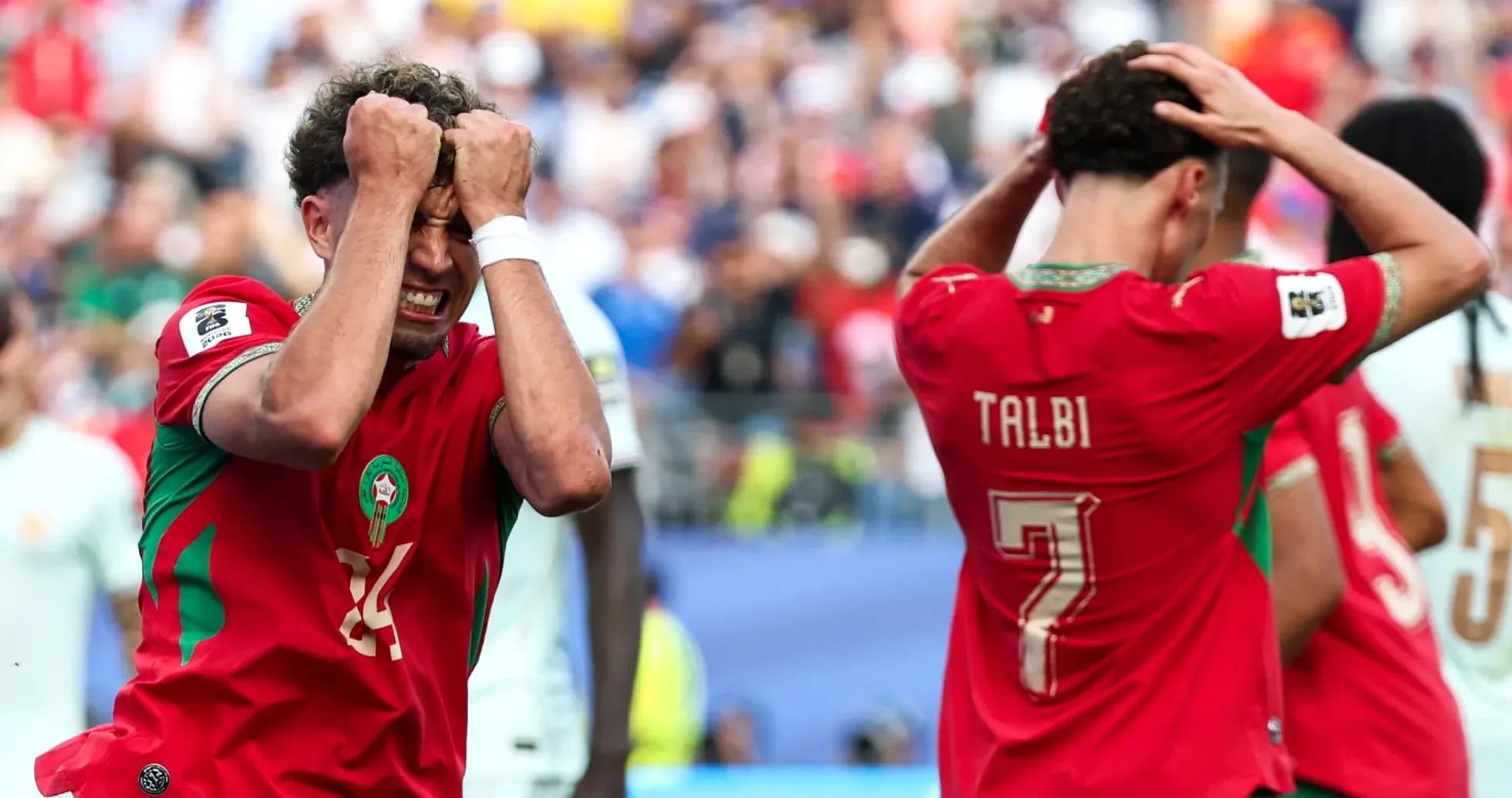
On the Moroccan side, the scene was very different. Flags drooped over shoulders. Faces that had been painted in bright red and green now wore the same expression: drained, disappointed, but not broken. The dream of avenging 2022 with a new generation had been swept away by the same 2-0 scoreline.
Yet even in defeat, there was a stubborn streak of optimism.
“We didn’t win this one, but we’ll win the next World Cup at home,” said Hamza, a Morocco fan who offered only his first name, already looking ahead to 2030, when Morocco will cohost the tournament. Around him, friends nodded, some still too raw to speak but not too despondent to listen.
The message was simple. The journey does not end here. The loss hurts, the opponent looks formidable, and Mbappe remains a problem no one has solved. But for Morocco, a young team and a nation with a World Cup on the horizon have no choice but to carry on.
“This is football. This is life.”