.svg&w=384&q=75 "naujapitch logo")
Korea's World Cup Challenge: Trust Issues and Talent Questions
Thirty days to go, and Korea walks into a World Cup it should fancy, carrying a mood it can’t escape.
The countdown has hit the one‑month mark in Korea, but the usual swell of anticipation around the men’s national team has been replaced by something harsher: distrust, fatigue, and a fan base that has spent the past year booing as loudly as it once sang.
A coach under fire, a crowd turning away
The discontent began the moment Hong Myung‑bo returned to the national team dugout in the summer of 2024. His hiring was controversial, his popularity low, and the reaction unforgiving. Packed stadiums turned hostile. Supporters booed Hong relentlessly and unfurled banners calling for the resignation of Korea Football Association president Chung Mong‑gyu.
Then came something more damning than noise: silence.
On Oct. 14, only 22,206 fans turned up at the 66,000‑seat Seoul World Cup Stadium for a friendly against Paraguay, the smallest crowd for a men’s international in a decade. A month later, when Ghana came to the same venue on Nov. 18, the attendance nudged up to 33,256. Respectable on paper, but well short of what the Taegeuk Warriors have grown used to.
Korea won both of those matches, either side of a victory over Bolivia in Daejeon on Nov. 14 in front of about 33,000. The results looked fine. The performances did not. The team stumbled through those games without ever convincing anyone that a genuine World Cup run was building.
Then 2025 arrived, and the facade of progress cracked.
A 4‑0 hammering by Ivory Coast on March 28 and a 1‑0 defeat to Austria three days later, both away, opened Korea’s World Cup year with a jolt. Two games, no goals, five conceded, and a flood of questions about whether Hong’s side is regressing at the worst possible time.
No wonder the confidence level among fans feels as low as it has been in years.
A soft group on paper, a hard truth in reality
Strip away the noise and the numbers still offer Korea a lifeline.
Ranked 25th in the world, Korea landed in what many pundits are already calling one of the softer groups of this expanded World Cup. Group A pairs them with Mexico (15th), Czechia (41st) and South Africa (60th). No Brazil. No France. No heavyweight that tilts the balance of power from the first whistle.
The schedule helps too. Korea open against Czechia at 8 p.m. on June 11 in Guadalajara (11 a.m. on June 12 in Korea), then stay in the same city to face Mexico at 7 p.m. on June 18 (10 a.m. on June 19 in Korea). They close the group against South Africa at 7 p.m. on June 24 in Monterrey (10 a.m. on June 25 in Korea).
Three group matches. All in Mexico. Only one change of city. While other teams crisscross North America in this first World Cup co‑hosted by Mexico, Canada and the United States, Korea will conserve energy and time.
That matters more than ever in a bloated 48‑team tournament. The format now sends the top two from each of the 12 groups, plus the eight best third‑place teams, into a new round of 32.
On paper, it all points to one conclusion: Korea should get out of the group.
How far they go after that is far less clear.
This will be Korea’s 11th consecutive World Cup. Away from home, they have reached the knockout stage twice – in South Africa in 2010 and Qatar in 2022. The bar is set: survive the group, then see if there is one more step in them.
Optimists, pessimists and one fragile core
Television analyst Kim Dae‑gil sits on the optimistic side of the line.
“I think Korea will get to at least the round of 16,” he said, leaning heavily on the quality of the draw. For him, the group offers a path that does not demand the kind of draining, backs‑to‑the‑wall football Korea has faced at past tournaments. “We can beat Czechia and South Africa six times out of 10. And if we qualify for the knockouts as the top seed or No. 2 seed, then we will meet a beatable opponent in the round of 32.”
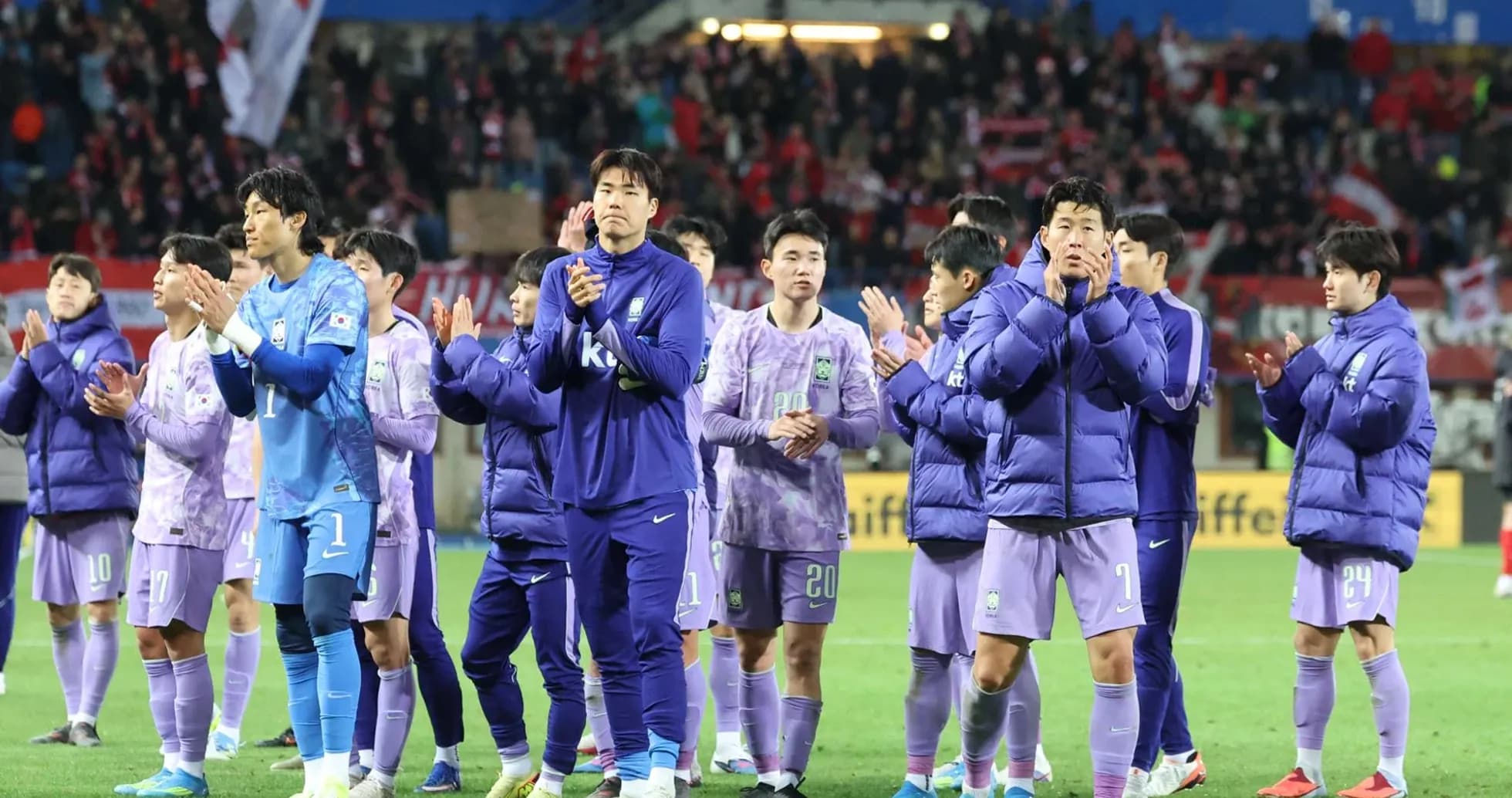
His belief rests on the shoulders of two men: captain Son Heung‑min of Los Angeles Football Club and Paris Saint‑Germain’s playmaker Lee Kang‑in. Kim calls them “game changers,” players capable of conjuring chances from nothing, the kind of talent that can tilt tight World Cup matches.
The problem comes when you look behind them.
“The gap between the starters and backups is substantial,” Kim warned. To push beyond the round of 16, he argued, Korea will need more than flashes from their stars. They will need a supporting cast that can sustain a level, absorb minutes and maintain intensity. “It is imperative for the likes of Son Heung‑min to stay healthy.”
That “if” hangs heavy over this squad.
Two other analysts, Seo Hyung‑wook and Park Chan‑ha, share a much bleaker outlook. Seo initially believed Korea had enough to reach the round of 16. Hwang In‑beom’s ankle injury changed that.
Hwang, a key two‑way midfielder, is rehabbing a right ankle problem picked up in March while playing for Feyenoord. The national team’s medical staff are overseeing his recovery, but his status is uncertain. For Seo, that’s a critical blow.
Hwang is as irreplaceable as anyone in this team. He knits play, breaks lines, covers ground. Lose him, or even get him at less than full capacity, and Korea’s entire structure starts to wobble.
“Other mainstays have not been playing well,” Seo said, pointing to club form. Lee Kang‑in and Bayern Munich defender Kim Min‑jae have not been playing many minutes for their sides. The engine room is rusty; the defensive leader short on rhythm.
Seo still sees one clear strength: the chemistry among Europe‑based stars such as Son, Lee and Kim, forged over years together in the national setup. They know each other’s movements, they share big‑match scars. The issue is how few of them there are.
“The problem is there just aren’t many of them,” Seo said. “At this moment, I don’t think you could say anyone can play at a world‑class level at the World Cup.”
His prediction now stops at the round of 32.
Park Chan‑ha is in the same camp.
A team caught between talent and identity
“Hong Myung‑bo’s team has some talented players,” Park said. The raw ingredients are there. The output is not.
Too often, Korea struggle to create clear scoring chances. The team leans heavily on individual bursts – a Son dribble, a Lee pass, a moment of improvisation – rather than a cohesive attacking structure. That can work in Asia. It rarely survives the pressure cooker of a World Cup.
“You can only do so much of that at the World Cup,” Park warned, pointing to the March losses as early evidence that this approach hits a ceiling against stronger, better‑organized opposition.
If Hwang cannot play or is limited, Park believes those issues will only grow. The midfield will lose control, the transitions will fray, and the burden on Son and Lee will become unsustainable.
For Park, the entire campaign may hinge on one night.
“I think the first match against Czechia will be the most important one,” he said. “This is the one Korea must win, and they will be in trouble if they don’t get it done. Czechia are not an offensive‑minded team, and Korea may have difficulty breaking through their defense.”
Seo agrees. History backs him up.
“In our World Cup history, the outcome of the first match often determined the fate for the rest of the tournament,” he said. Lose early, and the pressure crushes you. Win, and belief floods back into the dressing room.
Mexico lurks in the second match, the toughest opponent in the group. Go into that game without three points from Czechia, and Korea will be playing with a knife at their throat.
Kim Dae‑gil sees it differently. For him, the true battle will come in that second game.
He expects Korea and Mexico to fight for top spot in Group A. That position matters in a 48‑team bracket. Win the group, and the path through the round of 32 could soften. Finish second or scrape through as a third‑place team, and the margin for error shrinks.
Thirty days to find an answer
So here Korea stand: a favorable draw, minimal travel, a core of Europe‑hardened stars – and a fan base that no longer trusts what it sees.
The stadiums have already spoken once, with boos, banners and empty seats. The analysts are split between cautious hope and early exits. The medical room holds one of the team’s most important players. The coach remains under scrutiny every time his team steps onto the pitch.
Thirty days is not long. It might be just enough.
Will this be the tournament where Korea’s talent finally aligns with its structure, or another World Cup where promise dissolves under the weight of its own doubts?