.svg&w=384&q=75 "naujapitch logo")
Jorge Messi Rumor: Media Fiasco Shakes Argentina
The news broke in Argentina with the force of a thunderclap: Jorge Messi, father of Lionel, was dead.
It was wrong.
The false report, aired on Luzu TV and fronted by presenter Florencia Peña, has now cost multiple people their jobs, triggered an advertiser exodus, and drawn a furious public rebuke from the Messi family – all while the Argentina captain is leading his country at a World Cup.
A rumour, a live mic, and a collapse in standards
On air, Peña told viewers that Jorge Messi had died and went further, suggesting Lionel Messi would not play again at this World Cup. The claim raced across social networks in minutes. No confirmation. No second source. Just a live broadcast and a bombshell.
Reality emerged soon after. The Messi family released a statement on Thursday confirming that Jorge Messi was in hospital with an undisclosed medical issue but was “progressing favourably”. He was ill, not dead.
The contrast could not have been starker: a family trying to manage a private health crisis and a media outlet that had already announced a death that never happened.
Peña walks away – and points to the control room
Facing the backlash, Peña resigned from Luzu and issued a public apology to the Messi family, explaining that the false information had been fed to her through her earpiece during the live show.
“I apologise to the Messi family for the awful moment I imagine they are going through,” she wrote on social media, in a statement translated from Spanish. “I am deeply ashamed to have been the vehicle for this pain. I must clarify that this false information was provided to me during the live broadcast as verified by the production team of the show, and I trusted it.
“Even so, I take responsibility for being part of the mistake, and that’s why I decided to step aside and end my participation in Luzu. I apologise again from the heart; I was wrong.”
The message captured the tension at the heart of the fiasco: a presenter blaming a breakdown in verification behind the cameras, but accepting that her name and face carried the story into the world.
Luzu under fire as sponsors flee
Luzu, founded in 2020 and now one of Argentina’s most influential streaming news channels, moved quickly once the scale of the error became clear.
“We deeply regret the incident that occurred on air during the programme,” the channel said in its own statement, also translated from Spanish. “For our channel, broadcasting sensitive information without proper prior verification is unacceptable. Consequently, Luzu TV management has decided to part ways with all those responsible, and Florencia Peña has decided to step aside. We reaffirm our commitment to responsible, respectful, and rigorous communication.”
The price was immediate. According to Argentine media reports, as many as 10 brands pulled their sponsorship of Luzu almost at once. In a crowded media landscape, trust is currency. Luzu spent a chunk of it in a single broadcast.
The Messi family draws a line
From the family’s side, the response was cold and precise. Their statement did not name Luzu or Peña, but there was no doubt where it was aimed.
“In light of the versions, rumours and speculation that have circulated in recent hours, the family wishes to express their profound discomfort at the lack of sensitivity, respect and scruples with which some individuals have treated a strictly private and family matter,” it read, in part.
The message then set out a clear boundary: “The family also wishes to clarify that only their closest family members have real and accurate information about Jorge’s condition. Therefore, any version, statement or information that does not come from the family itself and their corresponding channels should not be considered valid or truthful. In moments like this, we ask for responsibility, prudence and humanity. A person’s health and the peace of mind of those around them should not be the subject of speculation or irresponsible media interest.”
In a few paragraphs, the Messis turned a personal ordeal into a public indictment of how parts of the media now chase speed over certainty.
Messi scores, controversy swirls
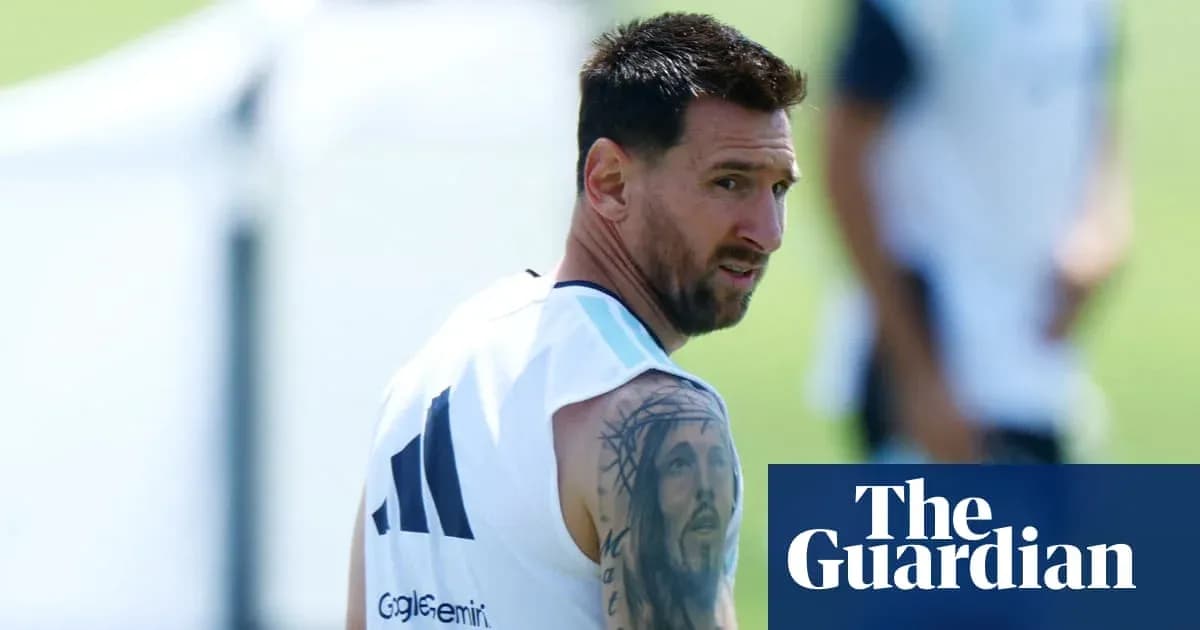
All of this unfolded while Lionel Messi continues to write World Cup history on the pitch.
At 37, he is playing in a record sixth World Cup and opened Argentina’s campaign in ruthless style, scoring a hat-trick in a 3-0 win over Algeria on Tuesday in Kansas City. The reigning champions next face Austria in Group J on Monday in Arlington, Texas, with Messi again at the centre of everything.
Algeria, though, left Kansas City furious. Their federation has sent a letter to Fifa’s refereeing commission, complaining about what they describe as poor officiating in the defeat to Argentina. The flashpoint came in the first half, when Messi stepped on the calf of Algeria captain Aïssa Mandi.
Algerian fans howled for a red card. Messi was not punished and stayed on the field to complete his hat-trick. The match was refereed by Poland’s Szymon Marciniak, the same official who took charge of the 2022 World Cup final in Qatar, where Argentina beat France on penalties.
So Messi moves on, goals piling up, pressure mounting, his father recovering in hospital, and his family publicly demanding basic decency from those who cover him.
In an era when every whisper can become a headline in seconds, how many more newsrooms will have to learn the hard way that “verify first” is not an old-fashioned slogan, but the bare minimum?