.svg&w=384&q=75 "naujapitch logo")
Iran's World Cup Journey Amid War and Uncertainty
Iran’s national team slipped into Turkey on Monday, not for a friendly or a quick tune‑up, but for a long, uneasy wait before a World Cup like no other.
They will be there for weeks, using Turkish soil as a launchpad to a tournament co-hosted by the United States – the same United States that, alongside Israel, began bombing Iran on February 28, triggering a wider war across the Middle East. A World Cup build-up under air-raid sirens and sanctions, under political tension and logistical doubt.
Yet inside the camp, the message from the federation is one of order and control.
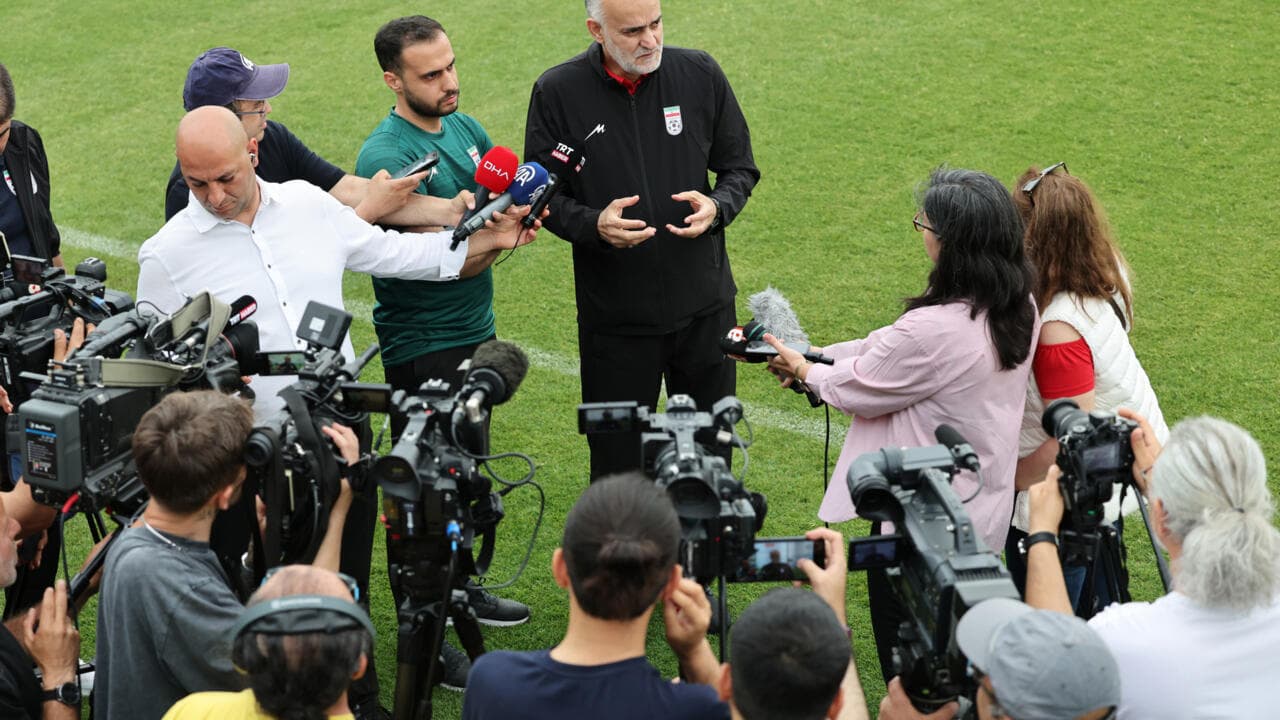
“Everything will proceed properly according to the protocols and what FIFA has stipulated,” said national team director and federation vice-president Mehdi Mohammad Nabi, setting a firm public tone as the squad settled into its temporary base.
He spoke of structures and guarantees, of a tournament that, on paper, should look like any other.
“Inside the United States, they also have committees in place, including a security committee that cooperates with FIFA and is responsible for security matters,” he said. Iran, he reminded everyone, are not newcomers to this stage. “In past years we've experienced all of this and we're fully informed about how these security committees operate at every World Cup we've participated in. In this regard, we're very confident and we have a clear plan.”
Confidence off the pitch, however, still collides with cold bureaucracy.
The players and staff have not yet received their US visas. That single fact hangs over everything. The federation plans to lodge the applications at the Canadian embassy in Turkey, an unusual detour that underlines just how politically charged this World Cup has become for Iran.
“We're not certain yet that all the players and staff will receive US visas,” Mohammad Nabi admitted. It is the one line that cuts through the official optimism, the one reminder that football, for all its rituals, cannot completely escape geopolitics.
He quickly returned to the rulebook.
“One of the rules that applies to the host country is that they must provide guarantees, according to FIFA's statutes and the regulations of the competition,” he said. “One of their commitments is the visas: they have to grant the necessary visa facilities to all the teams that have qualified for the World Cup. And FIFA has made arrangements so that the host country will provide the necessary cooperation to teams like Iran in this area.”
On the calendar, everything is clear. On the ground, nothing is.
Iran are slated to open their Group G campaign against New Zealand in Los Angeles on June 15. After that, Belgium await in the same city, a heavyweight test in the Californian glare, before a trip north to face Egypt in Seattle. Between matches, the team will be based in Tucson, Arizona, a desert camp for a squad coming from a country under bombardment.
So the plan is drawn: Turkey, then visas – if granted – then Tucson, Los Angeles, Seattle. Training pitches, security checks, matchdays.
The question now is whether the political promises and FIFA’s statutes can keep pace with the realities of a war that refuses to stay outside the touchline.