.svg&w=384&q=75 "naujapitch logo")
Indy Eleven's Strong Start vs Forward Madison's Struggles in USL League One Cup
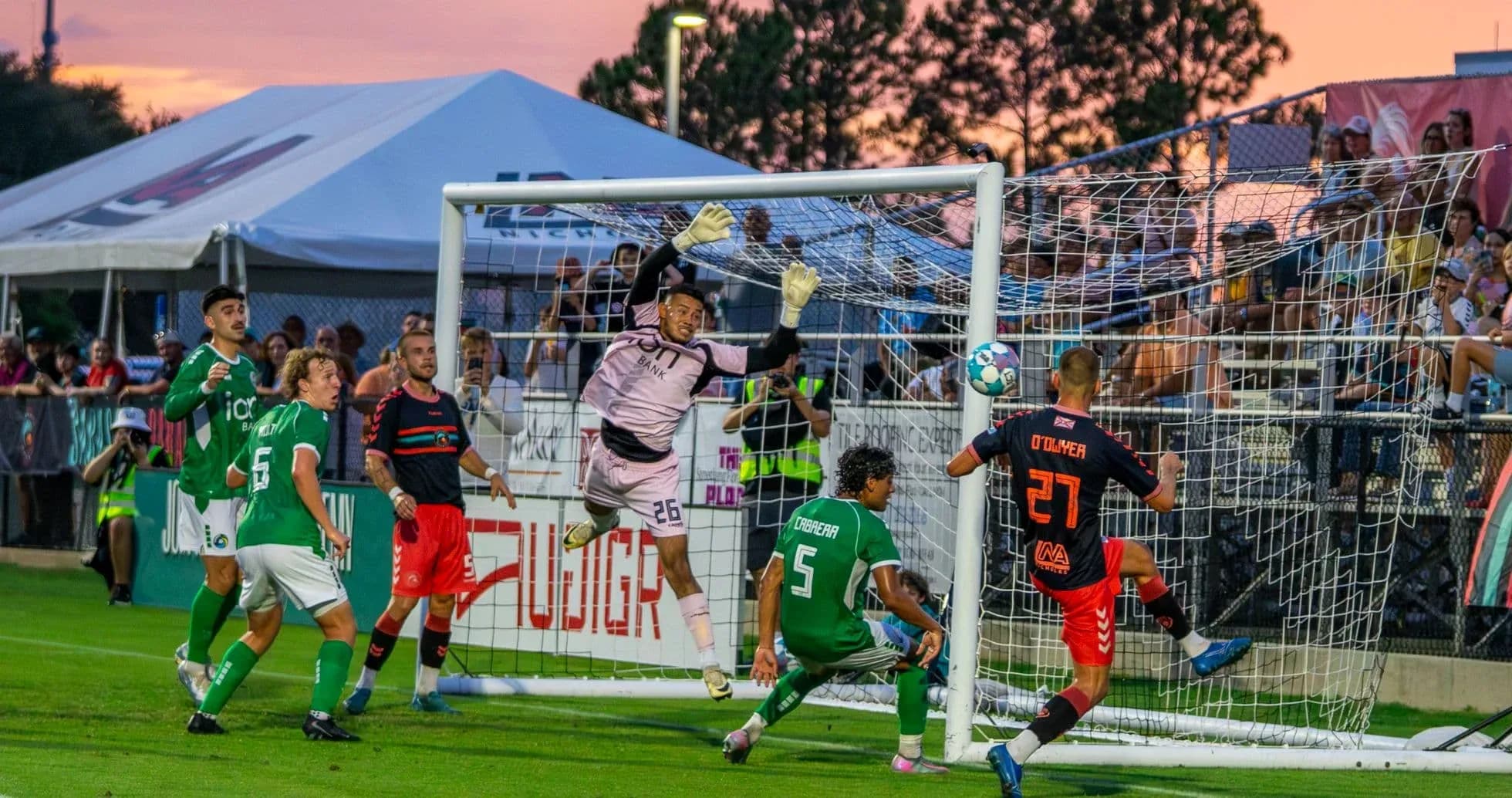
Under the lights at Michael A. Carroll Stadium, Indy Eleven’s 2–0 win over Forward Madison felt less like a routine group-stage result and more like a statement about where these two squads sit in the early landscape of the USL League One Cup.
Following this result, Indy’s campaign profile is that of a side learning quickly and sharpening with each outing. In total this campaign they have played 3 matches, winning 2 and losing 1, with no draws. Their attacking return is clear: 6 goals in total, split evenly between home and away, with an overall scoring average of 2.0 goals per game. At home they average 1.5 goals, on their travels 3.0. Defensively, they concede 4 in total, 2 at home and 2 away, for an overall average of 1.3 goals against per match (1.0 at home, 2.0 away). The result is a positive overall goal difference of +2 in this competition snapshot.
Forward Madison, by contrast, are a side still searching for a foothold. Across their 3 group matches they have lost all three, with 2 goals scored in total and 7 conceded. That leaves them with an overall goal difference of -5, and an attacking average of 0.7 goals per game against 2.3 conceded. At home they have yet to score (0.0 average, 1.0 conceded), and on their travels they manage 1.0 goal per match while shipping 3.0. The patterns point to a team that is competitive in moments but too porous and too blunt over 90 minutes.
I. The Big Picture: Indy’s Emerging Identity vs Madison’s Fragile Framework
Indy’s season DNA in this cup is one of front-foot ambition balanced by a tightening defensive core. Their biggest wins so far — 2–0 at home and 3–2 away — underline a side comfortable both controlling at Carroll Stadium and trading punches on the road. Crucially, they have yet to fail to score in any group game, with 0 total fixtures where they drew a blank.
Forward Madison’s identity is more brittle. They have failed to score in 2 of their 3 matches in total, and have yet to keep a clean sheet. Their heaviest away loss, 4–2, shows they can create chances but lack the defensive stability to survive open games. In the context of a group where margins matter, their form line of LLL and a longest losing streak of 3 matches tells its own story.
II. Tactical Voids and Discipline: Where the Edges Appear
There is no explicit injury or suspension list in the data, so the tactical voids are less about absentees and more about structural weaknesses.
For Indy, discipline is firm but not flawless. Their yellow-card distribution shows a spread of risk across the match: 14.29% of cautions in total come in the opening 0–15 minutes, another 14.29% between 16–30, then a spike to 28.57% both in the 31–45 and 61–75 ranges. That double peak suggests an aggressive edge at the end of both halves, when the game-state sharpens and pressing intensifies. The absence of any red cards in total hints at controlled aggression rather than recklessness.
Forward Madison’s disciplinary profile is more volatile. In total, 25.00% of their yellows land in the first 0–15 minutes, a sign of early fouls as they try to slow opponents. Another 12.50% arrive from 16–30, then a major surge: 37.50% of their yellows between 46–60 and 25.00% from 61–75. The real red flag is late: 100.00% of their red cards in total fall in the 76–90 window. That late-game dismissal pattern speaks to a squad that unravels under scoreboard pressure, exactly when game management is most critical.
III. Key Matchups: Hunter vs Shield, Engine Room vs Enforcer
Without individual scoring charts, the “Hunter vs Shield” duel is best read through unit profiles.
Indy’s attacking “hunter” is collective. The front line of E. Kizza, K. Williams, J. Blake, and B. Rendon is supported by the creative axis of C. Lindley and A. Quinn. This group powers an overall 2.0 goals-per-game output, with the biggest away win of 3–2 underscoring their ability to break lines and exploit space. Against a Madison defense conceding 3.0 goals on their travels and 2.3 overall, the matchup heavily favors Indy’s forwards. The Shield here is Madison’s back line, anchored by J. Shannon and K. Toure, with G. Kanyane screening. Their task is immense: to compress space between lines and protect T. Manske from the volume and variety of Indy’s attacks.
In the “Engine Room” duel, Indy’s midfield trio of Lindley, Quinn, and J. O’Brien offers control, passing range, and second-ball dominance. Their balance has helped deliver 1 clean sheet in total at home and maintain a steady platform for transitions. For Madison, H. Karamoko and G. Kanyane are central to any resistance. They must disrupt Indy’s rhythm, particularly in those late first-half and early second-half windows where Indy’s yellow-card peaks hint at heightened intensity and pressing.
Out wide, M. Segbers and J. Bolma carry Madison’s best hope of stretching Indy and relieving pressure. Their ability to isolate Indy’s fullbacks like L. Neidlinger and M. Rasheed could determine whether Madison can raise their attacking average beyond 0.7 goals per game overall.
IV. Statistical Prognosis: xG Story Without the Numbers
Even without explicit xG values, the underlying indicators are clear. Indy’s consistent scoring, lack of failed-to-score matches, and positive overall goal difference of +2 suggest that their chance creation is robust and sustainable. Their goals-against average of 1.3 overall, with just 1.0 conceded at home, points to a defensive unit that, while not impervious, is structurally sound.
Madison’s profile implies an xG deficit: 2 goals for and 7 against in total, no clean sheets, and 2 matches where they failed to score. Their defensive concession rate of 3.0 on their travels, combined with late red-card vulnerability, paints the picture of a team that fades as the match wears on.
Following this result, the narrative is of Indy Eleven as an emerging group-stage force: efficient in front of goal, increasingly secure at the back, and mentally composed across 90 minutes. Forward Madison, meanwhile, must address their late-game discipline and defensive organization if they are to turn their possession flashes into points. For now, the tactical and statistical balance of this group tilts decisively toward Indy’s evolving, confident collective.