.svg&w=384&q=75 "naujapitch logo")
Heimir Hallgrimsson's Disappointment and Hope for Ireland
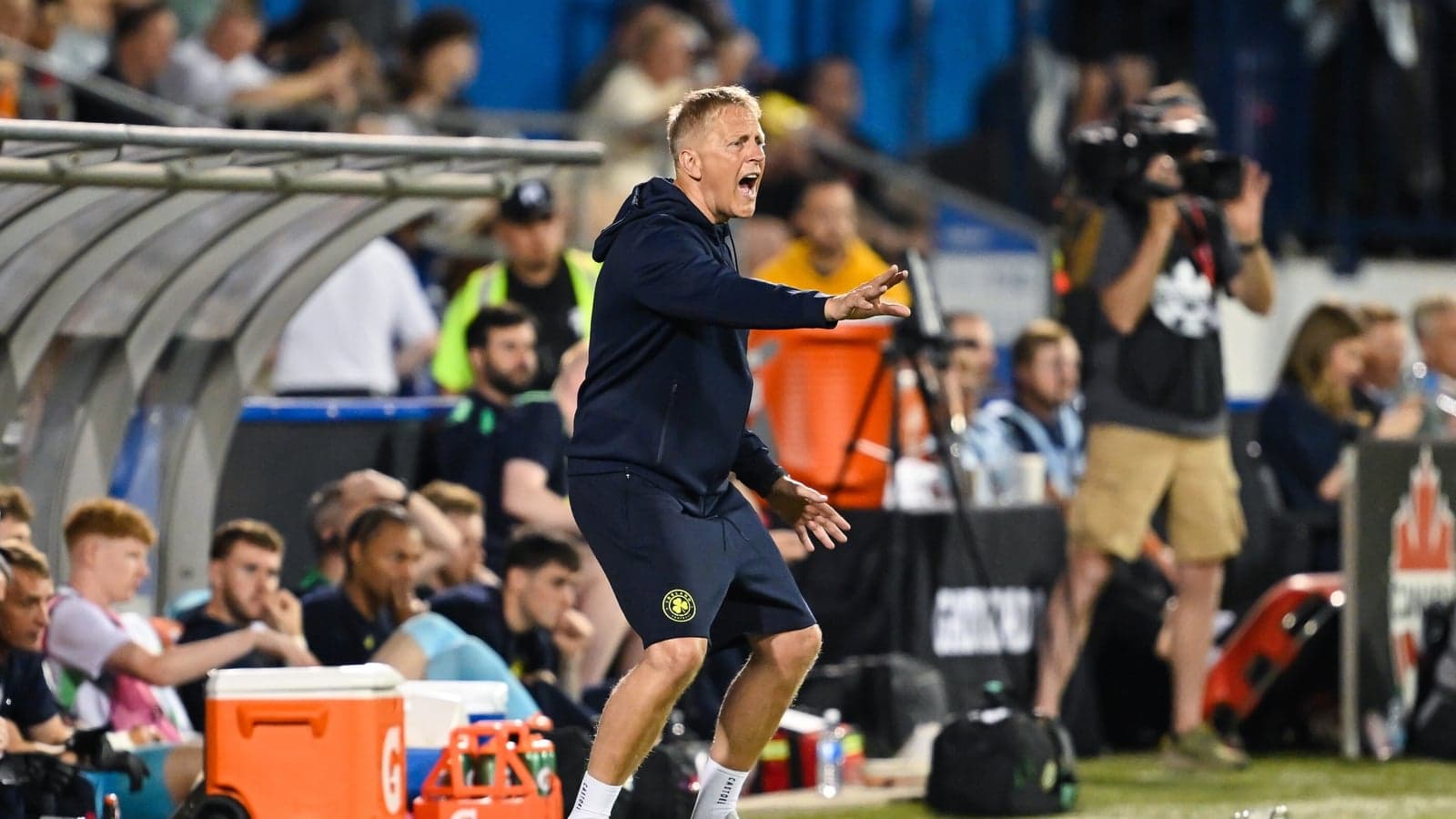
Heimir Hallgrimsson’s jaw was tight as he walked through the mixed zone in Montreal. For the first time in his Republic of Ireland tenure, the easy smile was gone. The 1-1 draw with Canada had ended respectably enough, but the opening 45 minutes still gnawed at him.
This wasn’t irritation about a missed chance or a refereeing call. This was about standards.
Ireland had gone behind to a Jake O'Brien own goal, a scrappy concession that summed up a flat, reactive first half from an experimental side. The performance jarred with everything Hallgrimsson has tried to build since taking over.
"It was unlike everything we have done in recent games," he told RTÉ Sport’s Tony O’Donoghue, his words clipped, deliberate. He spoke of a team waiting, not acting. Responding to Canada, not imposing themselves. No spark. No conviction. No decisions.
Everything, he said, was flat.
A manager’s first real anger
By his own admission, this was the first time he had been “really disappointed” with his team’s display. Not the result. The performance.
He referenced players looking “sluggish in the warm-up” and wondered aloud if the humidity, the heat, or perhaps the intensity of recent training had dragged them down. Whatever the reason, Canada seized control and fully merited their lead.
"They deserved to score," Hallgrimsson admitted, adding that Ireland were “lucky” to reach half-time only 1-0 down.
That honesty cut through the usual end-of-season fuzz. This wasn’t a manager protecting egos. It was a manager drawing a line.
Inside the dressing room at the break, that line became a demand. Ireland had to be braver. They had to press. They had to quicken everything — from thought to touch to movement.
The response came.
Second-half shift and a scruffy reward
Ireland emerged after the interval with more purpose and a sharper edge. The introduction of Liam Scales and Jamie McGrath helped steady the structure and raise the tempo. Suddenly, Ireland weren’t waiting to see what Canada might do. They were asking questions of their own.
Hallgrimsson saw exactly what he wanted.
"As much as I was unhappy with the first half, I was much happier with the second, really happy," he said. With Scales and McGrath on, he felt the team looked “more balanced” and far bolder in their decision-making.
The equaliser, when it came, was not pretty. It didn’t need to be.
Troy Parrott stepped up to take a penalty, only to see his effort saved. Chiedozie Ogbene, who had been lurking on the edge of the box, had already rehearsed the moment in his head. He mimicked Parrott’s run-up, followed the trajectory, and when the rebound spilled loose, he reacted quickest to sweep the ball home.
"I had confidence that Troy was going to score," Ogbene said. "I was outside the box, mimicked his run up, I was fortunate the ball landed on my feet and I was able tap it in."
Fortune favours those who move. Ogbene had gambled, stayed optimistic at 1-0 down, and got his reward.
Ireland then pushed for a winner, and the game briefly opened up. Dawson Devoy and Mason Melia both had clear chances to turn a respectable draw into an unlikely win, only for the final touch to desert them. Canada, for their part, carved out opportunities of their own.
Hallgrimsson didn’t try to dress it up.
"We could have stolen it but I think it would have been a theft," he said. A draw, he felt, was about right. “Let’s say it’s a good draw.”
A camp about tomorrow, not just tonight
Beneath the frustration of that first half, something more important was taking shape. This camp, stretching to 24 days across Spain and North America, has been about widening the net and toughening the core ahead of the Nations League in the autumn.
It would have been easy to coast. Long season. Tired legs. A bruising defeat in Czechia already on the books. Hallgrimsson wasn’t interested in easy.
"I'm really happy with the players that came with us; we had 21 involved in Spain, 27 in these camps," he said. This was not, in his words, a “joke camp”. It was a working block, used to “think about the future and to deepen the squad”.
The benefit, he insisted, will be felt not just now, but “also in the future”.
Montreal underlined that point. Devoy, the creative spark from the League of Ireland, went straight into the starting XI — the first LOI player to be capped by the senior team since Jack Byrne in November 2020. His inclusion carried symbolic weight as well as tactical intent.
As the game wore on, the League of Ireland influence grew stronger. St Pat’s attacking midfielder Kian Leavy and Shamrock Rovers teenager Adam Brennan both came off the bench, joining Portugal-based Joe Hodge in earning their debuts. Recent newcomers Jaden Umeh and Corrie Ndaba were handed their first starts.
This was Hallgrimsson stress-testing the depth chart in real time.
Goosebumps for what’s coming
For senior figures like Ogbene, the injection of fresh faces has changed the feel of the group.
"All these guys deserve to be here, they showed well in training and there was a good feeling about this camp," he said. Then he went further.
"I have goose bumps in my stomach for the future of Ireland. I'm just so excited."
Those are not the words of a player going through the motions on an end-of-season tour. That’s a winger who sees something building behind him — competition, energy, possibility.
Ireland left Montreal with a draw, a mixed performance, and a manager who did not hide his displeasure at what he had seen for half a game. But he also left with a clearer view of who can live at this level, and who can help drive the next phase.
The Nations League awaits in the autumn. The question now is simple: will the standard set in that second half become the rule, or will Hallgrimsson have cause to reach for that same hard edge again?