.svg&w=384&q=75 "naujapitch logo")
Girona vs Real Sociedad: Tactical Breakdown of the 1-1 Draw
Girona’s 1-1 draw with Real Sociedad at Estadio Municipal de Montilivi was a meeting of contrasting game plans: Girona’s high-possession, high-volume attack against a compact, risk-averse Real Sociedad block built to protect a narrow lead and play for transitions. Over 90 minutes, the numbers and the tactical flow aligned: Girona imposed territory and rhythm but needed a substitute centre-forward to rescue a point, while Real Sociedad’s structure and goalkeeper kept them alive despite a minimal attacking output.
Executive Summary
In a La Liga Regular Season - 36 fixture, Girona came from behind to draw 1-1 after trailing 0-1 at half-time. The hosts produced 60% possession, 29 total shots and an xG of 2.22, yet only broke through once. Real Sociedad, with just 6 shots and 0.33 xG, capitalised on a first-half set-piece situation and then retreated into a low-to-mid block, leaning on organisation and time management. The result reflects Girona’s territorial dominance but also underlines Real Sociedad’s defensive resilience and game management in a hostile away setting.
Scoring Sequence & Disciplinary Log
Goals (chronological, locked to events):
- 28' J. Martin (Real Sociedad) — assisted by S. Gomez A key early moment in Real Sociedad’s plan: from sustained pressure and wide service, Sergio Gómez delivered, and centre-back J. Martin converted to give the visitors a 0-1 lead against the run of early possession. That goal allowed Real Sociedad to sink deeper and protect central spaces.
- 66' C. Stuani (Girona) — assisted by A. Martinez Michel’s decision to introduce C. Stuani at half-time paid off. On 66 minutes, left-back A. Martinez advanced and supplied the cross or final ball, with Stuani finishing to level at 1-1. It was the logical outcome of Girona’s relentless pressure and box occupation.
Card verification and disciplinary log (chronological, with reasons):
- Real Sociedad: 7 yellow cards
- Girona: 2 yellow cards
- Total: 9 cards
- 12' Ander Barrenetxea (Real Sociedad) — Foul
- 53' Jon Aramburu (Real Sociedad) — Foul
- 59' Mikel Oyarzabal (Real Sociedad) — Foul
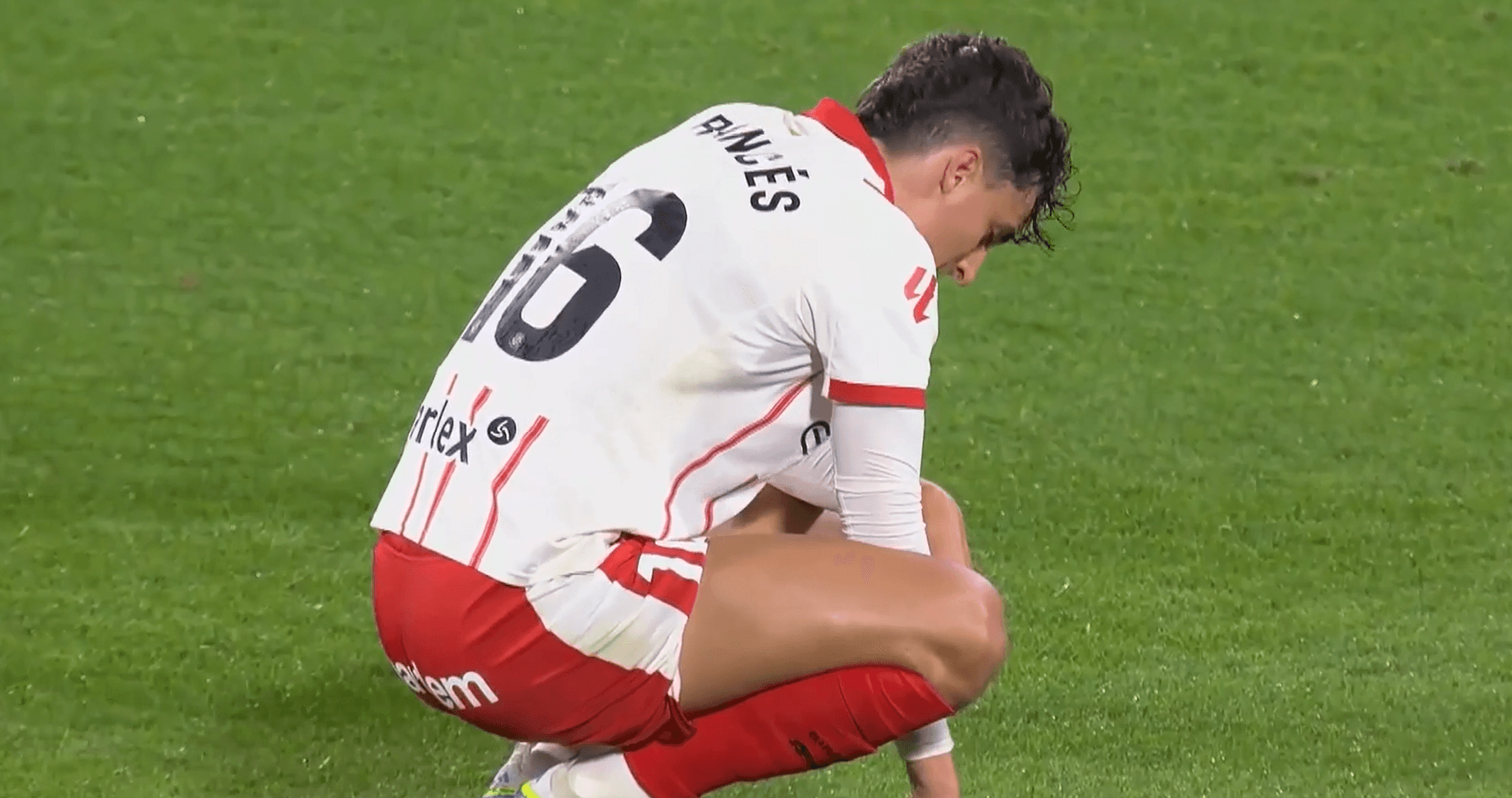
- 62' Alejandro Francés (Girona) — Foul
- 73' Sergio Gómez (Real Sociedad) — Foul
- 76' Joel Roca (Girona) — Foul
- 82' Duje Ćaleta-Car (Real Sociedad) — Time wasting
- 88' Gorka Carrera Zarranz (Real Sociedad) — Foul
- 90' Beñat Turrientes (Real Sociedad) — Foul
The pattern is clear: Real Sociedad’s back line and forwards repeatedly resorted to Foul interventions to slow Girona’s circulation, with a late Time wasting caution for Duje Ćaleta-Car underlining their priority of preserving the point.
Tactical Breakdown & Personnel
Michel set Girona up in a 4-3-3 with P. Gazzaniga behind a back four of A. Moreno, Vitor Reis, Alejandro Francés and A. Martinez. The midfield trio I. Martin, A. Witsel and A. Ounahi provided the platform for an aggressive front line of J. Roca, V. Tsygankov and B. Gil. The structure aimed to pin Real Sociedad deep, with full-backs high and interiors rotating into half-spaces.
Girona’s 560 passes, 508 accurate (91%), show a patient, circulation-heavy approach, using the centre-backs and A. Witsel as a rest-defence base while Ounahi and I. Martin connected to the wide forwards. The 29 total shots, 17 inside the box, indicate sustained penetration rather than sterile possession. Yet only 4 shots on goal highlight Real Sociedad’s success in forcing low-quality shooting angles and getting bodies in front of attempts (10 blocked shots).
Real Sociedad’s 4-2-3-1 under Pellegrino Matarazzo was built on compactness. A. Remiro anchored a back four of S. Gomez, D. Caleta-Car, J. Martin and J. Aramburu. Double pivot J. Gorrotxategi and Y. Herrera shielded central zones, while T. Kubo, L. Sucic and A. Barrenetxea supported M. Oyarzabal. Early on, they pressed selectively, but once ahead, the structure shifted into a deeper 4-4-1-1, with the wingers dropping to form a second line.
Key turning point came with substitutions. At 34', A. Barrenetxea (OUT) made way for P. Marin (IN), signalling an early adjustment on the flank, likely to add work rate and discipline. For Girona, the decisive move was at 46': B. Gil (OUT) and C. Stuani (IN). This changed the profile of the front line from mobility to penalty-box presence, enabling more direct service and second-ball pressure. Later, at 57', I. Martin (OUT) for T. Lemar (IN) and A. Witsel (OUT) for F. Beltran (IN) tilted Girona further towards creativity and vertical passing from midfield.
Real Sociedad’s triple adjustment at 57' — J. Gorrotxategi (OUT) for C. Soler (IN) and T. Kubo (OUT) for G. Carrera (IN) — was less about attacking upgrade and more about fresh legs to maintain their block and press triggers. The late double change at 87' (J. Aramburu (OUT) for Beñat Turrientes (IN), Y. Herrera (OUT) for I. Zubeldia (IN)) further emphasised defensive reinforcement and game management.
Goalkeeper reality: P. Gazzaniga faced only 2 shots on goal and made 1 save, with goals prevented at 0.1, underscoring how little Real Sociedad created from open play. A. Remiro, by contrast, had to make 4 saves, also with 0.1 goals prevented, but his defence absorbed the bulk of Girona’s threat via blocks and forced misses rather than pure shot-stopping heroics.
The Statistical Verdict
The xG split — Girona 2.22, Real Sociedad 0.33 — confirms that the 1-1 scoreline flatters the visitors. Girona’s Overall Form in this match, in terms of chance creation and territorial dominance, was strong, but their finishing underperformed the underlying numbers. Real Sociedad’s Defensive Index is reflected in the low xG conceded relative to the shot volume; their structure channelled Girona into crowded zones and limited clear one-on-ones with A. Remiro.
Possession (60% vs 40%), passing volume (560 vs 401 total passes) and accuracy (91% vs 82%) all emphasise Girona’s control of tempo. Yet the foul count (13 Girona, 19 Real Sociedad) and 7-2 yellow card imbalance reveal that Real Sociedad accepted repeated Foul interventions and Time wasting as a trade-off to disrupt rhythm.
In the end, Girona’s tactical plan was validated by the metrics but not fully by the scoreline. Real Sociedad executed a pragmatic away blueprint: strike from a key moment, compress space, rotate fresh legs into the block, and manage the clock — even at the cost of heavy discipline.