.svg&w=384&q=75 "naujapitch logo")
Football's Hidden Health Crisis: The Reality for Players
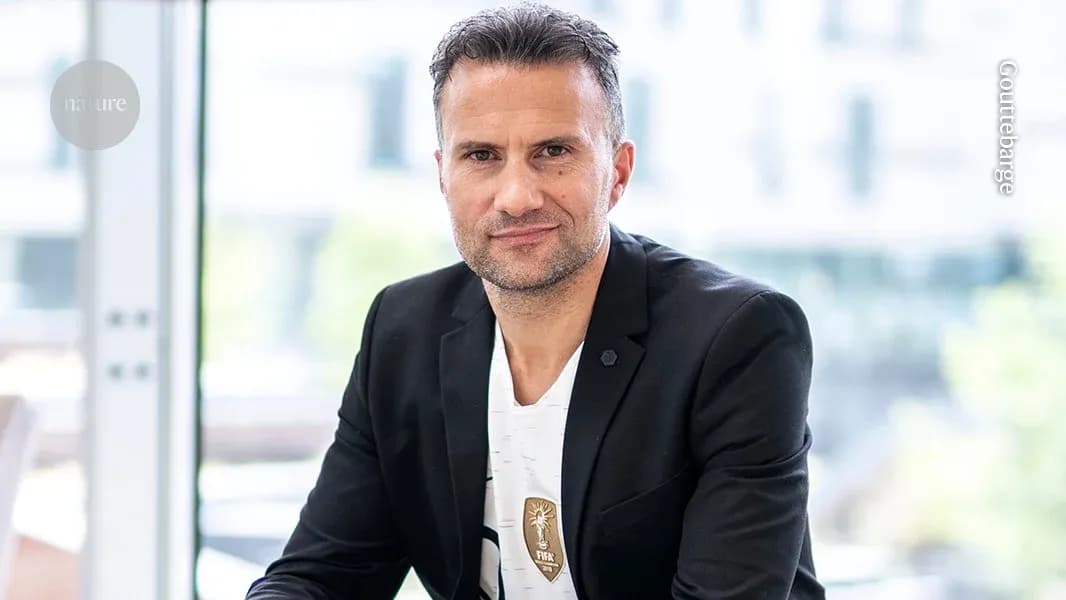
Vincent Gouttebarge knows what it feels like when the body says stop and the game refuses to listen.
For more than a decade he played professionally in France and the Netherlands, living the routine that millions dream of and very few truly understand. When he retired in 2007, he swapped the dressing room for the research lab. Now, as medical director at FIFPRO, chair of the International Olympic Committee’s Mental Health Working Group, and a researcher at the University of Pretoria and Amsterdam University Medical Centre, he has become one of the most influential voices on what elite football does to the people who play it.
With the 2026 men’s World Cup kicking off across the United States, Canada and Mexico, the spectacle is already overwhelming. Packed stadiums. Relentless coverage. Wall-to-wall noise. Behind it, Gouttebarge sees something else: a tournament that magnifies the physical and mental strain on players who are already pushed to the edge.
The Myth of the Indestructible Footballer
From the stands and on screens, footballers look untouchable. Strong, rich, adored. Gouttebarge’s research and his own experience cut straight through that illusion.
“Footballers are not superheroes,” he stresses. They live with the same range of health conditions as anyone else. Musculoskeletal injuries are obvious and widely discussed. The bruised ankle, the torn hamstring, the ruptured ligament — these are part of the public script of the sport.
What remains largely hidden are the symptoms of mental-health problems that Gouttebarge has tracked for years: adverse thoughts, troubling feelings, disruptive behaviours. These are not abstract concepts to him. They are recurring patterns in the data he has been collecting since 2012 across professional football and elite sport.
He does not diagnose disorders in these studies; the clinical process is simply too demanding to fit into the brutal rhythm of top-level competition. Instead he works with what players report. The picture that emerges is clear enough: mental-health symptoms are common, and they are fuelled by a mix of everyday life and the unique pressures of the game.
World Cup Glory, World Cup Cost
For a player, a World Cup call-up is the pinnacle. The anthem, the shirt, the chance to write a name into history. On the surface, it is all positive.
Scratch that surface and the reality looks more complicated.
The impact on mental health, Gouttebarge explains, depends heavily on what actually happens during the tournament. Are you starting every game or watching from the bench? Is your team winning or going out early? Are you hailed as a hero or picked apart in real time by millions of strangers online?
Then comes the part that most fans barely register: what happens after.
There is almost no breathing space. Once the World Cup ends, players are rushed back to their clubs. If they are fortunate, they might get one or two weeks off. Many do not. The next season waits, impatient and unforgiving. There is effectively no recovery period between campaigns.
This is not just a performance issue, Gouttebarge insists. It is a health issue.
A Calendar That Breaks Bodies and Minds
The modern match calendar is a maze of domestic leagues, cups, continental competitions and international tournaments. At the top level, players can be forced through two or three games a week, one after another, sometimes without a proper day off.
Gouttebarge calls that load what it is: a huge burden. It does not only wear down muscles and joints. It drains players emotionally. It clutters their thinking. It leaves little room for the kind of rest that protects mental health as much as physical fitness.
In 2024, FIFPRO and the World Leagues took the unusual step of publicly calling on FIFA to rethink how it schedules major tournaments. The demand was simple: more recovery time between big competitions. More space for players to be human.
The calendar is only part of the story. The game now plays out on screens 24/7. Social media amplifies every mistake, every rumour, every dip in form. That pressure does not stop when the final whistle blows. It follows players into the off-season, into their homes, into their holidays.
Injury, Form and the Invisible Spiral
Gouttebarge’s research points to a brutal feedback loop.
Injury is one of the most powerful triggers for mental-health problems in athletes. A serious injury does not just sideline a player; it strips away their routine, their role, often their sense of identity. A long spell without training or competition ranks, in his data, as the single most significant adverse life event in an athlete’s career.
The relationship cuts both ways. Poor mental health can increase the risk of musculoskeletal injury. A player who is struggling mentally might sleep badly, struggle to concentrate, misjudge a tackle, push too hard in training. The body pays.
Unexpected poor performance is another flashpoint. A bad game, a costly error, a run of form that refuses to improve — at elite level, those moments carry huge emotional weight. Contracts, selection, reputation, future transfers: everything feels on the line.
Add the usual stressors of life away from the pitch — relationships, family problems, financial pressures — and the image of the invulnerable star collapses quickly.
The Stigma That Still Lingers
Despite progress, football remains a conservative sport in many places. Talking openly about mental health is still far from normal.
In Europe, Gouttebarge sees encouraging movement. Players speak more, clubs invest more, the subject has begun to appear on official agendas. Yet the stigma has not disappeared.
Across South America, Africa and parts of Asia, where football’s grip on the public imagination is just as strong, it can still be seen as a weakness to admit to depression or anxiety. The fear is simple and stark: if a coach knows, will you lose your place in the team?
The contrast with physical injury is striking. A player will sit in a press conference and casually discuss a torn hamstring or a sore ankle. The same player may stay silent about panic attacks or persistent low mood.
For Gouttebarge, that silence is dangerous. It keeps players isolated. It feeds the idea that mental health is something to hide, not something to manage.
He argues for a dual approach. From the bottom up, players and coaches need education and mental-health literacy programmes that make it clear these issues belong on the same agenda as any physical injury. From the top down, the game’s structures must change.
National federations typically stack their medical committees with sports physicians, orthopaedic surgeons and cardiologists. Mental-health professionals are usually missing. That, he says bluntly, has to change.
Small Interventions, Real Impact
In 2018, FIFPRO rolled out an education programme aimed at improving mental-health awareness among players. It was not a gold-standard randomized controlled trial. Gouttebarge is transparent about that.
Still, the results mattered. After the programme, players showed better attitudes and behaviours around mental health than before. For him, it was proof of concept: invest a little time in explaining why mental-health challenges deserve the same priority as a muscle tear, and you can shift the culture, even if only a few degrees at a time.
In a sport obsessed with marginal gains, that kind of shift could be decisive.
Isolation as Punishment
One practice in particular infuriates Gouttebarge: the routine sidelining of players by isolation.
It is a familiar story. A new coach arrives. The squad is too big. A handful of players are deemed surplus and told to train alone or shunted off to work with the youth team.
From a trade-union standpoint, it is a clear breach of the spirit of the contract between player and employer. From a health perspective, Gouttebarge sees something even more troubling.
Social support is one of the strongest protective factors against mental-health problems. Strip a player out of the group, away from the daily interaction of the dressing room, and you increase their risk. You turn a professional decision into a personal punishment.
He is blunt: this would not be tolerated in most other industries. You would not separate an office worker from their colleagues and leave them in a side room for weeks because a new manager did not rate them. In football, it still happens with alarming regularity. For Gouttebarge, that is not just bad management. It is poor leadership, plain and simple.
As the World Cup unfolds and the spotlight locks onto goals, saves and storylines, his work is a reminder of the question the sport can no longer dodge: how long can football keep stretching its players before something breaks that no scan can see?