.svg&w=384&q=75 "naujapitch logo")
FIFA Revises Water Bottle Policy for World Cup 2026
Fifa has tweaked its water bottle rules again for the 2026 World Cup, easing a policy that had sparked a backlash before a ball has even been kicked.
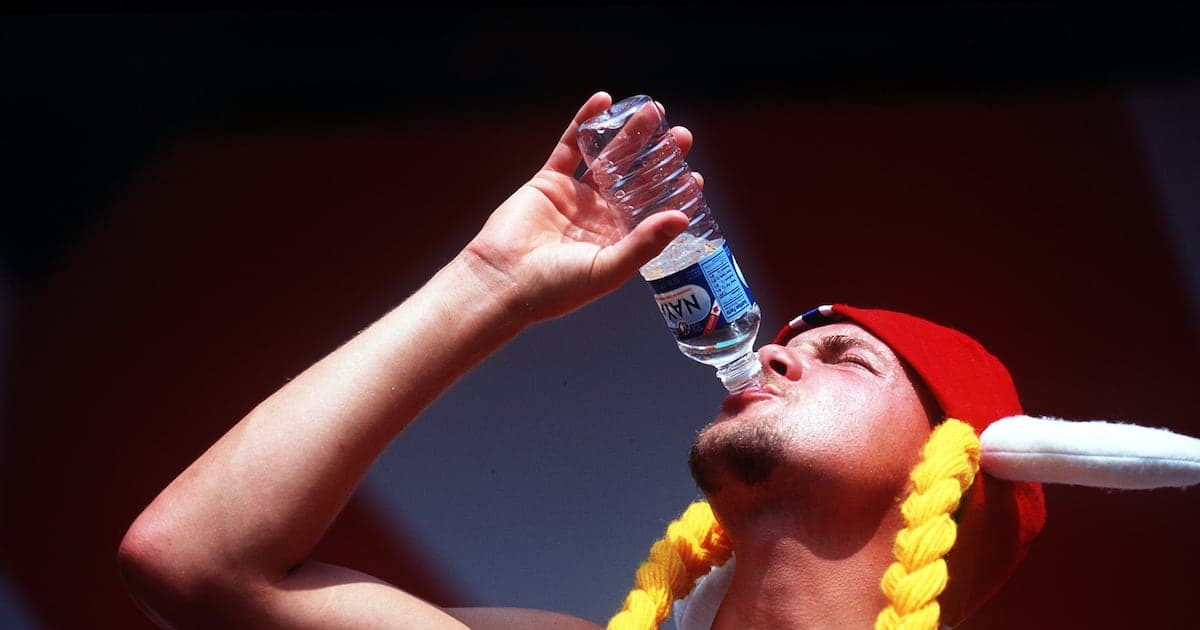
After days of criticism from supporters, scientists and politicians, fans will now be allowed to take one soft, plastic, factory‑sealed disposable bottle of water – 20 ounces (590ml) – into matches in the USA and Canada.
It is a partial retreat from an earlier, much stricter stance. Ticket holders had originally been told they could bring in an empty, transparent, reusable bottle of up to one litre. That option vanished in an update earlier this week, when reusable bottles of any kind were suddenly outlawed.
The change landed badly. With concerns already swirling about extreme heat and the health of spectators at a summer tournament spread across North America, fan groups and experts lined up to question the logic. Why remove the option to refill a reusable bottle in conditions where hydration could become a safety issue?
Into that storm stepped British prime minister Keir Starmer, who cut through the usual diplomatic language. He called the measure “wrong” and said he “can’t help but think that it’s about making money”.
His argument was simple and blunt. If fans cannot bring in their own bottles, they have to buy water inside the stadiums. “So you can’t bring plastic bottles in but you can buy a bottle of water when you get in the crowd? And then it’ll be expensive,” he told LBC, before pointing out that tickets “cost a fortune, far too expensive in my view”.
The pressure told. Fifa rowed back, though not all the way.
A statement from the governing body confirmed the new compromise: every supporter can carry one sealed disposable bottle through the turnstiles at World Cup 2026 matches in the USA and Canada. No refilling flasks. No metal containers. No hard plastic bottles.
World Cup 2026 chief operating officer Heimo Schirgi underlined that line. “What is not allowed are hard-sided resealable water containers, which could pose a safety and security risk,” he said.
Fifa had insisted on Tuesday that the original ban aimed to “prevent risk and injury to players and attendees”, pointing to the possibility of bottles being used as projectiles. That justification did little to calm the anger of fans, who quickly drew comparisons with last summer’s Club World Cup in the United States.
At that tournament, supporters could bring empty bottles into grounds and refill them once inside. Water was on sale as well, typically priced between £3 (€3.47) and £4.50, but the option to carry a reusable container helped take the edge off both the heat and the cost.
This time, the balance tilts more clearly towards single‑use plastic and in‑stadium sales. Environmental concerns sit uneasily alongside safety arguments and commercial realities, and the policy now lands somewhere in the middle: less draconian than the midweek edict, but still far from the refill culture many fans expected.
Starmer, for one, is not convinced. For him, the issue goes beyond hydration and into the broader cost of following elite football. “The ticket sales are too high. And this is the wrong policy,” he said.
The World Cup is still two years away, yet the debate over something as basic as a bottle of water has already exposed the tension at the heart of the modern game: where does supporter welfare end and revenue protection begin?