.svg&w=384&q=75 "naujapitch logo")
England's World Cup Heartbreak: Kane and Another Semifinal Exit
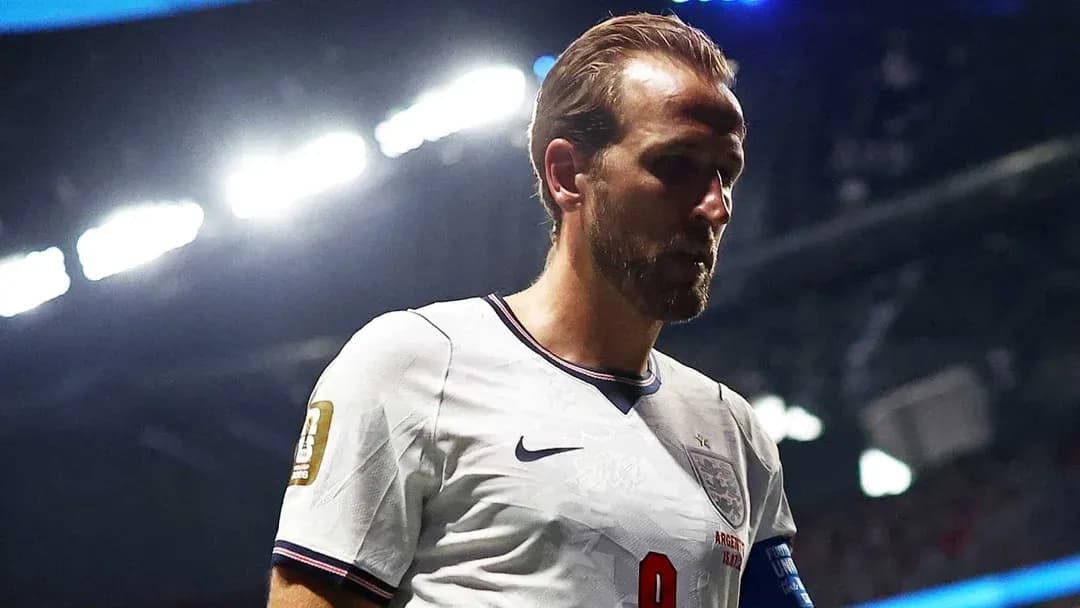
Harry Kane walked off the pitch in New Jersey with the look of a man who had seen this film too many times before. Another World Cup semifinal. Another lead surrendered. Another England side left staring at the celebrations of someone else.
Argentina’s 2-1 comeback win over the Three Lions in the 2026 World Cup semifinal cut deep, and the England captain did not bother to hide it. Hours after the final whistle, Kane took to X and poured out what so many of his teammates were feeling but could not quite articulate in front of the cameras.
“There are no words big enough right now to overcome this feeling of emptiness in the stomach,” he wrote.
No spin. No brave face. Just the raw, hollow ache of another missed shot at history.
A familiar collapse on the brink
The cruelty of the night lay in its familiarity. England led. England believed. Then England fell.
Goals from Enzo Fernández and Lautaro Martínez flipped the match on its head and dragged Argentina into the final, leaving Thomas Tuchel’s side marooned in that same old territory: close enough to see the trophy, never close enough to touch it.
The numbers make the pain even sharper. In the 21st century, only twice has a team scored first in a World Cup semifinal and still failed to reach the final. Both times, it was England. First against Croatia in 2018. Now against Argentina in 2026.
This is a generation that was supposed to rewrite the country’s World Cup story. Instead, the semifinal has become a ceiling they keep crashing into. Since lifting the trophy in 1966 after winning their first semifinal, England have now been knocked out at this stage three times in a row: 1990, 2018, 2026. Three eras, same ending.
Kane’s quiet night, loud frustration
On a night when England needed their captain to drag them through, Kane endured one of the most subdued games of his international career.
He did not manage a single touch in Argentina’s penalty area – a stark, brutal statistic for one of the most prolific forwards of his generation. It is a rarity for him at major tournaments, something that has happened only twice before. This time, it came when the stage and the stakes were at their highest.
That absence in the box told its own story. Argentina squeezed the spaces, cut off the supply lines, and forced Kane to drift deeper and deeper in search of the ball. The further he came away from goal, the further England’s dream of the final seemed to drift.
Yet his message online hinted at more than just despair. Beneath the emptiness, there was a flicker of defiance, the sense of a player who knows this wound will not heal quickly but refuses to let it be the final chapter.
Tuchel’s rebuild starts now
For Tuchel, this is the moment when the job really begins.
He has taken England to the brink in his first World Cup in charge, only to watch a lead slip away under the weight of history and Argentina’s ruthlessness. Now he must pull together a dressing room scarred by another semifinal exit and convince them that this is not the end of their cycle, only another brutal lesson.
England will not have long to lick their wounds. Tournament football never allows it. The core of this team is still in its prime, still stacked with experience and talent. Kane remains the figurehead, carrying the scars of yet another near miss but also the belief that he can still change how his international story is remembered.
The captain feels empty tonight. The question now is simple, and unforgiving: how many more chances will this generation get to fill that void?