.svg&w=384&q=75 "naujapitch logo")
England's World Cup Challenge: Injury Concerns and Manager Pressure
England stumble towards their World Cup opener against Croatia with more noise swirling around them than rhythm in their legs. Tornado scares, injury gambles, selection snubs over video calls, apocalyptic headlines about SWAT teams a mile away from a stadium – and somewhere in the middle of it all, Thomas Tuchel is being told, in no uncertain terms, that anything less than a semi-final is failure.
The football hasn’t even started and already the circus is in full flow.
Tuchel, Maguire and a FaceTime farewell
Harry Maguire’s World Cup ended before it began, and in suitably modern fashion. As reported by The Sun, Tuchel delivered the news over FaceTime. Not a quiet visit, not a phone call, not even a curt message. A video chat.
The detail jarred because it felt emblematic. Clinical. Remote. A player who has been central to England’s recent tournament runs – for better or worse – cut adrift via a screen.
Maguire’s own explanation of the decision only underlined the awkwardness. He relayed that Tuchel had “gone with the four lads that he got through the qualifying in the autumn camps where he felt like they did well during those six games,” then immediately admitted the manager “can’t really give me an excuse.”
That contradiction says plenty. The reasoning was there. The reassurance was not. For a defender who has long been a lightning rod for criticism, this was a brutal, if unsurprising, full stop.
A manager with ‘no excuses’
If Maguire’s omission is one flashpoint, the broader pressure on Tuchel is the real storm cloud. On the eve of England’s opener, The Sun framed the stakes in stark terms: “make the semi-finals at least or he has failed.”
No nuance. No allowance for the chaos of tournament football. Just a blunt line in the sand.
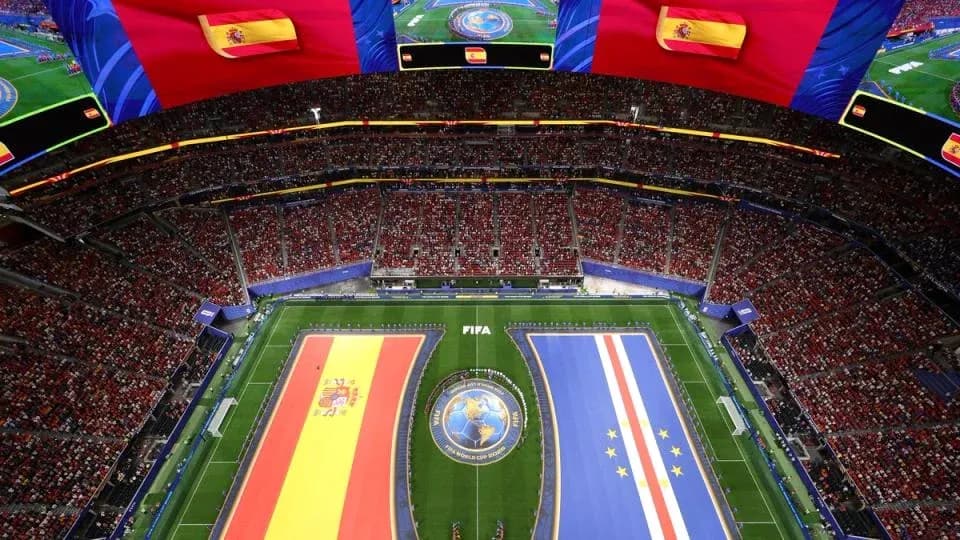
It comes a day after Spain, reigning European champions and one of the favourites for this World Cup, were reminded that even the elite can be dragged into trouble. Their stumble has not softened expectations around England; it has hardened them. The message is clear: whatever happens to others, this England must deliver.
Saka’s ‘gamble’ and Arsenal’s supposed alarm
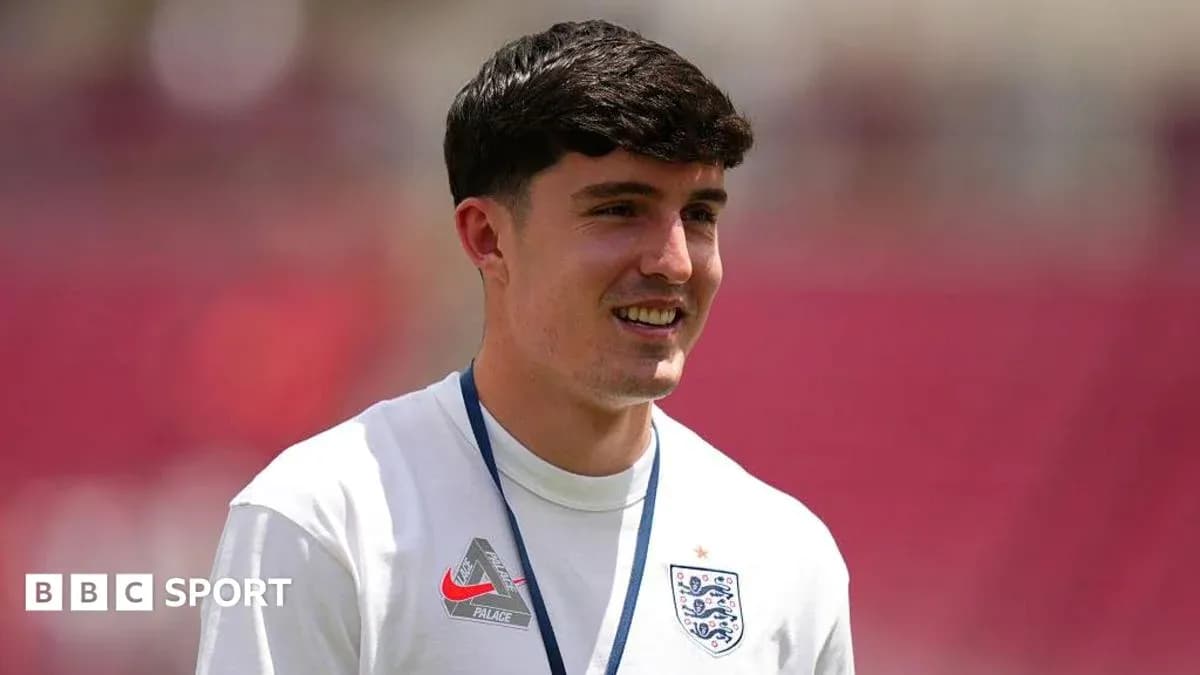
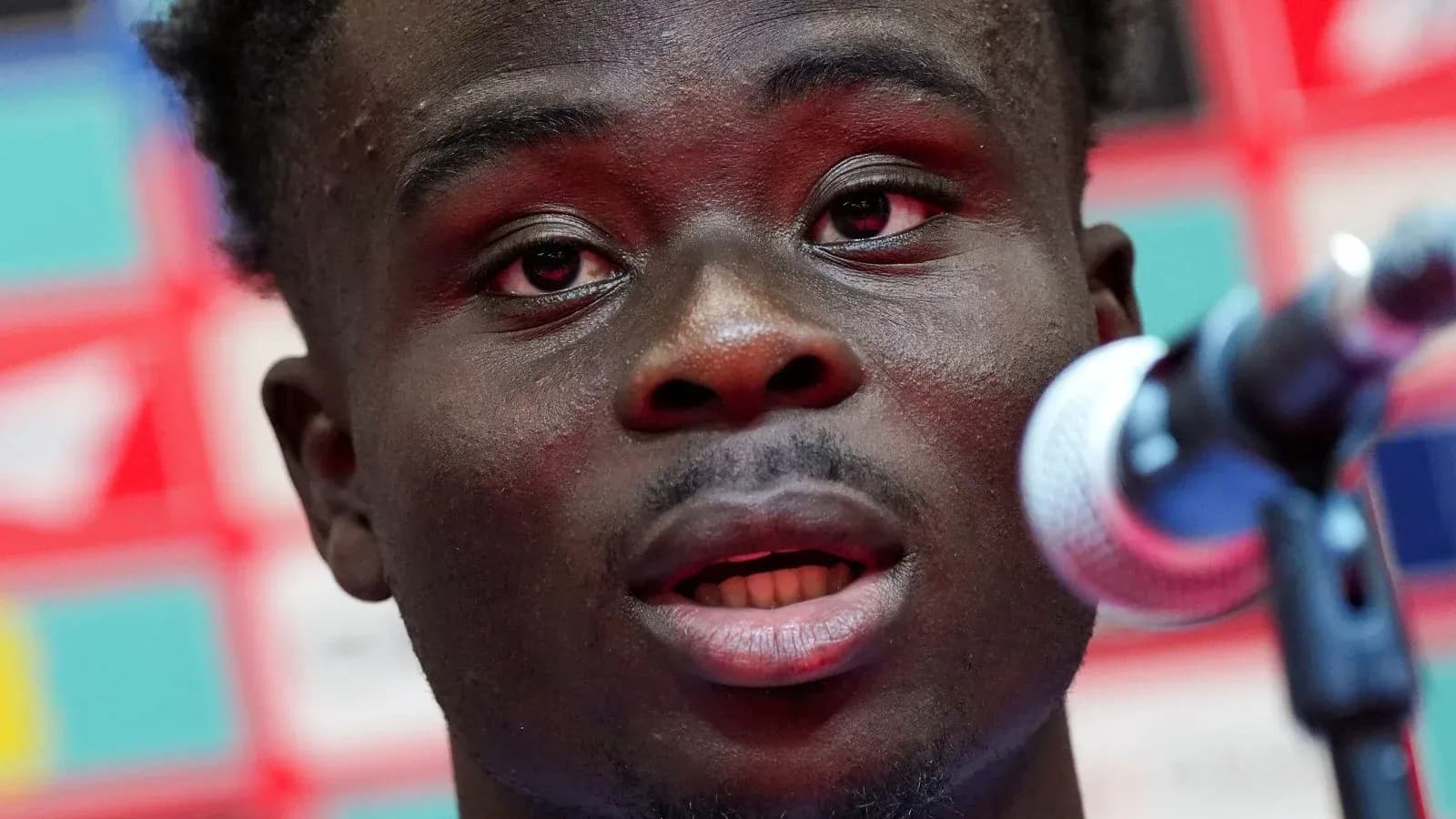
Into that environment walks Bukayo Saka, still managing an Achilles problem and still central to England’s attacking plans.
Tuchel has already said “it is very unlikely he starts and finishes all the matches” at this World Cup. The numbers back that up. Since mid-March, Saka has started and finished just one match for club or country. He began only two of Arsenal’s last seven Premier League games in the title run-in, was limited to under an hour in their Champions League semi-final second leg, and played less than half an hour across England’s warm-up fixtures after missing the March squad through injury.
None of that is a secret. None of it is new.
Saka, though, has made his position plain. He says he is “ready to go” and “happy to take the gamble” on his fitness for England. For a player of his mentality, that attitude is entirely in character.
Yet his words were quickly twisted. The Daily Mirror’s original, measured headline – Saka ready to take a World Cup “gamble” in a “huge boost” to England – was transformed by the Daily Express website into something far more breathless: “Bukayo Saka sparks Arsenal concerns with alarming England comments at World Cup.”
The reality is almost the opposite. Saka explicitly praised Mikel Arteta and “the Arsenal medical team” for their work with England, saying they had “managed me amazingly since March.” Tuchel echoed that last week, stressing that Arsenal “took very good care of him and were very aware of it.”
Everyone involved knows he is not fully fit. Everyone has known that for months. The “alarm” is largely manufactured, a headline chasing jeopardy where the player and both medical departments are, in fact, aligned.
Storms, SWAT teams and the search for peril
The sense of impending doom around England’s camp has not been confined to injuries and selection calls.
The Sun’s foreign editor Nick Parker has chronicled how the squad were “shaken” by a tornado that, crucially, did not force them to alter their quiet evening indoors. Now comes another brush with danger: a SWAT team and armed police responding to an incident a mile from where England’s first match will be played.
The headline screams urgency. The opening paragraph leans into it. Only in the seventh paragraph does the key line arrive: “There is no indication the incident was connected to the World Cup or posed any threat to the tournament or its venues.”
The threat, in other words, did not exist. But the narrative of a team besieged by off-field drama rolls on. If fireworks go off five miles away, expect someone to tell you the England camp has been “rocked.”
Spain slip, narratives twist
Even Spain’s draw with Cape Verde has been pressed into service as a warning and a reassurance all at once. “Why England and all other World Cup rivals should be worried after Spain are humbled by Cape Verde,” ran one line, before conceding that Spain “still cannot be ruled out of contention for the trophy” with two group games left.
A powerhouse stumbles, yet remains a threat. A familiar story. The conclusion being nudged towards England is obvious: no result elsewhere will lower the bar at home.
Between tornado tales, crimes unrelated to the tournament, and Saka daring to say he wants to play, the picture being painted is of a squad under siege from every angle. In reality, they are dealing with the same thing every England squad faces before a ball is kicked: noise.
Crossed wires and curious logic
The muddle is not limited to England. Jeremy Cross, writing in the Daily Mirror, noted that Liverpool will quietly welcome the strong early World Cup showings from Florian Wirtz and Alexander Isak, even if those came against Curacao and Tunisia.
So far, so reasonable. Then came the odd leap: “Iraola will want this to continue. He would never admit it, but the Spaniard will hope Isak uses the biggest stage of all to find himself again, before taking that feeling back to Anfield.”
Why would Andoni Iraola “never admit” he wants his star striker, an expensive, central figure in his plans, to rediscover form? What manager doesn’t want his best forward brimming with confidence? The only implied tension seems to be that Iraola is Spanish and Spain might, at some point, cross paths with Sweden. That is a thin basis for secrecy.
It is a small example, but it speaks to a wider trend: narratives being stretched to breaking point to add drama where the football itself already offers plenty.
Croatia next, with the volume turned up
So England head towards Croatia with questions hanging over their defence, their talismanic winger nursing an Achilles, and their manager framed as a man who either reaches the last four or walks away branded a failure.
The stakes feel huge. The noise is deafening. The reality is simpler.
Tuchel has to pick a side fit enough, mentally and physically, to shut out the storms being whipped up around them. Saka has to judge how far he can push his body. Maguire has to process a FaceTime that closed one chapter of his international story, at least for now.
The rest is just volume. The real verdict starts when the whistle blows against Croatia.