.svg&w=384&q=75 "naujapitch logo")
England's Midfield Dilemma: Rice and Anderson Together?
England can feel the argument before they even feel the ball.
Do you go bold and pair Declan Rice with Elliot Anderson in the same midfield? Or do you protect what you’ve got and live with the accusation that you’ve gone too safe?
It’s a genuine dilemma, not a social-media invention. One camp wants England on the front foot, with two number tens buzzing between the lines. The other looks at Rice and Anderson and sees two of the best central midfielders in the Premier League, players whose instincts are to sit, to build, to control.
Rice brings the engine. Anderson brings the passing range. Both are used, week after week, to starting the play rather than finishing it. They drop in, take it off the centre-backs, and knit things together. They’re the platform, not the fireworks.
The idea of playing them together is simple enough: lock down the middle, give the full-backs licence to fly. With that insurance policy behind them, the wide defenders can step high, join the attacks, and stretch a low block that’s camped on the edge of its own box.
That structure makes sense. Until it doesn’t.
If, by the hour mark, England are still nudging the ball side to side, still running into the same wall of shirts, then something has to give. That’s the moment for positive substitutions, not another ten minutes of patience disguised as caution.
Managers live and die on those calls. Get the changes right and you’re hailed as a genius who “changed the game.” Get them wrong and you’ve turned control into chaos, overloading the pitch with attacking players and leaving the back door wide open.
And that back door matters here. DR Congo carry far more threat than Panama. They haven’t turned up to make up the numbers; they’ve earned the right to be in this fight and they can break with real purpose. England cannot ignore the counter-attack.
But they cannot play with the handbrake on either.
This is knockout football. The passes that split defences are the same passes that sometimes go astray. They won’t all come off. They’re not supposed to. The point is to keep trying, to keep asking questions, to keep knocking on the door until something cracks.
It will be another low block, another game where England see plenty of the ball and spend long spells camped in the opposition half. That’s exactly when they need variety. More shots from distance. More willingness to let fly from 20, 25 yards. A goal from range changes everything against a side that wants the game tight and tense.
The approach has to shift from what we saw in spells against Ghana and Panama. Not wholesale panic, but a different tempo, a different mindset.
Because the stakes have changed. Lose this and you’re out.
The shirt feels heavier on nights like this. An England knockout game at a World Cup, against a team you’re “meant” to beat on paper, brings its own kind of pressure. Those are the fixtures that ruin summers and careers when they go wrong.
Plenty in that dressing room will know the history. Iceland in 2016 still hangs in the air whenever anyone talks about a “should win” tie. That night in France is a warning: if you stroll in thinking the result is a formality, you’re already in trouble. Full concentration isn’t a cliché here; it’s survival.
DR Congo arrive with more than just spirit. They impressed at AFCON, where Axel Tuanzebe was part of the story. There’s Premier League pedigree running through the side, and at the top of the pitch Yoane Wissa stands out as the live wire.
Wissa never quite exploded at Newcastle in the way he would have wanted, but on this World Cup stage he has come alive. He harries defenders, never lets them settle, always offers a run in behind or into the channels. DR Congo lean on him heavily, and he’s responded.
Behind him, Tuanzebe brings a different kind of influence. His pace rescues situations that look lost, allowing the team to hold a higher line and be braver without constantly worrying about balls dropped into the space behind. He doesn’t always look rapid to the naked eye, but he eats up ground and he’s strong in the duel.
With England’s runners darting from deep and wide, Tuanzebe’s role grows. He will have to read the game, cover, and lead. His voice matters as much as his legs. He talks along the back line, drags team-mates into position, and sets the tone with how he defends.
His journey has not been smooth. Injuries have stalled him, tested him. The way he’s responded – the daily gym work, the preparation, the professionalism – says plenty about his character. You don’t come through Manchester United’s youth system, make it to the first team and stay around that level if you’re not a serious player.
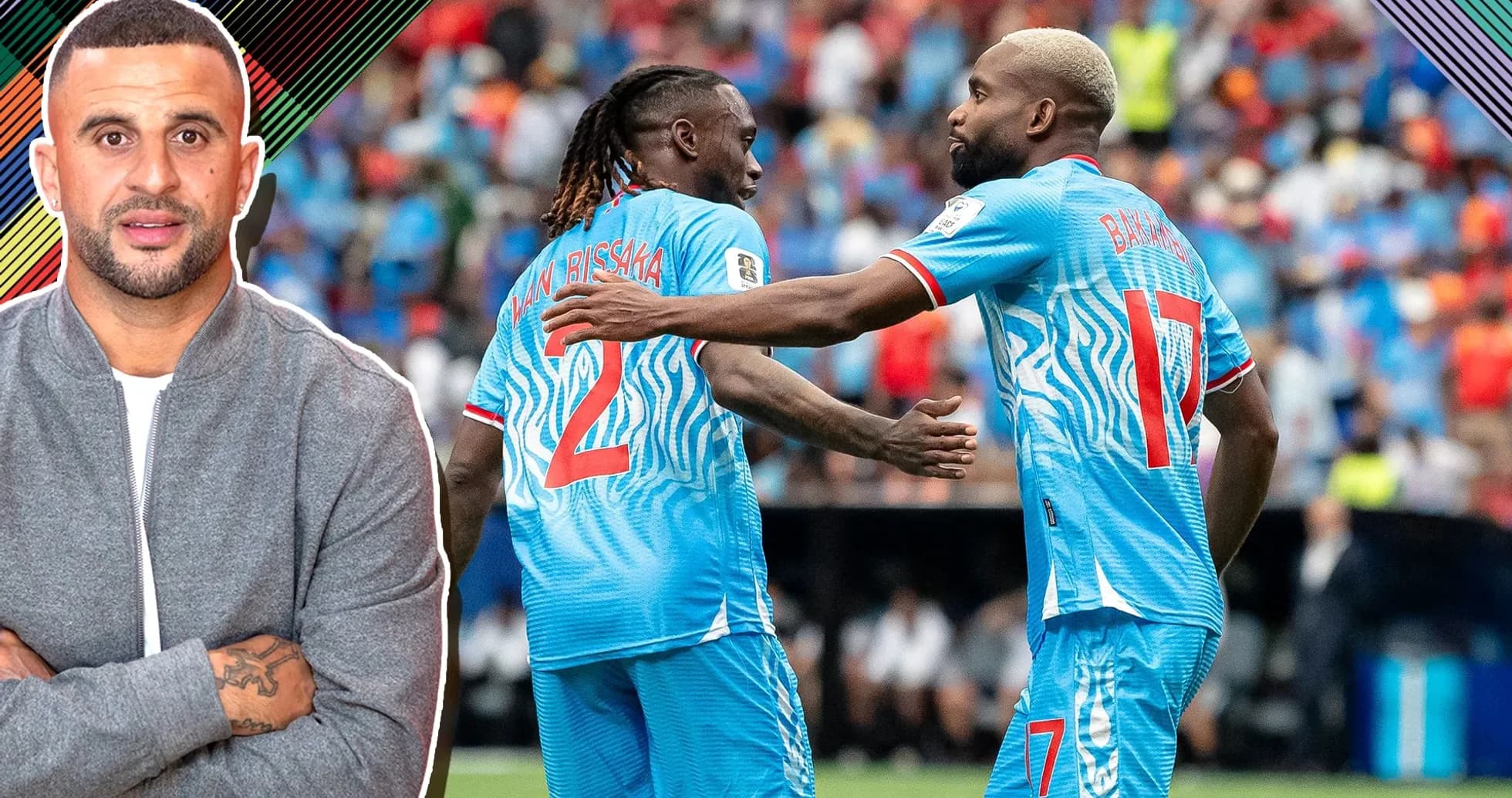
He’s versatile too, comfortable at centre-back or right-back. That flexibility is valuable, but DR Congo have another heavyweight option on that right side: Aaron Wan-Bissaka.
Wan-Bissaka is a defender forwards hate. One v one, he is as tough as they come. At City, they used to call him “Go-Go Gadget” because you think you’ve skipped past him, only for one of those telescopic legs to appear from nowhere, nick the ball and leave you on the turf wondering what just happened. His timing in the tackle is elite, and he relishes the duel.
He defends with pride, with the same relish others reserve for scoring goals. He wants the biggest names, the quickest wingers, the trickiest feet. If Marcus Rashford starts, he’ll know exactly what’s coming down that flank from his Manchester United days – and the battle will be fierce.
So England walk into a game they expect to win, against opponents who have no intention of playing that role. The quality is there, the talent is there, the options are there.
What’s missing will be revealed in 90 minutes: do they trust themselves enough to take the risks that knockout football demands?