.svg&w=384&q=75 "naujapitch logo")
Dani Carvajal's Farewell: A Legend Leaves Real Madrid
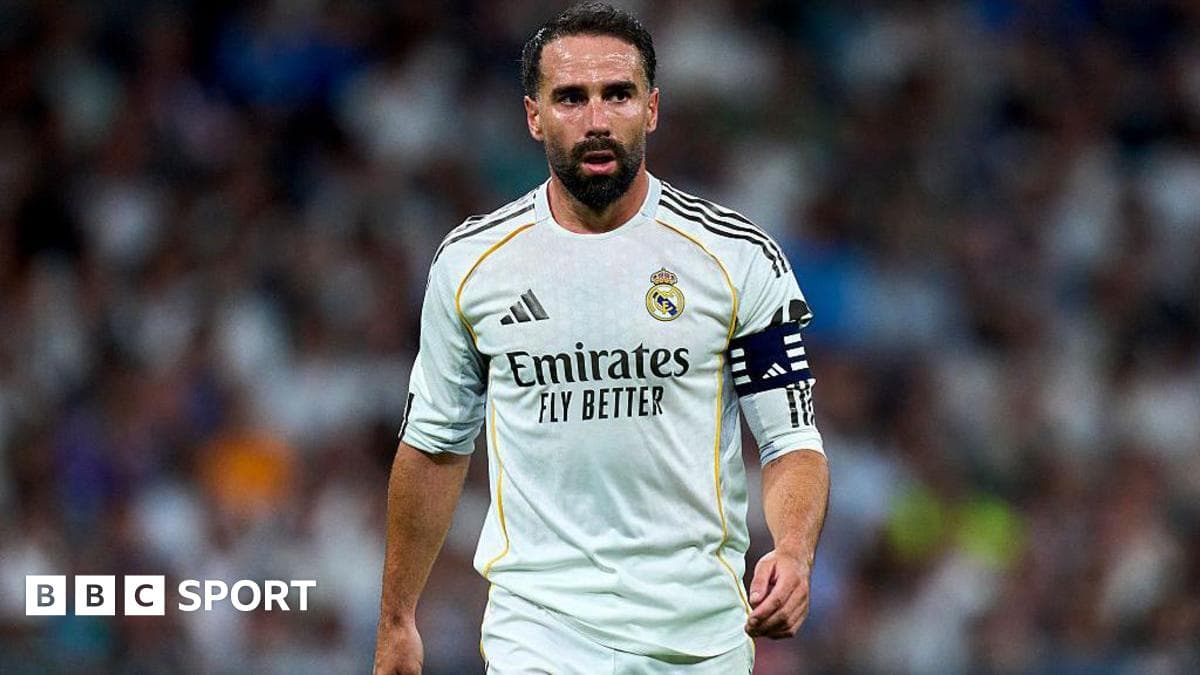
The final walk will come under the Bernabeu lights, on a late May evening, with the season already lost and the stands full of gratitude rather than expectation. After 23 years tied to Real Madrid, Dani Carvajal is leaving.
Not on his terms, perhaps. But certainly on his stage.
The 34-year-old captain will depart when his contract expires at the end of June, closing a career in white that stretches from academy hopeful to one of the most decorated players in the club’s history. Four hundred and fifty games, 14 goals, 27 trophies. A right-back who became a reference point.
“Dani Carvajal is a legend and a symbol of Real Madrid and its academy,” said club president Florentino Perez. “This is and will always be his home.” For once, the presidential rhetoric feels almost too small for the subject.
From Valdebebas to the world
Carvajal joined Madrid’s academy in 2002, a local boy from Leganés stepping into Valdebebas at the age of 10. He left once, briefly, to prove a point. A season at Bayer Leverkusen in 2012-13 was enough to convince Madrid they had made a mistake letting him go; they triggered the buy-back clause and brought him home.
He walked into the first team in 2013 and never really walked back out.
At his peak, Carvajal was as complete a right-back as the modern game could offer. Fierce in the tackle, relentless in the press, clever in his positioning. He overlapped with purpose, not just for show, and understood when to tuck inside to help build play. Under Carlo Ancelotti and Zinedine Zidane, he became a structural pillar: width on the right, balance behind the ball, an outlet whenever Madrid needed to breathe.
He rarely dominated the front pages in the way Cristiano Ronaldo, Karim Benzema or Vinicius Jr did. He didn’t need to. His value lay in the nights when nothing dramatic seemed to happen on his flank because he had already solved the problems before they became visible.
The Champions League constant
The numbers tell their own story. Six Champions League titles, one of only five players to reach that mark. More than that: Carvajal is the only player to have started all six of the finals he won. In an era defined by Real Madrid’s iron grip on Europe, he was a constant.
The defining performance came late in his career. In the 2024 Champions League final against Borussia Dortmund, he scored the opening goal and walked away with the man-of-the-match award. A right-back setting the tone on the biggest night of all, still decisive when it mattered most.
His trophy haul with Madrid is staggering: four La Liga titles, two Copa del Reys, six Club World Cups, five UEFA Super Cups and four Spanish Super Cups. The list reads like a museum inventory of modern Madrid dominance. Carvajal’s fingerprints are on all of it.
His impact extended beyond club football. Since his Spain debut in 2014, he has collected 51 caps, anchoring the right side of the national team through multiple cycles. He helped Spain win the Nations League in 2023 and then the European Championship in 2024, completing a remarkable late-career international peak.
Recognition followed. He was named in the FIFPro 2024 World XI, included in The Best FIFA Men’s World XI the same year, and crowned best player of that 2024 Champions League final. For a defender who had spent most of his career in the shadows of attacking stars, the spotlight finally swung his way.
Captain, conscience, standard-bearer
The trophies tell only part of the story. Inside the dressing room, Carvajal became one of its emotional anchors.
As Sergio Ramos, Karim Benzema, Toni Kroos and Luka Modric drifted away from the Bernabeu stage, the responsibility for continuity fell on the next line of leaders. Carvajal embraced it. He grew from academy graduate to captain, a bridge between eras and a reminder of the standards that had built Madrid’s modern empire.
He was particularly important during the club’s recent turbulence. Over the last two seasons, with managerial instability and a second consecutive trophyless campaign now confirmed, Madrid leaned heavily on his mentality. Performances dipped, injuries mounted, but the internal message rarely changed: compete, endure, wait for the chance to rise again.
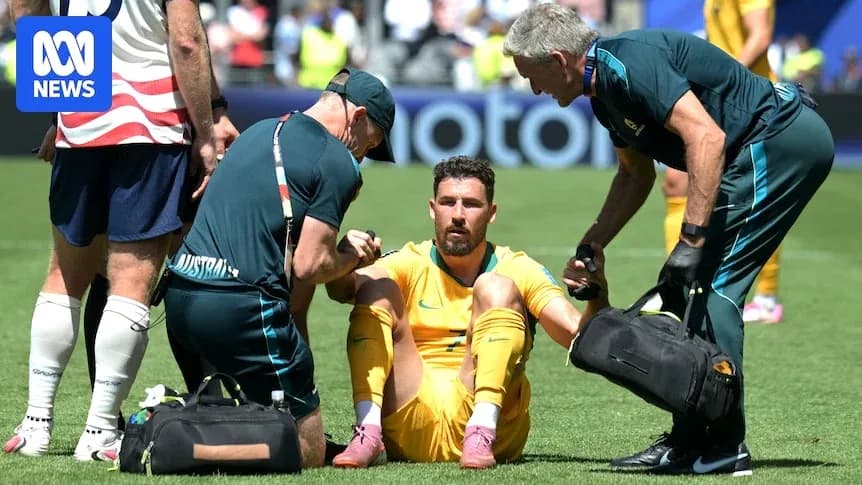
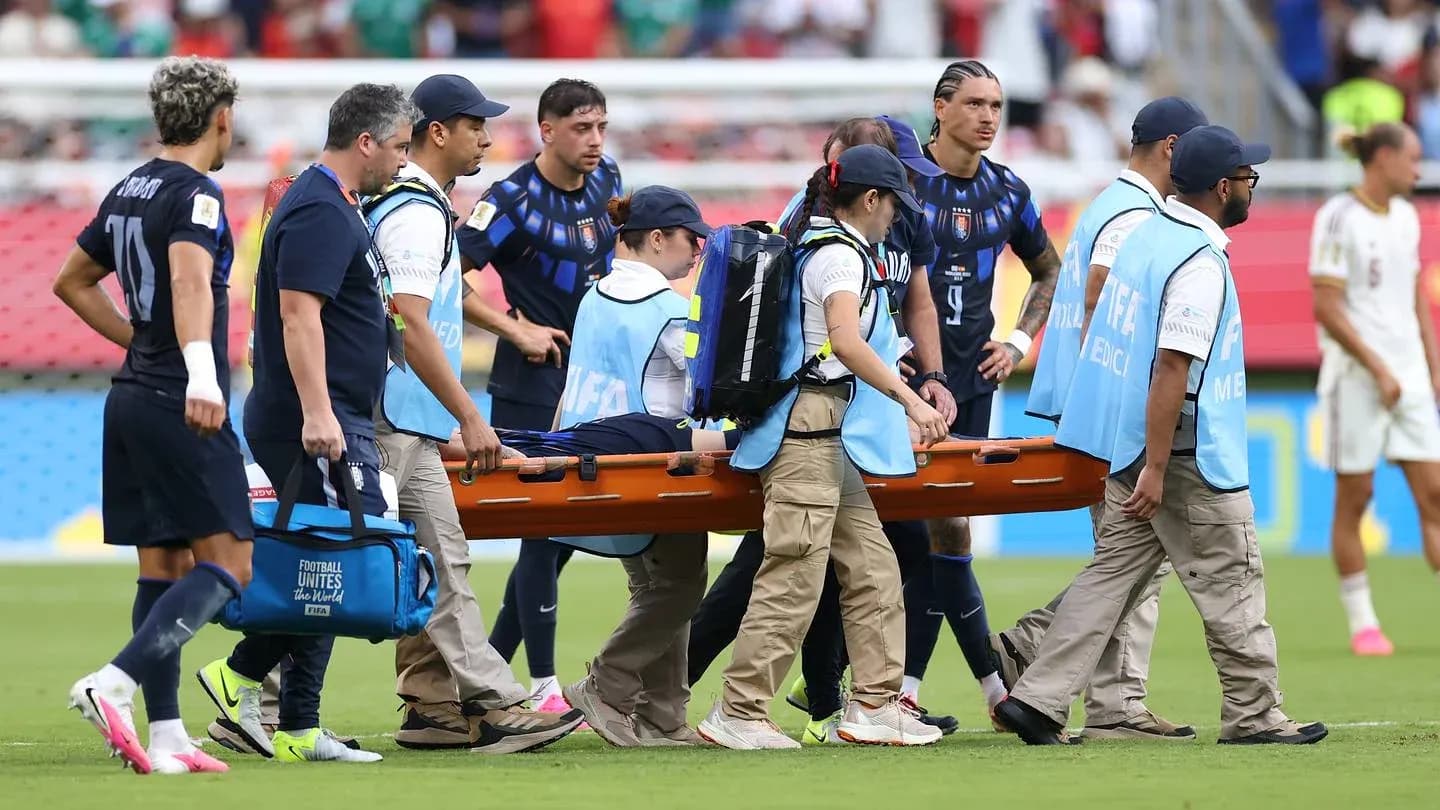
Even when his body began to betray him, his absence underlined his importance. The cruciate ligament tear in October 2024, followed by another serious knee injury a year later, cut deeply into his playing time and rhythm. Madrid often looked strangely exposed without him, the right side suddenly fragile where it had once felt secure.
The new order at right-back
Football does not wait for anyone, not even captains. The arrival of Trent Alexander-Arnold from Liverpool last summer marked the beginning of a new order.
The England international, with his passing range and attacking flair, gradually became the preferred option at right-back under Alvaro Arbeloa. Carvajal’s minutes shrank: just 892 in La Liga this season. The transition, already visible from the stands, is now official.
For Madrid, the shift is strategic. For Carvajal, it is personal. Yet there has been no public bitterness, no theatre. Just the quiet reality that one cycle ends as another begins.
What has not changed is the reaction when his name is read out at the Bernabeu. The applause still rolls around the stadium with a different tone, part appreciation, part farewell. The supporters understand what he has given them, and how hard it will be to replace more than just his tackling or his overlapping runs.
A farewell on a trophyless night
Madrid will finish this season without a major trophy for the second year running, a stark contrast to the years when Carvajal’s medal count grew almost by habit. Yet their final La Liga game of the campaign, against Athletic Club at the Santiago Bernabeu on Saturday 23 May, will carry its own weight.
The club will pay tribute to their captain that night. No parade, no silverware, just a stadium saluting one of its own.
It will be emotional, even if not entirely unexpected. Carvajal’s departure has felt like a question of when rather than if since the injuries began to bite and Alexander-Arnold arrived. But when the final whistle goes and he walks off the Bernabeu pitch as a Madrid player for the last time, the symbolism will be unavoidable.
A local boy who joined the academy in 2002. A defender who started six winning Champions League finals. A captain who helped define one of the club’s most successful eras.
Real Madrid will move on. It always does. The more intriguing question is how long it will take before the right-back position at the Bernabeu is spoken about in the same breath as the man who owned it for more than a decade.