.svg&w=384&q=75 "naujapitch logo")
Charleston Battery Triumphs in Shootout Against Pittsburgh Riverhounds
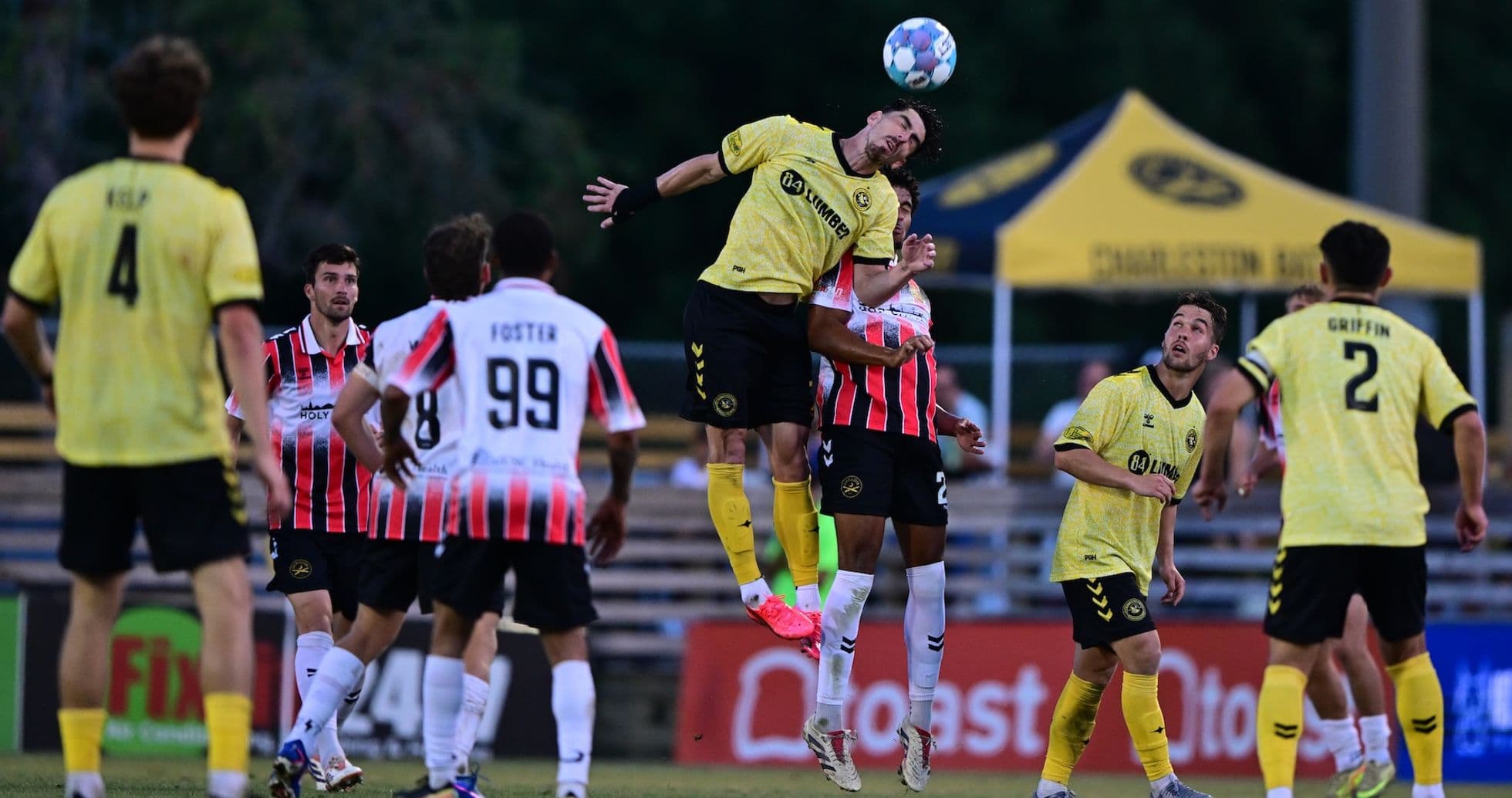
Under the lights at Patriots Point Soccer Complex, Charleston Battery and Pittsburgh Riverhounds played out 120 minutes that refused to yield a goal, before the group‑stage tension of the USL League One Cup finally cracked in a penalty shootout. Charleston held their nerve from the spot, prevailing 4‑2 to underline why they sit top of Group 6 and why their seasonal profile looks built for knockout football, even in a group format.
Heading into this game, Charleston’s identity was already clearly defined by the numbers. Overall, they had taken 8 points from 3 matches with a formidable goal difference of 7, built on 10 goals for and just 3 against in the standings snapshot. Their season statistics sharpen that picture further: overall they were averaging 2.3 goals scored per match and conceding only 0.3, with 2 clean sheets in 3 outings and no failures to score. At home, that balance tilted towards control rather than chaos: 1.0 goal for and 0.0 against on average, a narrow but authoritative 1‑0 template that this goalless draw plus shootout win ultimately echoed.
Pittsburgh arrived as a more volatile proposition. They were ranked 3rd in Group 6, with 5 points and a goal difference of -1 in the table, their overall goals for (8) just outweighed by goals against (9). Season statistics confirmed the contrast: overall they were scoring 1.3 goals per match but conceding 1.0, with their attacking punch at home (3.0 goals on average) not yet travelling well. On their travels, they averaged only 0.5 goals for and 1.5 against, with both of their away fixtures ending in defeat. This match, then, pitted Charleston’s suffocating defensive structure and ruthless efficiency against a Pittsburgh side still searching for an away identity.
From a squad‑building perspective, Ben Pirmann’s Charleston XI read like a unit designed to squeeze the middle third and protect the penalty area. J. Berner in goal was fronted by a back line anchored by G. Smith and J. Akpunonu, with D. Martinez and N. Messer providing the width and defensive coverage. In front of them, the presence of K. Pakhomov and S. Suber suggested a double‑pivot capable of screening space and breaking up transitions, freeing the creative burden for E. Ycaza and the direct running of L. Blackstock and M. Foster. At the tip, M. Berry offered a reference point for long phases of defending and quick counters.
Rob Vincent’s Riverhounds, by contrast, were configured for mobility and rotations between the lines. M. Sheridan marshalled the back, with P. Barnes, V. Souza, O. Mikoy and L. Kelp forming a defensive unit that had looked impregnable at home but fragile away. The midfield axis of D. Griffin and R. Mertz, supported by the technical touch of E. Goldthorp and the creative instincts of C. Ahl, was tasked with threading passes into the movement of S. Bassett and T. Amann. On the bench, options like A. Dikwa and B. Larsen offered late‑game shifts in profile up front, while J. Garcia and A. Flowers‑Gamboa added fresh legs in wide and defensive roles.
If the lineups hinted at different attacking philosophies, the disciplinary profiles of both teams framed the emotional arc of the contest. Charleston’s yellow card distribution this season has been defined by a clear second‑half spike: 50.00% of their cautions arriving between 46‑60 minutes, with further pockets at 0‑15, 16‑30 and 76‑90. It is a team that tends to tighten the screw after the interval, pressing higher and risking more duels. Pittsburgh mirror that rhythm eerily: 42.86% of their yellow cards also fall between 46‑60 minutes, with additional flashes across the rest of normal time. Crucially, the Riverhounds carry a red‑zone risk late on: 100.00% of their red cards this season have come in the 76‑90 window, a statistical red flag in a match that was always likely to be decided on fine margins.
That disciplinary pattern intersected neatly with the tactical flow of this fixture. As the game stretched into its final quarter and then into extra time, Charleston’s historically tight defensive record—0.0 goals conceded at home on average and only 1 goal against on their travels—allowed them to push their block higher without fear. Players like Pakhomov and Suber could step into midfield duels, while Ycaza and Blackstock looked for turnovers in advanced areas. Pittsburgh, already uncomfortable away from home, were forced to manage that surge while knowing their late‑game history included a red card profile in precisely the period where Charleston tend to be most aggressive.
The benches added another layer of tactical nuance. Charleston’s substitutes—L. Zamudio as a reliable alternative in goal, defenders like C. Allan, A. Cabrera, K. Held and J. Wayne, plus the energetic midfield option of D. Kuzemka and the attacking spark of A. Hughes—gave Pirmann the ability to refresh legs without sacrificing structure. For a match that went to 120 minutes, that defensive depth was invaluable in preserving the clean sheet that underpinned the penalty success.
Pittsburgh’s bench was more attacking in orientation. The presence of A. Dikwa and B. Larsen offered the chance to move from a more fluid front line to a direct, penalty‑box‑focused approach. Yet against a Charleston side that had failed to concede at home and averaged only 0.3 goals against overall, those late attacking gambles were always going to be forced into narrow channels and half‑chances rather than clear openings.
Following this result, the statistical prognosis for both sides sharpens. Charleston’s xG profile is not explicitly given, but their blend of low goals against, multiple clean sheets and efficient scoring suggests a team whose defensive solidity consistently outperforms opponents’ attacking output. In penalty terms, both sides entered the night without a single spot‑kick taken or missed in the competition, but Charleston’s broader record of control—three wins from three in the season statistics, no draws, no defeats—hinted at a group that manages high‑pressure phases with composure.
Pittsburgh, meanwhile, remain a side of two faces: potent at home, where they have a 3‑0 win as their biggest result and 3.0 goals per match, but brittle on their travels. Until they reconcile that split and tame their late‑game disciplinary edge, nights like this—120 minutes of honest work undone by marginal deficits in structure, mentality and depth—will continue to define their campaigns.
In the end, Charleston Battery’s shootout triumph was less a twist of fate than a logical extension of their seasonal DNA: defensively immaculate, emotionally controlled, and just clinical enough when the spotlight narrowed to twelve yards.