.svg&w=384&q=75 "naujapitch logo")
Champions League 2026/27: A New Format Awaits
The wounds from Budapest have barely scabbed over, but the calendar does not wait. A second successive Champions League final reached, a shootout defeat to Paris Saint-Germain endured, and a first Premier League crown since 2004 finally secured. Now the club walks back into Europe’s elite with the air of a side that belongs there.
For the fourth season running, they are at the top table. This time, though, they arrive as English champions and as the only team yet to have mastered the new format, having won all eight league-phase games in 2025/26 – a benchmark for everyone else.
A new Champions League, now familiar
The Champions League no longer tiptoes through cosy four-team groups. The league phase is here to stay.
The 2026/27 edition will again feature 36 teams, each playing eight different opponents: four at home, four away. No return fixtures, no hiding places. Every night feels like a one-off occasion, every mistake magnified.
The table stretches from first to 36th. Finish in the top eight and you stride straight into the last 16. Slip into ninth through 24th and the route becomes a two-legged play-off, a high-wire act just to reach the knockouts. Below that, the lights go out.
Two extra spots in this expanded field go to the associations whose clubs performed best the previous season. England and Spain topped that ranking in 2024/25, so both the Premier League and La Liga receive an additional place for this campaign.
Last season, the champions did not just survive this format; they dominated it. Eight games, eight wins, top of the pile. No one had done that before.
Europe’s cast is almost set
The picture for 2026/27 is nearly complete. Twenty-nine of the 36 teams have already booked their seats; only seven places remain, to be decided in the qualifying rounds that wrap up on August 26.
England sends a powerful delegation. Five Premier League sides will contest the Champions League: Liverpool, Manchester City, Manchester United and Aston Villa join the champions after all finished in the top five.
Spain matches that number. Real Madrid, Barcelona, Atletico Madrid, Villarreal and Real Betis carry La Liga’s banner, a reminder that Spanish depth still runs deep.
Italy and Germany each send four. From Serie A come Napoli, Inter Milan, AS Roma and Como, a mix of traditional heavyweights and a rising story. From the Bundesliga, Bayern Munich, Borussia Dortmund, RB Leipzig and Stuttgart step forward.
France offers three: the reigning European champions Paris Saint-Germain, plus Lens and Lille. The Netherlands contributes Eredivisie winners PSV and runners-up Feyenoord.
Portugal’s charge is led by Porto and Sporting Lisbon. Galatasaray represent Turkiye, Slavia Prague come from Czechia, and Shakhtar from Ukraine. All, like Belgium’s Club Brugge, arrive as domestic champions who sealed their spots long before the qualifiers began.
Seven more sides will emerge from the summer gauntlet. Five of those will come through the “champions path” – a route reserved for title winners from 42 different leagues. The final two will be drawn from clubs that finished second, third or fourth in their domestic competitions.
By the evening of August 26, the qualifiers will be over. On August 27, the full 36-team league phase will be drawn, and the season’s European journey will finally take shape.
Pot 1, a seat among giants
The rules of the draw shape the intrigue before a ball is kicked.
First, domestic clashes are off the table in the league phase. The champions cannot be drawn against fellow Premier League sides at this stage, so there will be no early meetings with Liverpool, Manchester City, Aston Villa or Manchester United.
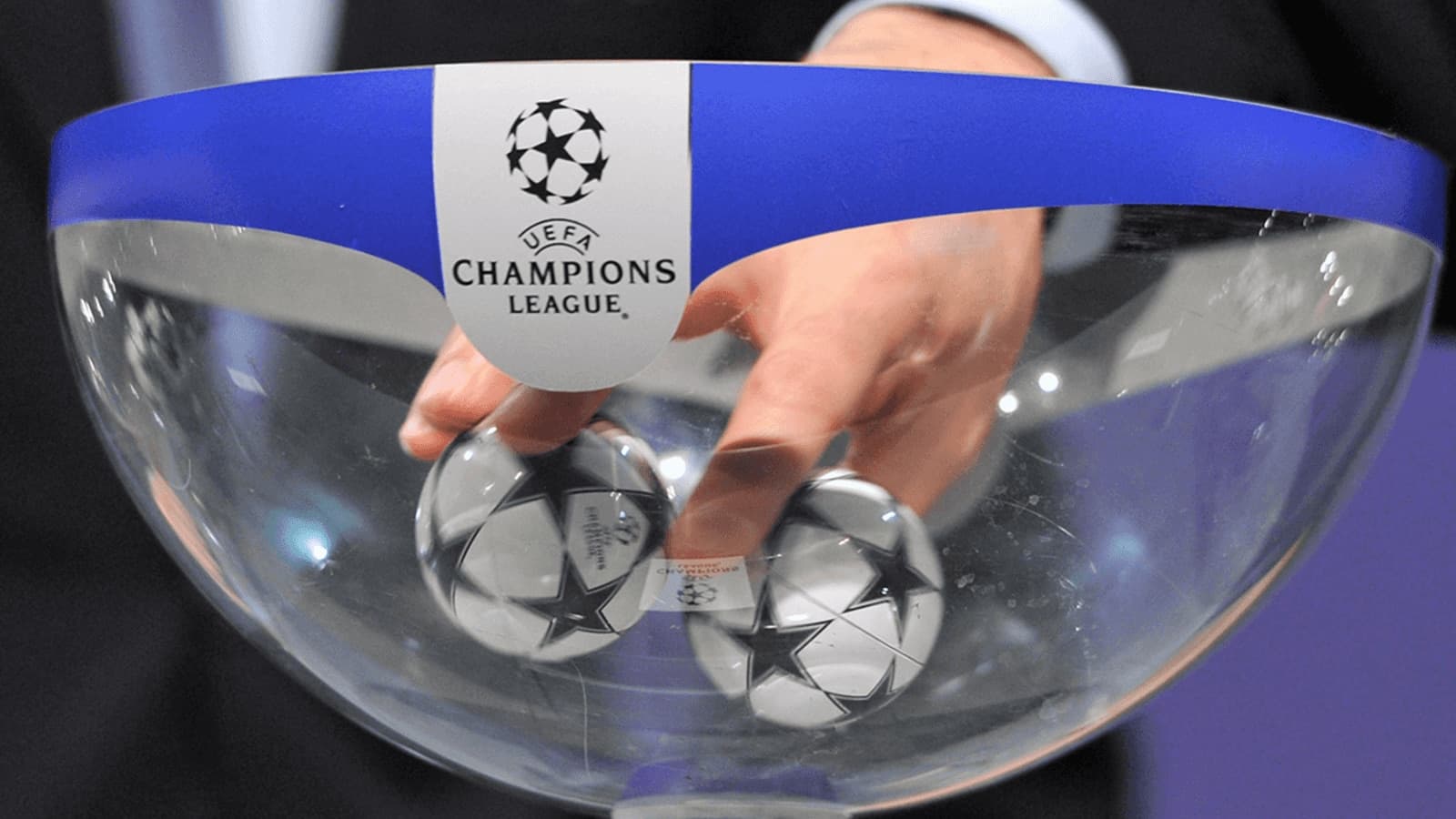
UEFA’s club coefficients determine the four seeding pots, and the champions sit where they expect to be: Pot 1.
It is a heavyweight room. Paris Saint-Germain, Bayern Munich, Real Madrid, Liverpool, Inter Milan, Manchester City, Barcelona and Atletico Madrid are all locked into that top pot. None of them can be drawn against one another in the league phase.
Pot 2 is no soft landing either. Borussia Dortmund, AS Roma, Sporting CP, Porto, Club Brugge, Real Betis, PSV Eindhoven, Aston Villa and Manchester United all sit there, waiting for their name to be paired.
Pot 3 brings another layer of danger: Feyenoord, Lille, Napoli, RB Leipzig, Villarreal, Shakhtar Donetsk and Galatasaray. Pot 4 already includes Como and Lens, with Slavia Prague, Stuttgart and the seven remaining qualifiers still to be slotted into either Pot 3 or Pot 4 once their coefficients and results are confirmed.
The format is simple, the implications anything but. The champions will face two teams from each pot, one at home and one away. They cannot be drawn against more than two clubs from the same country, which limits some combinations but leaves plenty of potential traps.
A night in Naples? A trip to Istanbul? A reunion with Lens or a test in Prague? The permutations stretch across the continent.
All four pots will be fully locked in on August 26, once the last qualifiers are decided. Only then will the true scale of the challenge be clear.
Dates that will define a season
Circle August 27, 2026. That Thursday brings the draw for the league phase, and with it the eight fixtures that will shape the early months of the campaign.
The schedule comes thick and fast. League phase matches are spread across eight matchdays:
- September 8–10
- October 13–14
- October 20–21
- November 3–4
- November 24–25
- December 8–9
- January 19–20
- January 27
By the end of January, the table will tell its story: who cruises into the last 16, who is dragged into the play-offs, who falls away.
On January 29, 2027, the draw for those knockout play-offs takes place, with the two legs scheduled for February 16–17 and February 23–24.
Then comes the decisive moment in the calendar. On February 26, 2027, UEFA will draw the paths for the round of 16, quarter-finals, semi-finals and the final itself. From that point, every team left in the competition will be able to see its possible road to Madrid.
The round of 16 ties are pencilled in for March 9–10 and March 16–17. The quarter-finals follow on April 6–7 and April 13–14. The semi-finals are set for April 27–28 and May 4–5.
And then the destination: Saturday, June 5, 2027. The Wanda Metropolitano in Madrid. A stadium that knows the weight of Champions League nights, waiting for another final and another story.
Last season ended in heartbreak from 12 yards. This one offers a familiar stage, a new format, and a chance to prove that Budapest was not an ending, but a warning to the rest of Europe.