.svg&w=384&q=75 "naujapitch logo")
Canada’s Unforgettable World Cup Journey
For weeks, Canada lived in the background of its own World Cup. The “forgotten host” tag lingered, overshadowed by the United States’ glare and Mexico’s colour. On the pitch, though, Jesse Marsch’s team refused to play a supporting role.
They tore through the group stage, banked their first World Cup point, their first win, and then a first knockout victory. Les Rouges muscled their way into the round of 16 for the first time in history before Morocco finally closed the door. For a men’s national team that had never been this far, it felt less like an exit and more like an arrival.
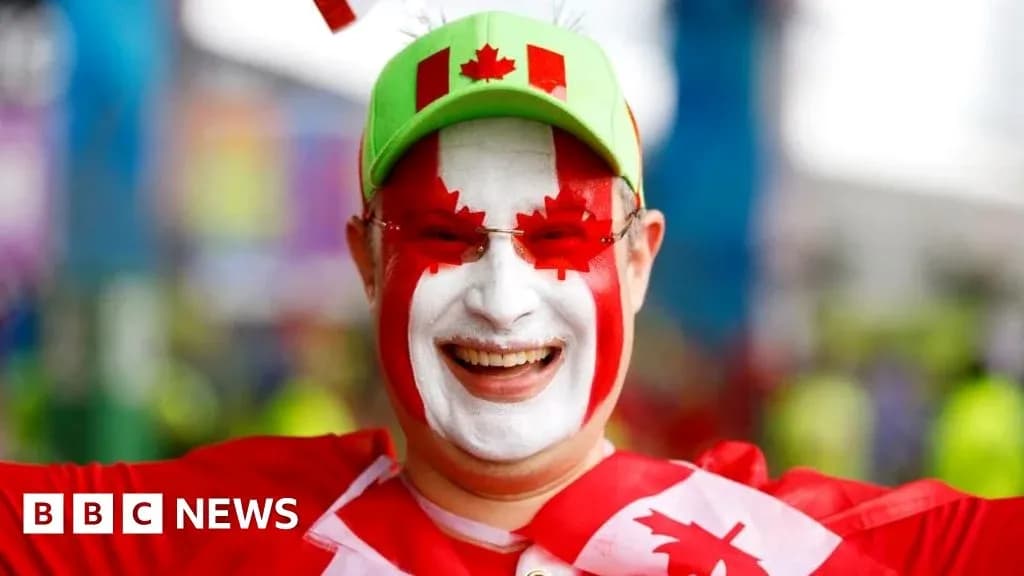
In Calgary, fan Matt Lorincz watched the run unfold and distilled the mood into two words: they “shocked everyone”. He was right.
A Hockey Nation Turns to Soccer
Canada is a country where football is played everywhere and followed nowhere near enough. Kids fill pitches across the provinces, yet the sport’s commercial pulse has long been drowned out by the roar of the NHL, the hum of Major League Baseball and the buzz around NBA franchises.
This World Cup cracked that hierarchy.
“Most people you talk to watch, like, hockey or other sports, right?” Lorincz said. “There’s not a lot of – or as many – soccer fans in Canada. So hopefully there may be a few more of those.”
For a brief stretch in June and July, the country leaned into the spectacle. Toronto and Vancouver, the two Canadian host cities, staged 13 of the tournament’s 104 matches. It wasn’t the lion’s share, but it was enough to change the soundtrack of city life.
In Toronto, the matches spilled out of bars and onto the streets. The walk to Toronto Stadium became a ritual: drums, flags, and marches cutting through the downtown core, a travelling wave of colour. On the west coast, Vancouver’s World Cup moment came with a statement scoreline as Canada demolished Qatar 6–0. The night should have been perfect. It wasn’t.
Star midfielder Ismaël Koné left the pitch on a stretcher, his leg broken after a heavy tackle. The win stood, but the image of one of Canada’s brightest talents in agony undercut the euphoria.
Carney Steps Into the Dressing Room
Off the pitch, the country’s political leadership leaned in as well. Prime Minister Mark Carney, a known sports obsessive with a wardrobe seemingly built around jerseys, became the most visible head of state among the three co-hosts. He is, so far, the only leader from Canada, the US or Mexico to attend games in person.
After that 6–0 win over Qatar in Vancouver, Carney walked into the dressing room and addressed a team that had just announced itself to the world.
“You showed a level of character that some people never achieve in their life,” he told the players. “And you showed it when a good part of the country and the world is watching.”
Sports minister Adam van Koeverden framed the tournament as a coming-of-age moment for a so-called “middle power”. Hosting, he said, had been “a sincere privilege” and not something Canada took lightly.
The original bid sold a romantic idea: “one continent, three countries”. John Kristick, now with Playfly Sports Consulting and once executive director of the United Bid Committee, watched that vision evolve. The tournament, he felt, had broadly delivered but drifted away from the notion of a truly united host.
With the US staging the majority of matches and its politics under the Trump administration dominating headlines, Canada and Mexico struggled to cut through. “I think it’s probably been harder for Canada and Mexico to break through as hosts. I think that the US have taken more of that limelight,” Kristick said.
Yet within Canada’s borders, there was no doubt. “Every Canadian knows Canada is hosting it,” Kristick added, and the pride was obvious.
Vancouver’s Finale and a Crash Course in Scale
Canada’s hosting duties ended with a round-of-16 tie in Vancouver, where Switzerland beat Colombia in the last World Cup match on Canadian soil. The final whistle didn’t just close a game; it wrapped up a national crash course in the sheer size of football’s biggest event.
Ian Tostenson, head of the British Columbia Restaurant and Foodservices Association, watched it from the vantage point of a business owner. For him, being in a host city meant one thing: understanding “the enormity of the World Cup”.
Crowds poured into bars and restaurants around matchdays. Alcohol sales climbed roughly 5% year-on-year. More importantly, the mood shifted.
“It raised the spirits of the entire province. I think the whole conversation [for the] last four weeks had been about soccer,” Tostenson said. In a period of economic headwinds, he saw a simple lesson: “You learn that if you give people a real reason to spend their money and give them value, they’ll spend it.”
The bill, though, was steep. Canada’s decision to co-host came with a price tag estimated at C$1.1bn to get World Cup-ready, with Toronto alone on the hook for around C$380m. For some, it was too much.
City councillor Josh Matlow did not see the numbers adding up for a cash-strapped municipality. “I don’t think that hosting the games made the city’s situation any better,” he said.
Van Koeverden pushed back. To him, the spending was “prudent”, an investment that had already begun to circle back through the economy. “Full stadiums, full parks, full restaurants, and full hotels is a nice problem to have in 2026,” he said, pointing toward the longer-term payoff.
A ‘Forgotten’ Host That Won Over Visitors
On the ground, the so-called forgotten host left a mark on visiting teams and supporters.
Portugal manager Roberto Martinez praised Toronto’s compact venue, the smallest of all World Cup stadiums, its capacity boosted by temporary seating. It reminded him, he said, of “old-fashioned Premier League grounds”. After Portugal’s win over Croatia there, he called the atmosphere “an incredible spectacle for football”.
Norwegian fan Gudmund Agotnes, in town for three matches, felt he’d lucked out with the schedule. Watching from the stands, he enjoyed a “pretty cool” stadium experience, with a “bird’s eye view” that captured both the pitch and the city’s skyline in one frame.
Record Audiences for Les Rouges
Inside Canada’s living rooms, the numbers told their own story.
More than a million fans attended the first 16 matches across the three host nations, Fifa reported. The tournament looked set to surpass the all-time cumulative attendance record of 3.5 million set in 1994 by the end of the group stage. With an expanded format, those figures were always likely, but they still underlined the scale.
At home, Canada’s date with Morocco on 4 July became the biggest non-final World Cup broadcast in the country’s history. Bell Media, the host broadcaster, said viewership peaked at 11.7 million unique viewers.
To put that in context: 9.8 million Canadians tuned in for the opening of the NHL season last October. Hockey Night in Canada, a staple of the national sporting diet, averages about 1.2 million viewers per broadcast. By contrast, the World Cup round-of-32 matches drew an average Canadian audience of 1.9 million.
For once, soccer did not just share the stage with hockey. It outdrew it.
Building on a Long-Standing but Underpowered Culture
Canada’s World Cup was billed as a debut as host, not as a debutante in the sport. The country has a deep recreational base and a history in the professional game.
The Vancouver Whitecaps trace their roots back to 1973. Toronto FC arrived three decades later and helped plant Major League Soccer more firmly in Canadian soil. The culture exists; the challenge has always been turning mass participation into elite consistency, especially on the men’s side.
The women’s national team, ranked ninth in the world by Fifa, has long carried the competitive torch. This men’s run suggested the gap might finally be narrowing.
Canada Soccer, the sport’s national governing body, moved quickly to harness the surge in attention. A fundraising campaign launched before the tournament hit its C$25m target months ahead of schedule, a significant injection for an organisation that has often operated under financial strain.
In the stands and in the streets, fans of Les Rouges simply soaked it in. In a Calgary bar, as Canada battled Morocco, supporter Zeileen Reardon watched more than just a football match.
“It brought a lot of people together in a very kind of segregated world that we’re living in,” she said. “So, I think it actually showed the world that we can come together, even for a game.”
For a nation once relegated to the margins of the global game, the question now is no longer whether Canada belongs on this stage. It’s what they do with this moment before the World Cup comes back to North America in 2026.