.svg&w=384&q=75 "naujapitch logo")
Canada vs South Africa: World Cup Knockout Match Preview
Canada’s World Cup road is finally clear enough to trace with a finger on the bracket. First, though, they have to walk through the door they’ve just kicked open.
On Sunday, in their first-ever World Cup knockout match, Canada meet South Africa. History on one side, jeopardy on the other.
A favourite, but not by right
The numbers say Canada should go through. FIFA rankings have them at No. 31, a full 29 places ahead of South Africa at No. 60. ESPN’s tournament projections put Canada 25th of the 48 nations, South Africa way down at 46th.
But rankings don’t clear headers or track runners. South Africa are still standing because they refused to fold.
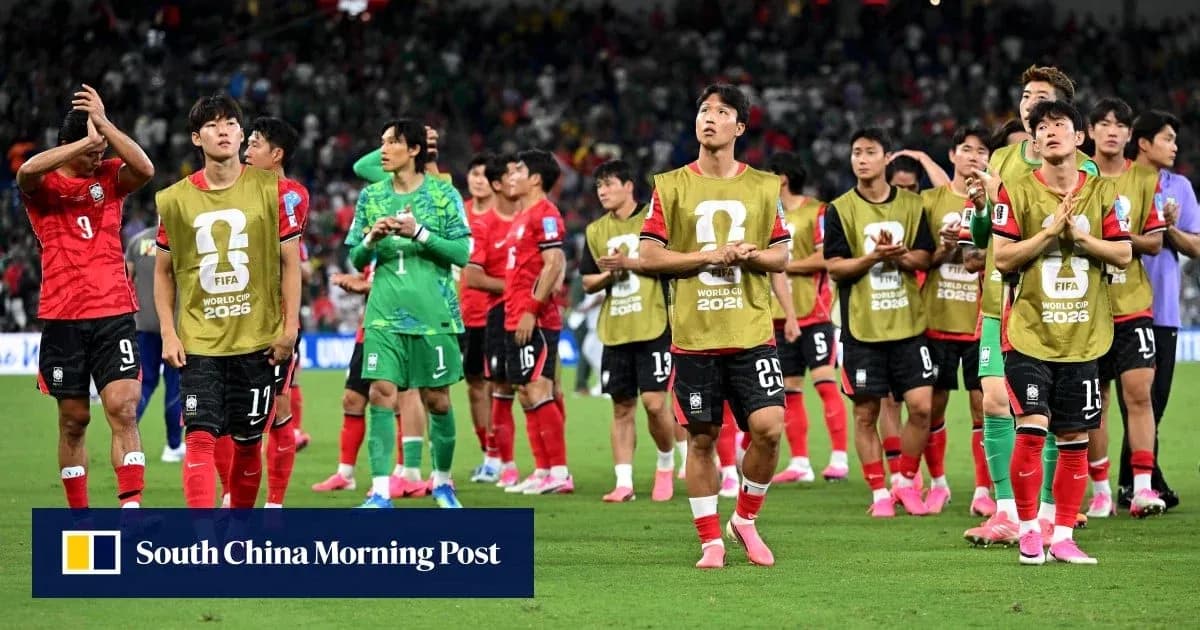
They opened their World Cup with chaos: two red cards and a 2-0 defeat to Mexico. Tournament hopes sagged. Then came Czechia. Teboho Mokoena buried a late penalty to salvage a point and keep them alive. Against South Korea, they had just 31 per cent of the ball, yet Thapelo Maseko’s goal was enough for a 1-0 win and second place in Group A.
They’ve already shown they can suffer, bend, and still find a way.
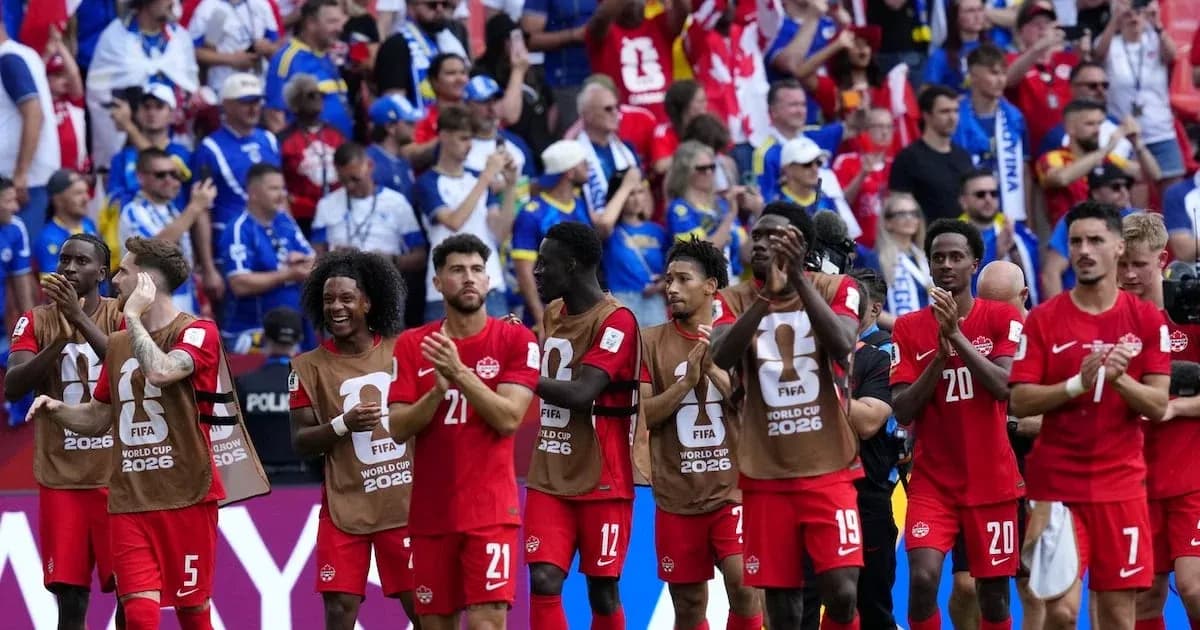
Canada arrive from a very different route. A 1-1 draw with Bosnia and Herzegovina to start, a ruthless 6-0 dismantling of a nine-man Qatar, and then a 2-1 loss to Switzerland on Wednesday that stung more for what it almost was than what it ended up being.
Down 2-0 early in the second half, Canada roared back and spent the closing stages camped in Swiss territory, chasing the point that would have won Group B and shifted their Round of 32 tie to Vancouver against a third-place side.
Jonathan David called those frantic final minutes “kind of intense.” He didn’t need to elaborate.
“You try not to look at the clock, because the more you look at it, the quicker time goes. But it’s garbage time,” the striker said. “You have to just have to crash the box and get the crosses and make sure you make your chances happen, and put shots on target, and hopefully something falls. And we came really, really close.”
They didn’t get their draw. What they did get is a different path, and perhaps a sharper edge.
The Alphonso Davies question
Hanging over Sunday is one name: Alphonso Davies.
Canada’s captain has yet to play a minute at this World Cup, sidelined by a hamstring injury. His absence has been a constant subplot. His presence on the teamsheet, it turns out, was one too.
Head coach Jesse Marsch admitted after the Switzerland match that Davies had been used as a “decoy” during the group stage, listed but never actually in contention to play.
“Alphonso wasn’t ready yet, but I wanted Switzerland to think about him and if you heard their press conference yesterday, they spoke about him a lot,” Marsch said. “He was never ready to play today, but I used him as a decoy.
“He will be ready for the next match, though. We didn’t want to be in a situation where he could be in danger, but he will be ready for the next match.”
Is that straight truth or another layer of gamesmanship? Canada stopped issuing injury updates before the win over Qatar, so the outside world has only hints and soundbites to work with. Inside the camp, they’ll know exactly how much of Davies they can unleash.
His return, even at less than full tilt, would alter the feel of this tie. South Africa would have to respect his pace, his ability to break pressure in one run. It stretches a back line, it changes how high fullbacks dare to push.
Canada have other fitness calls to make. Stephen Eustáquio, the metronome in midfield, came off the bench in the 58th minute against Switzerland and will be pushing to start. At the back, Moise Bombito could make his first start of the tournament if cleared to go, adding size and aggression in central defence.
What waits beyond South Africa
Beat South Africa, and Canada earn six days to breathe. The winner of Sunday’s tie returns on Saturday, July 4, in the Round of 16.
Waiting there will be no soft touch. The prize for surviving the first knockout is a collision with the winner of Netherlands vs. Morocco, a heavyweight clash in every sense.
Both nations come into their Round of 32 meeting on Tuesday unbeaten at 2-0-1. Both arrived at the World Cup as top-eight sides in the FIFA rankings: Morocco seventh, the Dutch eighth.
Morocco carry the weight of recent history. They stunned the world in Qatar 2022 by reaching the semifinals, knocking out giants and redefining expectations. The Netherlands fell on penalties to eventual champions Argentina in the quarter-finals, another chapter in their long story of being just short of the summit but rarely an easy out.
That hasn’t changed. The Dutch haven’t lost a World Cup match in regulation since the 1-0 defeat to Spain in the 2010 final.
Their current form fits that pedigree. In Group F they played out a 2-2 draw with Japan, then tore through Sweden 5-1 and handled Tunisia 3-1, flashing attacking depth and variety.
Morocco have been more controlled but no less convincing. A 1-1 draw with Brazil in the opener, a tight 1-0 win over Scotland, then a 4-2 victory over Haiti. They can grind. They can open up. They can hurt you in different ways.
Whoever emerges from that clash will be a brutal Round of 16 assignment for Canada or South Africa.
And the bracket only hardens from there. The top section funnels towards a likely quarter-final against Germany or France. Germany have already wrapped up Group E. France will clinch Group I with a result against Norway on Friday. That would set up a Round of 16 showdown between the world’s No. 3 side in France and No. 10 Germany, with the survivor looming for whoever fights their way out of the Canada–South Africa–Netherlands–Morocco corridor.
This is the neighbourhood Canada have moved into.
One step into the unknown
For now, the permutations can sit in the background. Canada have already ripped up their own history at this World Cup: first point, first win, first escape from the group stage.
The next milestone is obvious. A knockout win. A statement that this isn’t just a charming breakthrough, but the start of something harder, more permanent.
“We’re going to focus on the response,” Marsch said after the loss to Switzerland. “We’re exactly where we want to be.”
On Sunday, we find out what that actually means.