.svg&w=384&q=75 "naujapitch logo")
Canada and Bosnia & Herzegovina Draw in World Cup 2026 Opener
Beneath the floodlights of BMO Field in Toronto, Canada and Bosnia & Herzegovina opened their World Cup 2026 stories with a 1–1 draw that felt less like a settled argument and more like the opening chapter of a tactical duel that will echo through Group B.
I. The Big Picture – Two 4-4-2s, one shared tension
Both coaches arrived with clear identities and no tactical disguises. Jesse Marsch set Canada up in a classic 4-4-2, trusting structure and vertical aggression. Sergej Barbarez mirrored the shape for Bosnia & Herzegovina, but his version was more compact, more reactive, designed to absorb and counter.
Following this result, both sides sit on 1 point in Group B, each with a goal difference of 0 after scoring and conceding 1. Canada are ranked 2nd, Bosnia & Herzegovina 4th, but the underlying numbers hint at symmetry rather than hierarchy: overall, both have played 1 match, drawn 1, scored 1, and conceded 1. Canada’s contribution came at home; Bosnia & Herzegovina’s came on their travels.
For Canada, the 4-4-2 has been used in all their World Cup minutes so far, and it showed a clear spine: Maxime Crepeau behind a back four of Alistair Johnston, Luc De Fougerolles, Derek Cornelius and Richie Laryea; a midfield line of Tajon Buchanan, Ismael Kone, Stephen Eustaquio and Liam Millar; Jonathan David and Tani Oluwaseyi up front. Bosnia & Herzegovina answered with their own 4-4-2: Nermin Vasilj in goal; Amar Dedic, Nikola Katic, Tarik Muharemovic and Sead Kolasinac at the back; Edin Bajraktarevic, Benjamin Tahirovic, Ivan Basic and Adnan Memic across midfield; Ermedin Demirovic and Jovo Lukic leading the line.
II. Tactical Voids and Discipline – Where the game frayed
There were no confirmed absences in the data, so the “voids” were less about missing players and more about the spaces that opened and closed as the match wore on.
Canada’s defensive discipline carries an early warning. Overall this campaign, they have not kept a clean sheet in their single outing, conceding 1.0 goals at home on average. Their yellow card distribution is telling: 50.00% of their cautions came in the 0–15 minute window, another 50.00% between 46–60 minutes. That suggests a side that starts emotionally charged and then spikes again right after half-time, when tactical adjustments are still bedding in.
On an individual level, Canada’s back line walked a disciplinary tightrope. Luc De Fougerolles and Alistair Johnston both took yellow cards, each committing 2 fouls. De Fougerolles, despite his youth, was heavily involved: 50 passes at 80% accuracy, 3 tackles and 22 duels (10 won) underline his importance but also his exposure. Johnston’s 7 duels (5 won) and 1 successful dribble speak to his dual role as defender and outlet, but his booking marks him as a future suspension risk if this pattern continues.
Bosnia & Herzegovina’s discipline was more scattered but no less significant. Their yellow cards were spread across 31–45, 46–60 and 91–105 minutes, each window carrying 33.33% of their total yellows. It paints a picture of a side that reacts in key emotional phases: just before half-time, just after, and deep into added time. Jovo Lukic, Nikola Katic and Ermedin Demirovic all picked up bookings. For Lukic, that card came alongside a starring role; for Katic and Demirovic, it underlined the combative edge that anchors Barbarez’s defensive block.
Crucially, neither side has faced penalty pressure yet. Overall, both Canada and Bosnia & Herzegovina have a penalty record of 0 taken, 0 scored, 0 missed. From the spot, the slate is still clean.
III. Key Matchups – Hunter vs Shield, Engine Room vs Enforcer
Hunter vs Shield
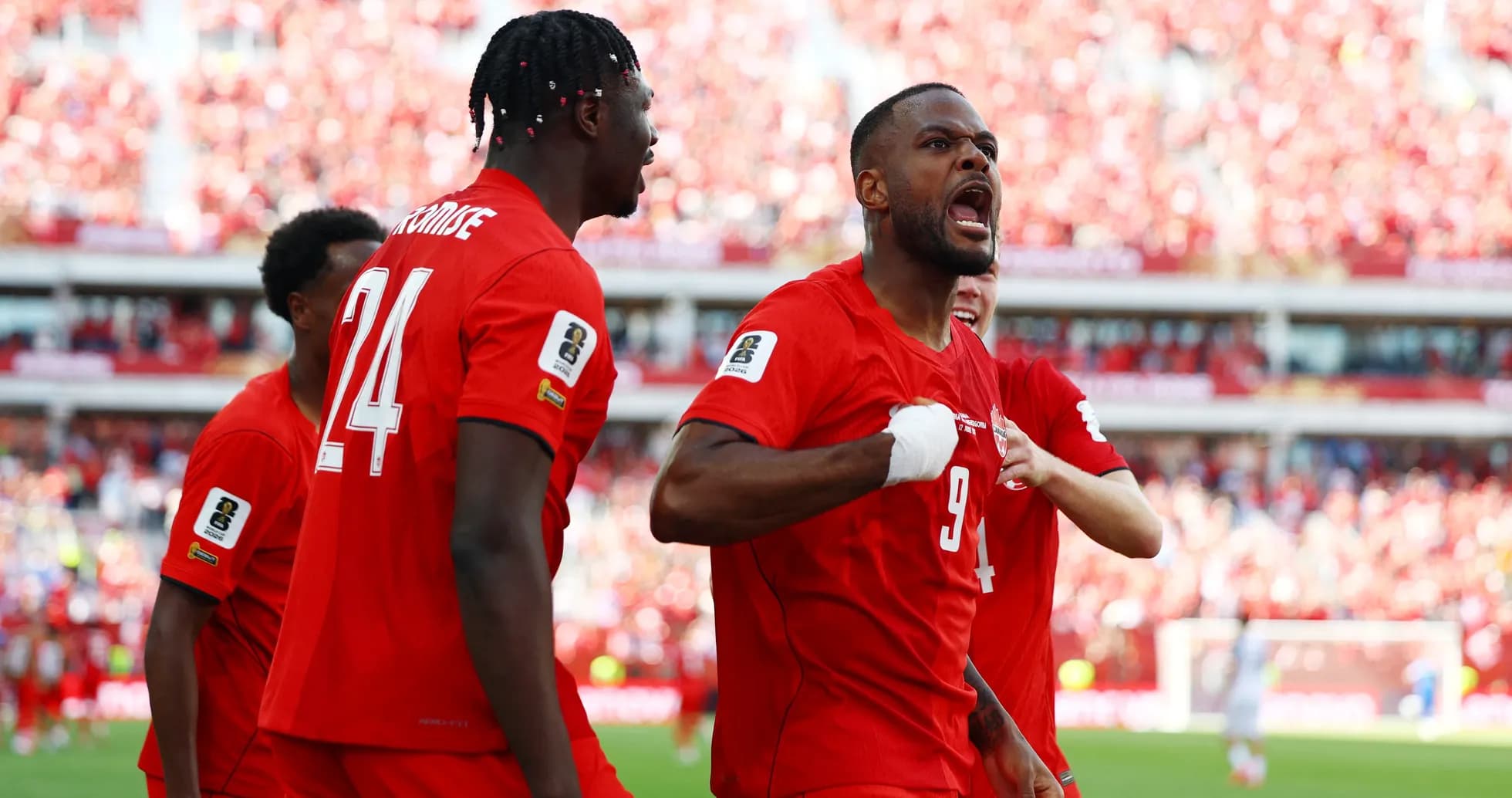
The most striking attacking stories come from the bench and from Bosnia’s front line. For Canada, Cyle Larin is already a central figure in the tournament narrative. With only 14 minutes played, he has scored 1 goal from 1 shot on target, drawn 1 foul, and posted a 7.7 rating. He is the classic late-game “hunter”: introduced from the bench, he changes the tempo and punishes tired legs.
Opposite him stands Bosnia & Herzegovina’s defensive “shield” in Nikola Katic. Across 90 minutes, Katic delivered 5 tackles, 2 blocked shots and 3 interceptions, winning 15 of 24 duels. Those 2 blocks are not near-misses; they are successful interventions, the final barrier between Canada’s forwards and Nermin Vasilj. If future group games see Larin introduced against a Katic-led back line, the clash will be direct and brutal: a penalty-box finisher attacking a defender who thrives on last-ditch duels.
For Bosnia & Herzegovina, Jovo Lukic is both hunter and reference point. He has already scored 1 goal, from 3 shots (2 on target), and his 10 duels won out of 13 show how he pins centre-backs and gives his side territory. Up against Canada’s central pairing of De Fougerolles and Cornelius, Lukic’s aerial presence and physicality will remain a persistent problem. De Fougerolles’ 22 duels hint at how much work Canada’s young defender had to do to keep him in check.
Engine Room
In midfield, the “engine room” duel is more nuanced. Canada’s creative spark in this match came not from a starter but from Promise David off the bench. In 29 minutes, he delivered 1 assist, 1 key pass and 1 tackle, while engaging in 10 duels (3 won). His profile is that of a hybrid: target man size with a playmaker’s eye, able to link long balls and still slip passes between lines.
On the other side, Bosnia & Herzegovina lean heavily on Benjamin Tahirovic and Ivan Basic to stabilise and recycle, but the standout connective tissue is Sead Kolasinac from left-back. Listed among the top assist providers, Kolasinac contributed 1 assist, 21 passes at 71% accuracy, 1 key pass, 3 tackles and 2 blocked shots in the scorers data set, or 2 tackles and 2 blocks in the assists data set. Either way, his influence is two-way: he advances to create and then sprints back to protect his channel. In narrative terms, Kolasinac is Bosnia’s enforcer who also doubles as a deep-lying playmaker from the flank.
IV. Statistical Prognosis – Margins, xG shadows and defensive truth
The raw xG numbers are not provided, but the statistical skeleton is clear. Heading into their next games, both sides average 1.0 goals scored and 1.0 conceded overall. Neither has kept a clean sheet; neither has failed to score. These are balanced, vulnerable teams.
Canada’s card profile suggests emotional surges early and just after the break; Bosnia & Herzegovina’s spread of yellows across late first half, early second half and added time points to a side that lives on the edge in decisive phases. In knockout-like moments of group play, those patterns often decide matches more than abstract xG.
Tactically, the prognosis is of a group where every detail matters. Canada’s bench weapons, Larin and Promise David, give Marsch late-game levers to tilt tight encounters. Bosnia & Herzegovina’s defensive spine, anchored by Katic and protected by Kolasinac’s aggression, offers Barbarez a platform to keep games within a single goal swing.
Following this result, nothing is resolved, but everything is revealed: two 4-4-2s, each with its own flaws and weapons, locked on identical records and heading into their next fixtures knowing that the smallest tactical edge – a blocked shot from Katic, a late run from Larin, a driven cross from Kolasinac – could be the moment that breaks Group B wide open.