.svg&w=384&q=75 "naujapitch logo")
Brazil's Outrage Over Vinicius Jr's Disallowed Goal
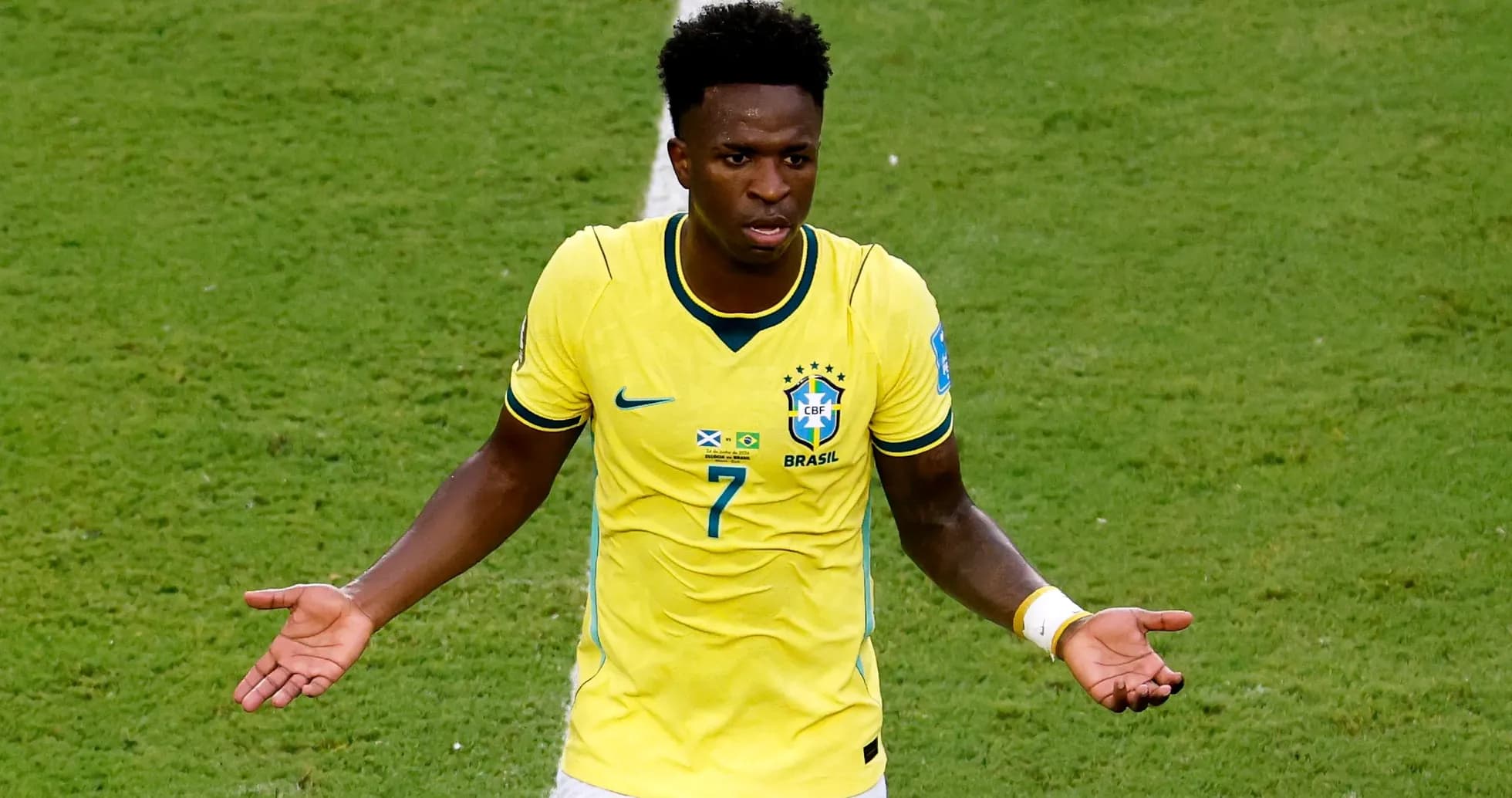
Brazil’s anger over Vinicius Jr’s disallowed goal has spilled far beyond the touchline and into FIFA’s inbox, turning a routine group finale against Scotland into a full-blown political row.
Vinicius strikes, VAR bites
The flashpoint came in the 21st minute of Brazil’s final Group C match. Already 1–0 up thanks to an earlier Vinicius Jr finish, the Real Madrid forward looked to have killed the contest early.
He robbed Jack Hendry, glided clear, and slid the ball past Angus Gunn with the composure of a man who has been here a hundred times before. Referee Cesar Ramos pointed to the centre circle. Brazil celebrated. Job done, or so it seemed.
Then came the familiar pause. VAR stepped in. After review, Ramos overturned his own decision, ruling a foul by Vinicius in the challenge on Hendry. The goal was wiped out. The mood flipped instantly.
Carlo Ancelotti’s staff exploded in protest on the sidelines, convinced the contact was far too light to justify intervention, let alone a full annulment. For them, this was exactly the type of marginal call that should never survive the “clear and obvious” standard.
CBF takes the fight to FIFA
The fury did not stay on the bench. It moved to the boardroom.
CBF president Samir Xaud has written directly to FIFA president Gianni Infantino, challenging what Brazil see as erratic and uneven officiating across the tournament. This is not a gentle nudge; it is a formal complaint with names, dates, and a specific demand.
At the heart of the letter is a request: that Mexican referee Cesar Ramos be removed from any future Brazil assignments in North America. The CBF argue that this is not an isolated incident but part of what they call a “negative history” with the official.
They point back to the 2018 World Cup group match against Switzerland, a game that still stings in Brazil. In that match, they felt they were denied a clear penalty and a foul in the build-up to Switzerland’s equaliser. In their view, that night set a precedent, and Ramos should never have been appointed to another Brazil game at a major tournament.
The letter, seen by Brazilian outlet Estadao, leans heavily on that past grievance to frame what happened against Scotland as part of a pattern, not a one-off mistake.
Brazil invoke Messi to make their case
In a striking move, Brazil have even turned to their greatest rival to underline what they see as double standards.
The CBF document cites a goal scored by Lionel Messi for Argentina against Austria earlier in the competition, highlighting similar physical contact in the build-up that went unpunished. That goal stood. Vinicius’ did not.
For Brazil’s federation, that contrast is the point. Physical duels that are waved on for some teams, punished for others. The implication is clear: they feel Brazil are being refereed to a different standard.
The letter also notes that the decision stunned not only the Brazilians but the Scots as well. According to the CBF, the immediate reaction of the Scottish players suggested they did not expect a review, let alone the cancellation of the goal. On the pitch, it looked like a routine challenge and finish. On the monitors, it became something else entirely.
Ancelotti looks ahead as noise grows
While the legal and political battle escalates off the field, Carlo Ancelotti is trying to keep his squad’s eyes on the tournament, not the tribunal.
Brazil still did what they needed to do against Scotland. Vinicius Jr found the net again later in the match, this time with no intervention from the booth, and Matheus Cunha added a third. The Selecao cruised to the top of Group C, controversy or not.
After the final whistle, Ancelotti cut a calm figure, speaking less about referees and more about rhythm, structure, and growth.
“Now we are playing as a team, that is the goal. We are not perfect, we have things to improve. We can be a little quicker when we have control,” he told reporters, underlining the progress he sees. “I’m happy because the team has improved a lot, now we are solid. In the knockout stage, solidity is very important. We have a solid team. Compared to the first game, we are making fewer mistakes, we have more rhythm, and we are more effective up front.”
Next comes Japan in Houston in the round of 32, a tie that will test that newfound solidity under the stress of knockout football.
The question now is whether Brazil can keep their focus on the grass while the arguments over VAR and refereeing swirl above them — or whether the sense of injustice becomes fuel for a deeper run.