.svg&w=384&q=75 "naujapitch logo")
Boavista: The Rise and Fall of a Footballing Legacy
Boavista are gone. Not relegated, not restructured, not rebranded. Extinguished.
A court order, delivered on 16 July 2026, instructed the Porto club to cease all activities by the end of the month and hand over its premises. After years of unpaid debts, failed restructuring attempts and a slow, painful slide through the Portuguese system, one of European football’s great awkward opponents has been pushed into history.
For Celtic supporters, the name Boavista still stirs something. Two eras, two very different European landscapes, one stubborn black-and-white obstacle.
The first meeting: Dalglish, Deans and a small slice of history
Celtic first ran into Boavista in the European Cup Winners’ Cup in 1975. On paper, it was a routine tie. On the pitch, it became a small landmark in the club’s story.
The first leg in Porto finished 0-0, a tight, cagey affair that left everything hanging on the return at Celtic Park. Two weeks later, under the lights in Glasgow, Celtic finally broke them open, winning 3–1 on the night and on aggregate.
Kenny Dalglish struck. Shuggie Edvaldsson added his name to the scoresheet. Dixie Deans, a man for big European moments, found the net as well. The goals took Celtic through, but the night carried another footnote: it was the first time the club had worn squad numbers on the back of those famous green-and-white hoops.
A functional win, a quiet innovation, and Boavista sent packing. At that point, they were just another name on a long list of continental visitors.
That would change.
The 2003 semi-final: Larsson, tension and a city divided
Fast forward to 2003. Different competition, different Celtic, different stakes.
The UEFA Cup semi-final pitched Martin O’Neill’s side against Boavista, by then a hardened, awkward outfit from a city dominated by Porto. The tie became a grind, a test of patience and nerve rather than a showcase of flair.
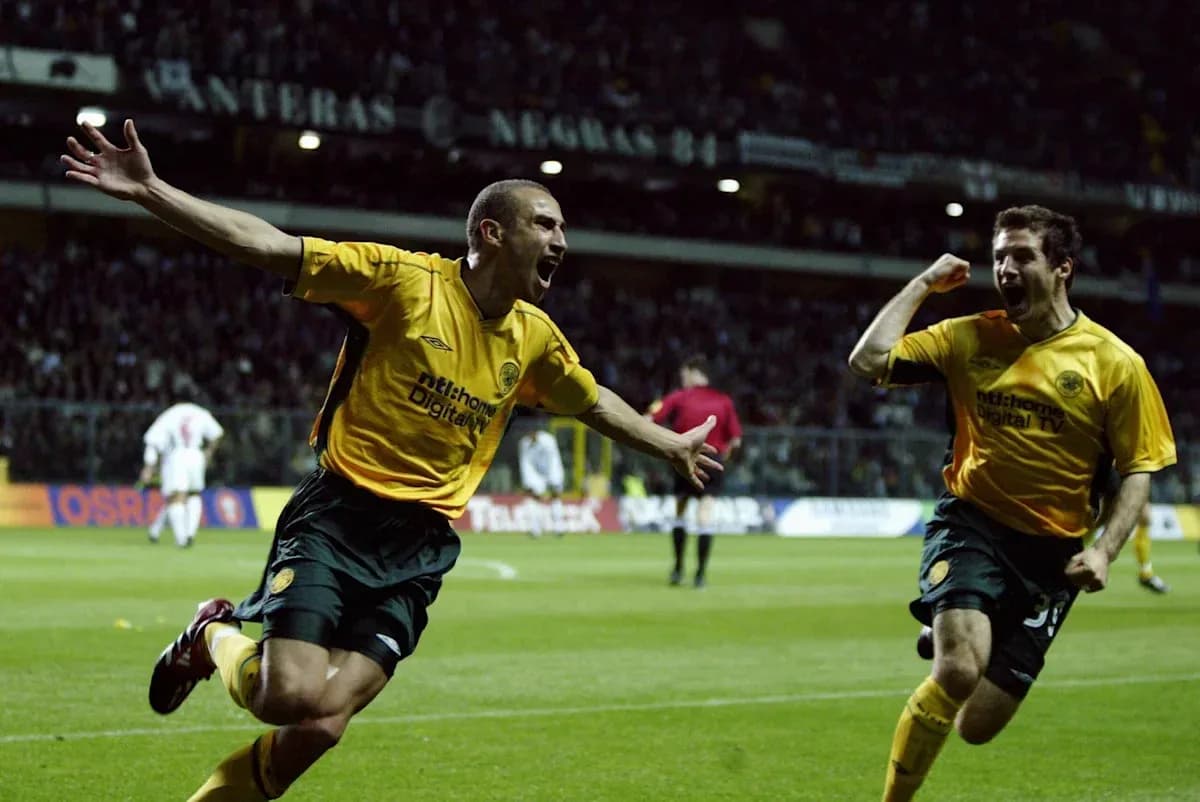
The first leg at Celtic Park finished 1-1. Henrik Larsson scored the equaliser, dragging Celtic back into a contest that threatened to tilt away from them. It was one of those European nights where every misplaced pass drew a groan and every half-chance felt vital.
The second leg in Porto turned into a war of attrition. Boavista, never glamorous but always organised, tried to suffocate the game. Celtic pushed, then pushed again. The longer it stayed level, the heavier the tension sat.
Larsson broke it.
His goal in the Bessa Stadium sealed a 1-0 win on the night and a 2-1 aggregate victory. One man, two goals across the tie, and Celtic were heading for a European final against Boavista’s city rivals, Porto. The ending in Seville still stings, but that semi-final remains one of those nights when Celtic forced their way through sheer will and a world-class striker at his ruthless best.
For Boavista, it was the peak of their European relevance. For Celtic, it was another chapter in a season that still lives in the collective memory.
A champion outside the “big three”
Boavista were never supposed to sit at Portugal’s top table for long. Founded in 1903, they built a respectable history, collecting nine major honours. The standout achievement came in 2001, when they tore up the script and won the Primeira Liga.
That title still stands alone. Boavista remain the first and only club outside Benfica, Porto and Sporting Lisbon to be crowned champions of Portugal. In a league shaped by three giants, they were the outlier who crashed the party and left with the trophy.
Yet while the football side punched above its weight, the finances told a different story. Problems had been brewing for years. The last 18 months simply accelerated the collapse.
Transfer bans, chaos and a slow death
The warning signs flashed in bold.
Boavista were hit with a ban that stopped them signing players in five consecutive transfer windows. When that restriction finally lifted, they lurched in the opposite direction, bringing in nine players in a single day in February 2025. It felt less like a plan and more like a scramble.
On the pitch, the decline became brutal. In the 2024/25 season, Boavista finished bottom and were relegated after a 4–1 defeat away to Arouca on the final day. Around 2,000 travelling fans watched their team fall apart, some of them spilling onto the pitch in a raw, emotional invasion that underlined just how far the club had sunk.
The league authorities then barred Boavista from playing in Liga Portugal 2. Relegated side Oliveirense were handed a reprieve; Boavista were pushed further down the ladder.
The blows kept coming. The club was refused registration for both the third tier and the fourth-tier Campeonato de Portugal in 2025. That decision triggered a change of company structure and a strange split: a new entity started life in the Liga Pro, the elite league of the Porto Football Association, while the original club itself entered a team in the fourth division of the district leagues.
It was a messy attempt to stay alive, a patchwork solution that satisfied no one.
The club-run team stopped turning up for games, racking up defeats by default before withdrawing from competition entirely at the end of October. The badge still existed. The institution, in any meaningful sporting sense, did not.
The final order
By July 2026, the situation was no longer salvageable.
A court order on 16 July demanded Boavista cease all activities by 31 July and surrender their premises. Years of unpaid obligations to creditors, failed restructuring efforts and mounting financial chaos had finally caught up with them. The insolvency process closed a chapter that had been dragging towards this conclusion for far too long.
In blunt terms: Boavista failed to pay their debts. The cost is their existence.
For Celtic fans, the club will always be tied to memories of Dalglish, Deans, Edvaldsson and, above all, Larsson’s decisive strikes in 2003. For Portuguese football, Boavista leave a more complicated legacy: a rare champion outside the traditional powers, a symbol of what can be achieved, and a warning of what happens when the finances fall apart.
Could a “new” Boavista FC rise from the wreckage one day, as so many phoenix clubs have tried elsewhere? Or does this court order mark the true end of one of Europe’s most stubborn, unglamorous, and quietly significant names?