.svg&w=384&q=75 "naujapitch logo")
Barcelona's Rebuild After Farewells of Key Players
Barcelona have lived through big farewells before. This one feels different.
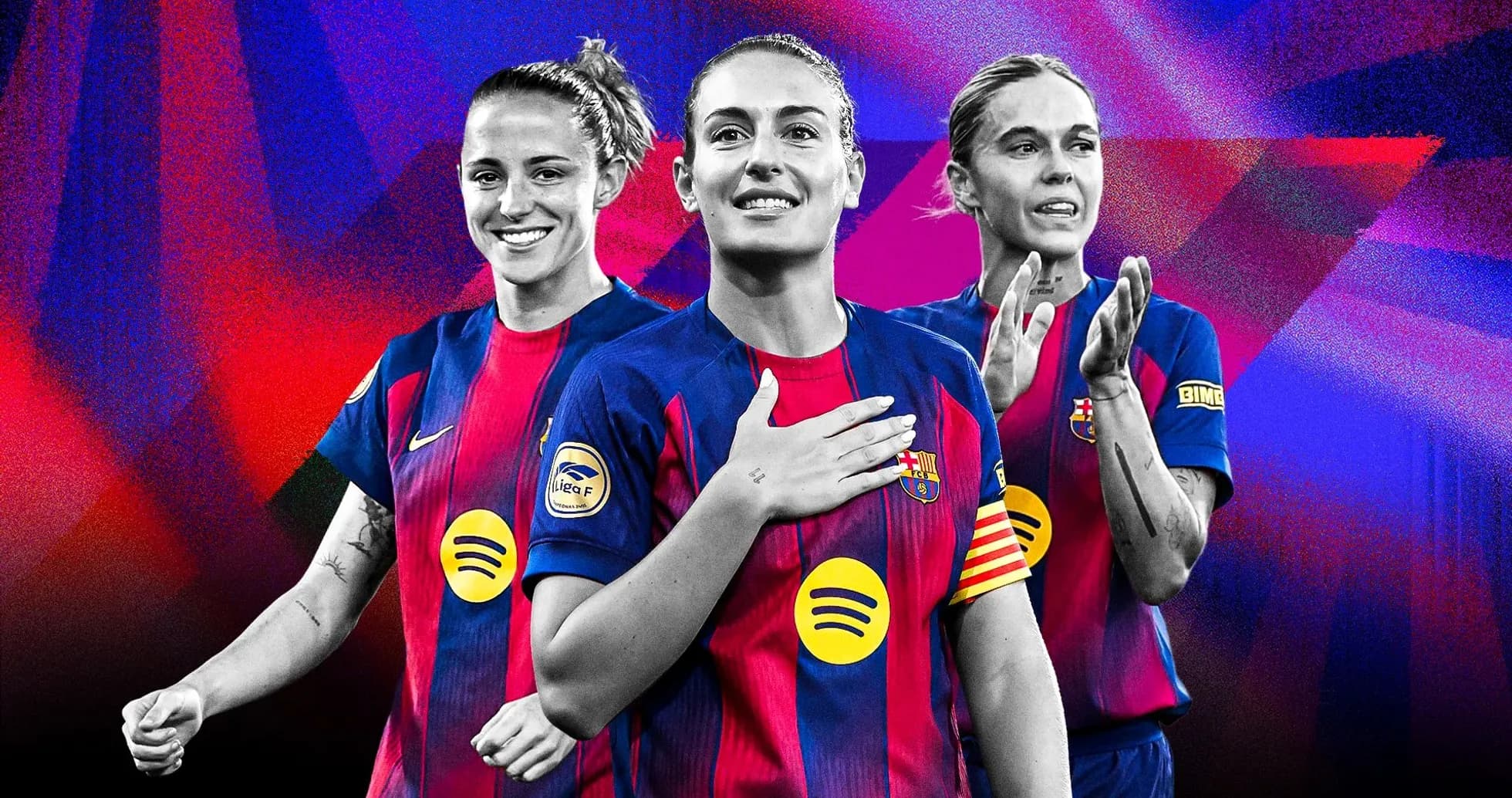
When the European champions wave off Alexia Putellas, Mapi León and Ona Batlle, they are not just losing three starters. They are losing the spine of an era. Putellas leaves as an icon and captain, a midfielder so influential this season that a third Ballon d'Or is firmly in play. León goes as arguably the best centre-back in the women’s game. Batlle exits as a world-class full-back at the peak of her powers.
Those are not gaps. They are craters.
Barca’s rebuild, the Barca way
If any club is built to survive this kind of exodus, it is Barcelona. La Masia continues to churn out talent at a rate unmatched in women’s club football, and the recruitment department has a long record of finding the right piece at the right time.
The twist this summer lies in the money.
Twelve months ago, financial constraints bit hard. The men’s team wrestled with La Liga’s Financial Fair Play rules, and the knock-on effect clipped the women’s ambitions in the market as well. Choices were dictated by the balance sheet as much as by the whiteboard.
Now? Hansi Flick’s side have just dropped £69 million ($93m) on Anthony Gordon. That single move hints at a different financial landscape at Camp Nou. If the club can suddenly spend again, the women’s team will feel that ripple.
But spending is one thing. Spending well is the test.
Replacing more than talent
On the pitch, the task is clear: find a right-back, a centre-back and a midfielder who can operate at the very top level. Off the pitch, the challenge is more delicate.
Putellas has been far more than a creative hub. Her role as captain and mentor has underpinned Barcelona’s latest surge. This season, coach Jonatan Giráldez – and then Pere Romeu – had to turn inward, promoting from within to cover injuries and exits. Teenagers Clara Serrajordi and Aicha Camara stepped into regular first-team roles. Martine Fenger, Carla Julia and Adriana Ranera all got their chances.
Then came the next wave: Sydney Schertenleib, Esmee Brugts, Vicky López, Kika Nazareth. All of them asked to carry more responsibility, all of them nudged along by a core of senior players.
Putellas sat at the heart of that process.
"She's a player who always tries to help other girls, to get the best out of them," Brugts said recently of the 32-year-old. "When I talk about the experienced players taking those leading roles, she's, of course, the main example for this. It calms me down a lot to play next to her and she gives me the confidence to play a good game myself."
You can’t buy that kind of presence off a shelf.
So Barcelona now must find not only elite replacements in three key positions, but also new voices in the dressing room. The candidates are obvious: Patri Guijarro, Aitana Bonmatí, Irene Paredes. All are seasoned winners, all have the personality to drag a team through the rough patches that will inevitably follow such upheaval.
And this is a club that has already been stress-tested. Mariona Caldentey, Lucy Bronze, Keira Walsh and Sandra Paños have all departed before or during the 2024-25 campaign. Each time, the prediction of a drop-off followed. Each time, Barcelona answered with trophies.
The core remains world class. The academy remains a goldmine. The culture is soaked in winning. There will be turbulence, but this does not look like a team about to fall off a cliff.
What it means for Spain
The story stretches beyond Catalonia. It stretches straight into the heart of the Spain national team.
León is expected to join London City Lionesses, the Women’s Super League side who finished sixth in their first top-flight season. Putellas could follow her to the English capital. Batlle, meanwhile, is set for Arsenal, the team who beat Barcelona in the 2024-25 Champions League final.
Batlle’s move feels like a straight swap in terms of intensity. At Barca, she has been a guaranteed starter in a side hunting four trophies. At Arsenal, she will again be a nailed-on starter, this time in a team competing on three fronts because new League Cup rules exclude clubs involved in the Champions League. The WSL is stronger than Liga F, so the overall demand and level of opposition should balance out.
León’s situation is different, and Putellas’ could mirror it if she joins London City Lionesses.
There will be no Champions League nights. The calendar will be lighter than at Barcelona, with fewer games crammed into the season. The trade-off? Week in, week out, they will face the intensity of the WSL, a league deeper and more competitive than Liga F, with regular meetings against Arsenal, Chelsea, Manchester City and Manchester United.
For Spain, that equation looks promising. Two key players in their 30s, still operating at a high domestic level but with fewer minutes and less accumulated fatigue in the build-up to the 2027 Women’s World Cup, is a scenario any national coach would welcome.
And if Barcelona choose to fill the gaps left by Putellas, León and Batlle with more La Masia graduates, Spain stand to benefit again. Serrajordi is already in the Spain squad for Friday’s clash with England and has grown steadily since her senior debut in October. She is the latest example of a pipeline that shows no sign of slowing.
On top of the 11 players in Spain’s current squad who wear Barca colours, Jana Fernández and Lucía Corrales also came through the club’s system before being sold last summer when finances demanded it. The production line in Catalunya is not just propping up a superclub; it is shaping a national team that has already conquered the world once.
A summer that will shape an era
So the stakes are clear. Barcelona face one of the most intriguing transfer windows in their modern history, a summer that will test their recruitment, their faith in youth and their ability to refresh a dynasty without losing its soul.
Spain watch on from a slightly different angle. As the club juggles its rebuild, the national team could emerge with fresher legs, more seasoned youngsters and a broader base of top-level experience.
The champions of Europe are about to reinvent themselves. The world champions may be the ones who gain the most from how they do it.