.svg&w=384&q=75 "naujapitch logo")
Aston Villa's European Glory: Unai Emery's Transformative Impact
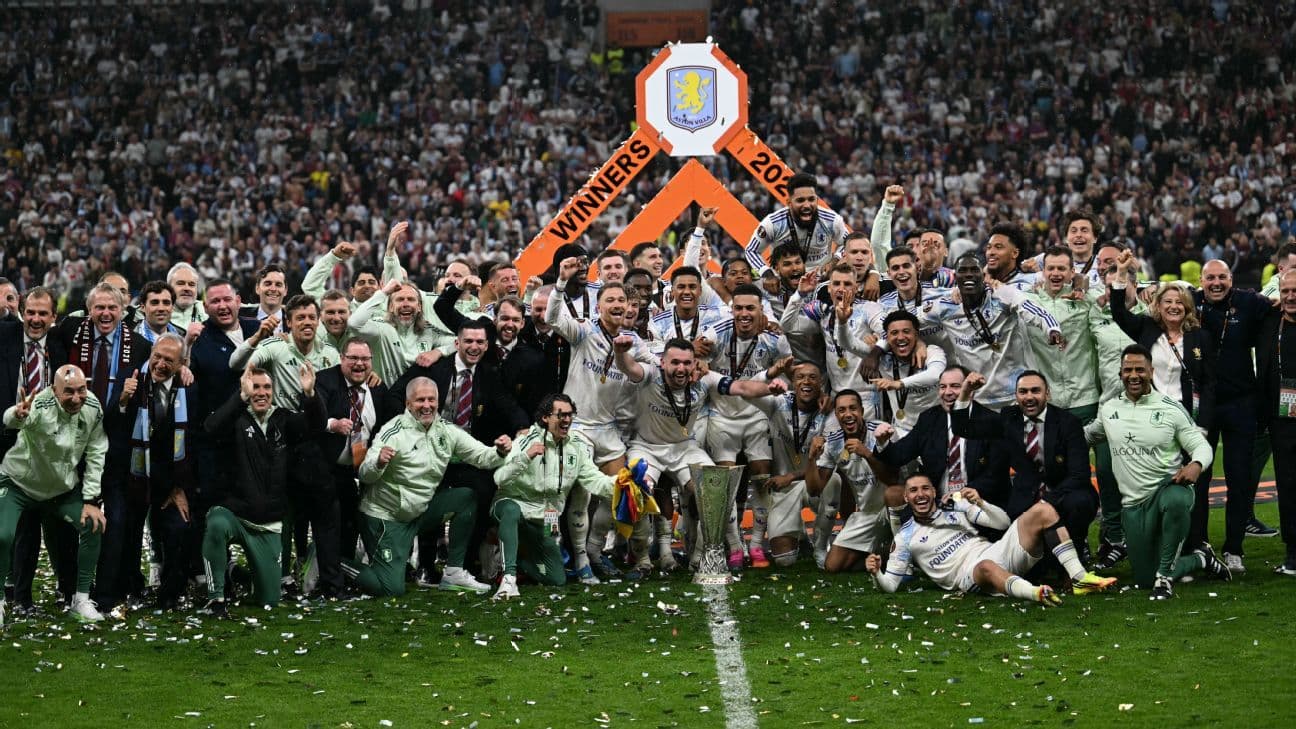
Aston Villa’s long road back to Europe’s summit ended in a blaze of claret and blue on the banks of the Bosphorus, a 44–year wait washed away in 90 ruthless minutes.
They have Unai Emery to thank for the final, emphatic step.
Emery’s empire, Villa’s rebirth
The 54-year-old has built a reputation as the man who bends the Europa League to his will. Now he has the numbers to prove it beyond argument: five titles, four different clubs, and a body of work that places him alongside Carlo Ancelotti in the rarest company of European coaching royalty.
This one might be his most transformative.
When Emery walked through the doors at Villa Park, the club sat 17th in the Premier League, still scarred by the ignominy of relegation in 2016 and years of drift that followed. On Wednesday night in Istanbul, he stood in the technical area of Besiktas Park, watching his side dismantle Freiburg 3-0 in a European final, a club reborn on the biggest stage it has known since Bayern Munich were beaten in 1982.
Villa did not just win. They imposed themselves. They smothered the occasion, dictated the terms, and turned a potentially tense night into a procession.
The Europa League master had written another script.
From Wembley graft to European glory
At the heart of it all, inevitably, was John McGinn.
Seven years ago, he was the tireless midfielder driving Villa past Derby County in the Championship playoff final, dragging the club back into the Premier League. Now he is the first Scotsman to captain a side in a major European final since Barry Ferguson led Rangers out in 2008, and the first Scot to do it for an English club since Graeme Souness with Liverpool in 1984.
The image of McGinn lifting the Europa League trophy, claret and blue ribbons spilling down, felt like the closing scene of a long, hard story. A squad that had trudged through cold midweek nights in the second tier now stood under the Istanbul lights, finally taking the moment that had eluded them.
Some of the journey’s early foot soldiers were part of this arc, if not this night. Tyrone Mings and Tammy Abraham shared that Wembley pitch in 2019. Ezri Konsa, Emi Martínez, Ollie Watkins and Matty Cash arrived in the year that followed, forming the spine of a team that kept promising a breakthrough.
They kept knocking. Conference League semifinalists in 2024. Champions League quarterfinalists last season, only to be knocked out by eventual winners Paris Saint-Germain. Each near-miss hardened them, sharpened them.
In Istanbul, the lessons showed. Freiburg were kept at arm’s length, their energy absorbed, their running lanes cut off. Villa waited, bided their time, then struck with a cold-blooded clarity that has become their hallmark.
By the end, a 30-year trophy drought was over, and names like McGinn, Tielemans and Buendía had been stitched forever into the same rich tapestry as Paul McGrath and Peter Withe.
The Emery effect, defined in 90 minutes
Thomas Tuchel once joked that UEFA might as well rename the trophy after Emery. It no longer sounds like a joke.
Sevilla three times. Villarreal once. Now Aston Villa. No coach has ever won the Europa League with three different clubs. Only Ancelotti, with his five Champions League triumphs, can match Emery’s total haul in a single major European competition.
Emery rejected the “king” label in the build-up, insisting his past meant nothing here. On the night, his work spoke louder than any title.
He set his team up to bypass Freiburg’s press, to go long into Watkins, to drag the German side into awkward, uncomfortable spaces. It looked disjointed early on, a stop-start contest littered with fouls and frustration. The game never settled into the kind of rhythm Freiburg wanted.
Then the pressure told. Not through chaos, but through design.
It’s easy to forget how this season began. No wins in the first four games. No goal until the end of September. A campaign that could have drifted into crisis instead became the platform for a surge into the Champions League places and now, a major European trophy.
Whatever doubts remained about Emery’s status in the modern game, Istanbul wiped them away.
Tielemans lights the fuse
For 40 minutes, this final threatened to grind. Both teams were edgy, passes went astray, the whistle of François Letexier cut through any hint of flow. Villa’s plan to launch balls at Watkins looked crude rather than clever.
Then Austin MacPhee’s set-piece notebook opened, and the night changed.
Lucas Digne rolled a short corner, catching Freiburg half-asleep. Morgan Rogers, given a second to think, measured a lofted ball to the edge of the box. Youri Tielemans arrived like a hammer.
The volley was pure, clean, and vicious, ripping past Noah Atubolu before he could react. A goal born in the analyst’s room, finished with a technician’s brutality.
From that moment, the result felt tilted. Freiburg had run hard – they would finish having covered 2.5km more than Villa, 102.9km to 100.4km – but the gaps began to appear where it mattered most: in quality, in composure, in conviction.
Buendía’s masterpiece, the killer blow
If Tielemans’ strike lit the fuse, Emi Buendía’s goal detonated the final.
Just as Freiburg tried to steady themselves, Villa found another angle, another flash of excellence. Buendía drifted to the edge of the box, shifted the ball onto his weaker left foot and, without fuss, whipped a shot that curled wickedly into the top corner.
Atubolu flew, fingertips clawing at air. The ball kissed the side netting. A shot of pure technique, the kind that rips the air out of a stadium.
Letexier barely let the replays roll before blowing for half-time. Villa walked down the tunnel two goals to the good, Freiburg’s players staring at the turf, wondering how a match that had felt so tight had slipped away so quickly.
History offered little comfort. The last three Europa League finals with a two-goal lead at the break have all finished 3-0: Atlético Madrid over Athletic Club in 2012, Atalanta over Bayer Leverkusen in 2024, and now Villa over Freiburg in 2026.
Once Emery has that kind of grip on a final, he rarely loosens it.
Rogers completes the pattern
The third goal lacked the aesthetic poetry of the first two, but it carried its own weight.
Rogers, at 23 years and 298 days, became the youngest Englishman to score in a major UEFA final since Steven Gerrard did it for Liverpool against Alavés in 2001. It was a sharp finish, the kind of instinctive strike that underlines the depth of this Villa squad.
By then, the contest was effectively over. Freiburg chased, covered ground, tried to inject pace. Villa stayed compact, ruthless, unflustered. The kind of mature European performance that had escaped them in those painful near-misses of the last two seasons.
In the stands, 11,000 Villa supporters roared, sang, and savoured. Among them, one future king – Prince William – watched the club he has followed since childhood finally reclaim a European crown. On the pitch, another kind of royalty paced the technical area, the unofficial owner of this competition, adding yet another chapter to his legend.
A new chapter for England, and for Villa
This triumph also folds into a wider English resurgence in the Europa League. With Tottenham Hotspur lifting the trophy last year, this is the first time since the early 1970s that English clubs have won the UEFA Cup/Europa League in consecutive seasons, a throwback to the days when Spurs and Liverpool claimed the first two editions of the competition.
For Villa, the scale of the achievement sits in the numbers. Forty-four years between major European finals, the third-biggest gap of any club, behind only Manchester City and West Ham United. Thirty years without a major trophy of any kind, now ended in style.
Jadon Sancho added his own slice of history, becoming the first player to appear in the final of three different major European competitions in three straight seasons: Champions League in 2023-24, Conference League in 2024-25, and now the Europa League in 2025-26. A modern career, spanning Europe’s full spectrum.
But this night belonged to Villa as a collective. To the players who climbed from the Championship to the Champions League. To a captain who has carried the load from Wembley to Istanbul. To a coach who has turned a struggling club into a European force.
The question now is no longer whether Aston Villa are back.
It’s how far this team, under this manager, can go from here.